The Office of Queen
A Global History of an Idea
Published by JADA — The Queen of San Diego
Somewhere around 2400 BCE, in the Sumerian city of Kish, a woman who had kept a tavern took the throne. Her name was Kubaba. When the scribes of the Sumerian King List came to record her reign — and they did record it, alongside gods and heroes and kings who supposedly ruled for thousands of years — they ran into a problem that would follow her successors for the next forty-four centuries: the language had no word for what she was. Sumerian had lugal, king, and nothing else fit for a sovereign. So the scribes called her lugal. Kubaba is the only woman on the Sumerian King List, preserved forever in the grammar of a man.
This article is about the thing the scribes had no word for. It is a history of the office of queen: what the word means and where it came from, the forms the office has taken on every inhabited continent, how forty-five centuries of artists have depicted it, and why the idea remains so charged that our films and fairy tales are still arguing about it. It is written for the general reader and documented for the skeptical one. Its single organizing claim is this: queenship is not a footnote to kingship. It is an office in its own right — older than most surviving institutions on earth, more various than the European imagination allows, and represented in art more continuously than almost any other human role.
I. Is "Office" the Right Word?
Start with the hardest question, because it is the one working scholars actually argue about: is queenship an office — or just a title carried by whichever woman happened to marry, bear, or outlive a king?
An office, in the strict sense, is a position that exists independently of the person who holds it. It has duties, resources, insignia, a ritual of investiture, and continuity across vacancies. Judged by that standard, an honest survey of the evidence returns a verdict the modern imagination does not expect: for most of recorded history, in most places, queenship was more official than we assume.
Consider the machinery. Medieval English queens consort were not merely married to the realm's ruler; they were anointed and crowned under a coronation rite of their own, a liturgical investiture distinct from the king's. They held an independent legal revenue — aurum reginae, "queen's gold," a surcharge attached to certain payments owed the crown — collected by the queen's own officers for the queen's own treasury. They maintained separate households, chanceries, and seals, and they exercised a formalized public duty of intercession: the queen who kneels before the king to beg mercy for the condemned is not improvising, she is performing a constitutional function, one so well understood that chroniclers staged entire political settlements around it. When John Carmi Parsons assembled the field-founding collection Medieval Queenship in 1993, his introduction made precisely this move: it turned attention away from the biographies of individual women and toward "the office of queen" — its functions, its resources, its constraints (Parsons 1993).
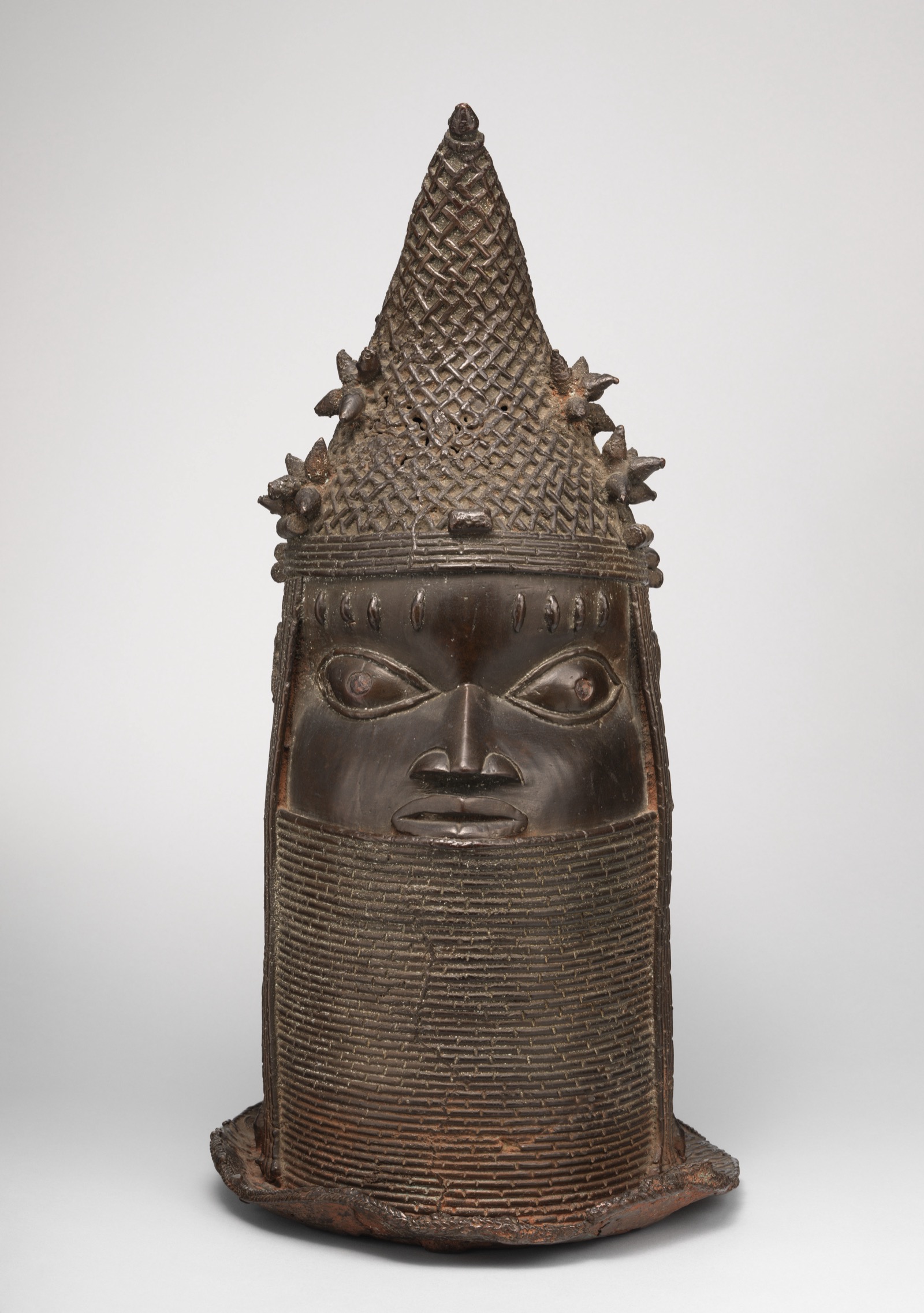
The strongest evidence, however, does not come from Europe. In the kingdom of Benin, in present-day Nigeria, Oba Esigie created the title of iyoba — queen mother — around the beginning of the sixteenth century, specifically to honor his mother Idia, the priestess and war-strategist whose support had won him his throne. The point is not the honor; the point is what the honor was. The iyoba received her own palace, her own court, and rank equal to the senior chiefs of the realm — and the office outlived Idia and has been filled ever since. No clearer demonstration exists anywhere that queenship can be a constitutional invention: before Idia, the office did not exist; after her, the kingdom could not imagine itself without it (Kaplan 1997).
Among the Asante of Ghana, the parallel institution is stronger still. The asantehemaa — conventionally translated "queen mother," though the translation flattens her — occupies her own stool (the Akan seat of sovereignty), presides over her own court with independent jurisdiction, and is the only person constitutionally empowered to nominate a candidate for the throne itself. She is not the king's appendage; she is the other half of a dual sovereignty. In Dahomey, the kpojito — the "reign-mate" who co-ruled with the king — was not even the king's biological mother: she was typically a woman of common or enslaved origin elevated to co-regency on merit and priestly authority, which makes the office about as far from "wife of" as an institution can travel (Bay 1998).
The honest counterargument deserves its hearing. Much queenly power was deliberately informal — influence exercised through marriage, motherhood, and patronage precisely because formal channels were closed. Theresa Earenfight, the leading theorist of the field, prefers to describe monarchy itself as a corporate enterprise in which king, queen, and dynasty govern as one body, with the queen's power flowing sometimes through the king, sometimes beside him, sometimes instead of him (Earenfight 2013). And the medieval lawyers had their own word, subtler than office: dignitas — the dignity — the thing that, in the legal maxim, non moritur: does not die. When Ernst Kantorowicz wrote The King's Two Bodies (1957), the great study of how monarchy separates the mortal ruler from the immortal institution, he never once discussed a queen; it took Marie Axton's The Queen's Two Bodies (1977) to show that Elizabeth I's own lawyers had spent a reign wrestling that doctrine onto a female sovereign — proof, in its way, that the institutional question was live in the sixteenth century and remains live now.
So: is "office" the right word? For queens regnant, unambiguously — they held the office. For the iyoba, the asantehemaa, the kpojito, yes beyond argument — these are constituted offices with succession and insignia. For the anointed consort with her own seal, her own gold, and her own coronation rite, "office" is defensible and illuminating. And where the word finally fails — before Isis, before the Queen of Heaven, before sovereignty personified — it fails upward, into something older than administration. This article keeps the word, and lets the evidence carry the argument.
II. The Word Itself
Every language that has queens had to decide what a queen is, and the decision is fossilized in the word. Lay the world's queen-words side by side and they sort into a handful of strategies — and the sorting is a map of assumptions about female sovereignty.
English is the great exception. Queen descends from Old English cwen, from Proto-Germanic \kwōniz, from the Proto-Indo-European root \gwen- — which meant, simply, woman. It is the same root that gives Greek gynē (hence gynecology — queen and gynecology are etymological cousins), Old Irish ben (the bean of banshee), Slavic žena, Sanskrit gnā. In English, a queen is not derived from a king. She is, etymologically, a woman — the woman, elevated to sovereignty by the history of the word itself. The root's other Old English child went the opposite direction: cwene, the same ancient word in a lower ablaut grade, slid downward through "serving woman" to become the archaic quean, "prostitute." One root, two trajectories — elevation and degradation running simultaneously through a single syllable — and because the two words became homophones, polite English eventually killed the lower one. The language chose the queen.
The Romance languages made the opposite choice. French reine, Spanish reina, Portuguese rainha, Italian regina all descend from Latin rēgīna — which is rēx, king, wearing a feminine suffix. In this vocabulary the queen has no independent existence: she is a female king, a grammatical derivation of male rule. Sanskrit made the same move from the same ancient root — rājñī from rājan — which yields one of the quiet astonishments of historical linguistics: Latin rēgīna and Sanskrit rājñī are cognates, the same word diverged five or six thousand years across the Indo-European dispersal. The maharani of Jaipur and the regina of Rome carry one title between them.
The Semitic languages derive her from ownership. Hebrew malkāh, Arabic malika, Akkadian malkat — all feminine forms of the ancient root m-l-k, king. When Islam carried Arabic down the East African coast, the word crossed a language-family boundary entirely: Swahili, a Bantu language, took malkia aboard intact, and a Semitic root has named the queens of the Indian Ocean coast ever since.
East Asia did something no other region did: it built the constitutional distinction into the vocabulary itself. Chinese has nǚwáng (女王) — literally "female king," a queen regnant — and, as a separate word, wánghòu (王后), the queen consort, whose second character means "behind, after." Korean (yeowang / wangbi), Japanese (joō / kōgō), and Vietnamese (nữ vương / hoàng hậu) all inherited the same two-word system with the same Chinese characters. Four languages, one shared insight: the woman who rules and the woman who is married to the ruler are different things, and a precise civilization should not use one word for both. English, note, still does.
And then there are the languages that reached for something else entirely. In Zulu and Swazi, the queen mother is indlovukazi — "the great she-elephant" — sovereignty grounded in the animal that embodies matriarchal wisdom and memory; in the Swazi kingdom, the she-elephant and the lion (ngwenyama, the king) co-reign, and neither may rule alone. In Classical Nahuatl, the ruler was the tlatoani, "the one who speaks," so a sovereign woman was a cihuatlatoani — the woman who speaks — sovereignty defined as voice. In Quechua, the qoya headed a parallel hierarchy of women mirroring the Inca's hierarchy of men. And Hawaiian gives mōʻī wahine — sovereign-woman — the title Liliʻuokalani held when the nineteenth century's greatest naval power decided her kingdom should not exist.
Two footnotes of pure historical comedy complete the map. The Russian koroleva and Turkish kraliçe both mean "queen" — and both are, at several removes, feminizations of the personal name of Charlemagne (Karl → Slavic korolĭ, "king"), a man so synonymous with kingship that half of Eastern Europe turned his first name into the job title. And the Russian tsaritsa is a feminization, four linguistic steps removed, of the family name of Julius Caesar. Two actual men, dead a millennium before the words settled, hiding inside the titles of a hundred queens. Meanwhile the Turkish word kadın — today the ordinary, unmarked word for "woman" — began as khatun, the title of the empress of the steppe, the rank held by Töregene, who between 1241 and 1246 ruled the largest contiguous land empire in human history as regent of the Mongols. A royal title wore down, in less than fifteen centuries, into the word for every woman. The etymologies, read together, say what this article will keep saying: the queen and the woman have never been far apart in the human mouth — sometimes the same word, sometimes a world apart, always negotiated.
III. The Shapes of the Office
The scholarship insists on precision here, and the precision pays. "Queen" in English collapses at least seven distinct offices, and nearly every confusion in the popular understanding of queenship comes from mixing them.
The queen regnant rules in her own right — suo jure, in the lawyers' Latin; reina propietaria, "proprietary queen," in the magnificent Castilian legal formula. Hatshepsut, Wu Zetian, Isabella, Elizabeth I, Nzinga, Liliʻuokalani. She holds the same office a king holds, and most legal systems treated her as an anomaly to be explained, contained, or — as we will see — erased afterward.
The queen consort is married to the reigning king. She shares his rank but not, formally, his powers. The office is easy to underestimate and the underestimation is always an error: the consort's crown was the only royal office a woman could reliably reach in most patrilineal systems, and consorts converted it into everything from Tiye of Egypt — to whom foreign kings addressed diplomatic correspondence directly, bypassing the pharaoh — to the anointed intercessors of medieval Europe with their courts and their queen's gold.
The queen regent governs instead of — for an absent king, an incapacitated one, or most commonly a son too young to rule. Regency is where dynastic systems, whatever their official theory of female incapacity, quietly hand a woman the whole machine. Catherine de' Medici ran France for decades; Töregene ran the Mongol Empire; the Chinese institutionalized the arrangement as chuilian tingzheng — "administering the government from behind the lowered curtain" — a phrase that is itself a small masterpiece of political theology: the empress dowager rules, audibly, while a silk screen preserves the fiction that she is not there.
The queen dowager is a king's widow in the reign of his successor; the queen mother is the reigning sovereign's mother — and in Africa, as Section I argued, "queen mother" is usually the wrong translation for what is really a parallel constitutional office: the iyoba of Benin, the asantehemaa of Asante, the kpojito of Dahomey, the indlovukazi of the Swazi. Flora Kaplan's landmark collection on African queens and queen mothers (1997) makes the essential point: these titles vary so much in structure and power that collapsing them into the European category loses exactly what matters about them.
Beyond the constitutional offices stand two more shapes. The mythic-divine queen — Isis, Hera, the Queen of Sheba as three religious traditions each claim her, the Virgin Mary crowned Regina Caeli — where sovereignty is not an office held but an essence personified. And the metaphoric queen — the chess queen, the queen bee, the beauty queen, the drag queen, the queen of hearts — the office unmoored from the state and set loose in the culture, where, as Section VI will show, it has done some of its most revealing work.
Earenfight's tripartite formula organizes all of it: queens exercised power through a king, beside a king, or instead of a king (Earenfight 2013). Across forty-four centuries the proportions shift, but all three vectors are always present, on every continent. That is the office. Now: the women who held it.
IV. A World Survey: The Women Who Held the Office
No single narrative contains four and a half millennia of queenship, and this article will not pretend to one. What follows instead is a walk through the office's great workshops — the places and centuries where queenship was built, tested, defended, erased, and rebuilt — with the full chronological roster — each woman's office typed, per the taxonomy of Section III — reserved for the Register appended to this article.
1. The Ancient Workshop: Sumer, Egypt, Kush
The record opens, fittingly, with a grammatical emergency. When Kubaba the tavern-keeper took the throne of Kish, the scribes gave her the only sovereign title Sumerian had — lugal, "king," literally "great man" — because the language had no feminine form and nobody invented one for her. Five hundred kilometers south and a century or so earlier, a woman named Puabi was buried at Ur beneath a golden headdress of twenty gold leaves and lapis lazuli carried overland from Afghanistan, attended in death by more than fifty retainers — a sovereign's retinue, not a wife's — and her cylinder seal names her nin, lady, with no husband mentioned at all. From its very first pages, the record shows the two moves that will recur for four thousand years: the woman fitted awkwardly into the king's title, and the woman whose independent standing must be reconstructed from the silence around her name.
Egypt made female sovereignty thinkable in a way no other ancient polity did — not routine, but available at dynastic crises, roughly once per golden age (Cooney 2018). Merneith, around 2950 BCE, appears in her son's tomb in the sequence of rulers — Djer, Djet, Merneith, Den — the earliest plausible female sovereign in Egyptian history, a millennium before the ruler usually given that honor. That ruler, Sobekneferu (r. c. 1806–1802 BCE), left something better than a claim: a quartzite torso, now in the Louvre, that shows her wearing the female sheath dress underneath the male pharaonic kilt — both at once, a constitutional argument made of clothing, carved thirty-eight centuries before anyone would write the phrase "gender presentation."
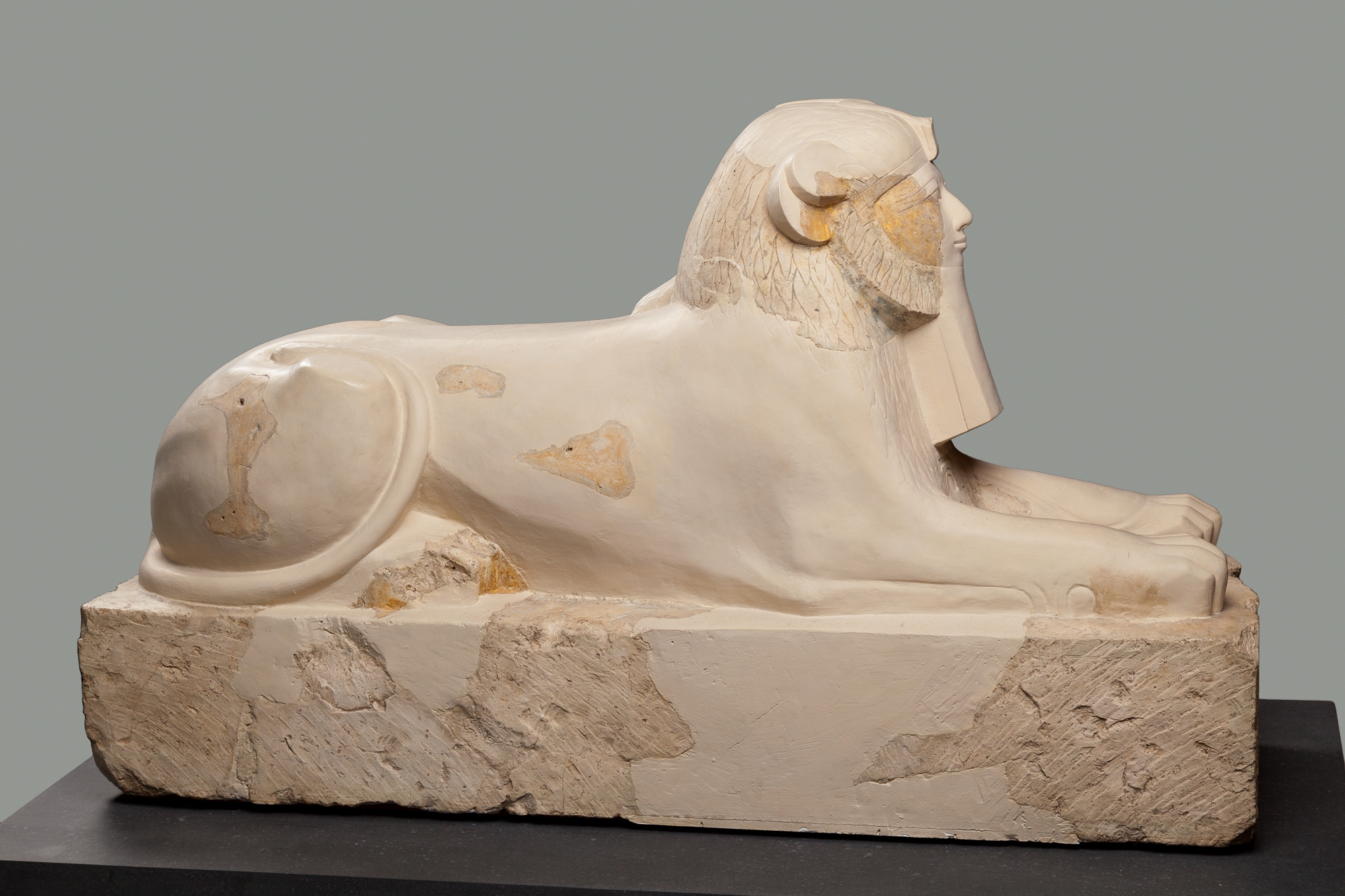
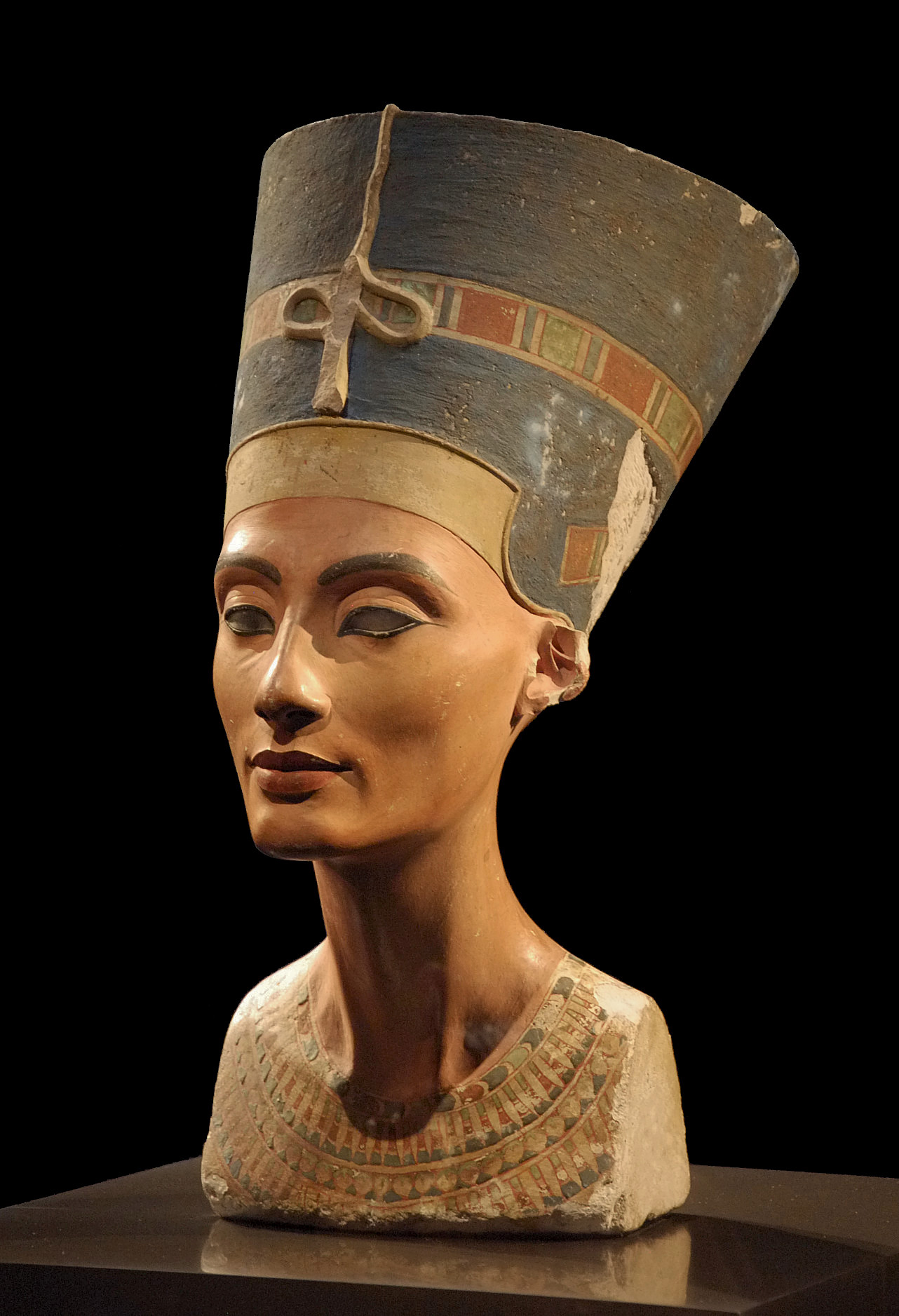
Then Hatshepsut, who ruled for two decades as pharaoh in full male regalia — nemes headcloth, false beard, every crown in the wardrobe — while her inscriptions kept slipping into feminine grammar: "His Majesty, herself." Some twenty years after her death, chisels came for her. Cartouches gouged, statues smashed, images recut into her male predecessors — the best-documented erasure of a female sovereign in the ancient world, and an inadvertent tribute: nobody defaces what has no power. (The erasure was never finished; her temple at Deir el-Bahri still holds enough of her to reconstruct everything, and recent scholarship suggests some of the damage was later stone-salvage rather than vendetta — history's insults compounding history's insults.) Beside the regnants stand the consorts who stretched the office from inside: Tiye, to whom the king of Mitanni wrote directly — a queen consort conducting foreign policy over the pharaoh's head — and Nefertiti, whose painted limestone face, found in a sculptor's workshop in 1912, was never displayed in antiquity at all. The most famous royal portrait on earth is an artist's working model, and Egypt and Germany are still arguing about the crate it left in.
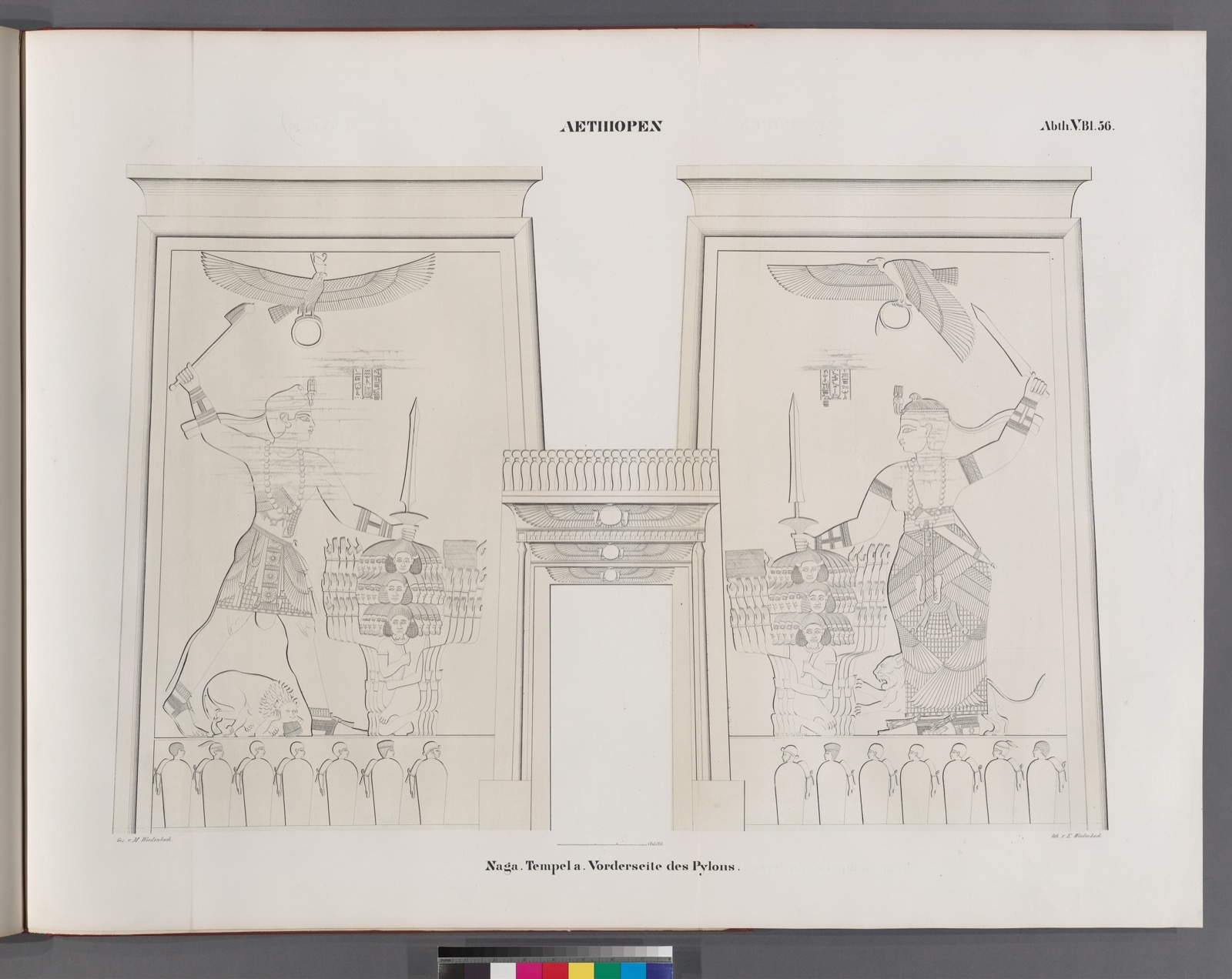
South of Egypt, the kingdom of Kush quietly did what Rome and Egypt would not: it made female sovereignty normal. At least eleven women ruled Meroë in their own right between roughly 260 BCE and 320 CE, under the titles kandake and qore, and its temple walls show queens at kingly scale, smiting enemies, crowned by gods. One of them, Amanirenas — one-eyed, whether from birth or battle the sources disagree — marched thirty thousand soldiers into Roman Egypt in 24 BCE, sacked Aswan, and carried off a bronze head of the Emperor Augustus, which she buried beneath the staircase of a victory temple at Meroë so that the Kushite nobility would step over the emperor's face on their way up to the altar. Then she negotiated with Augustus directly and won: tribute cancelled, taxes remitted, Rome withdrawn. The bronze head sits today in the British Museum, still wearing the composure of a man who does not know where he has been.
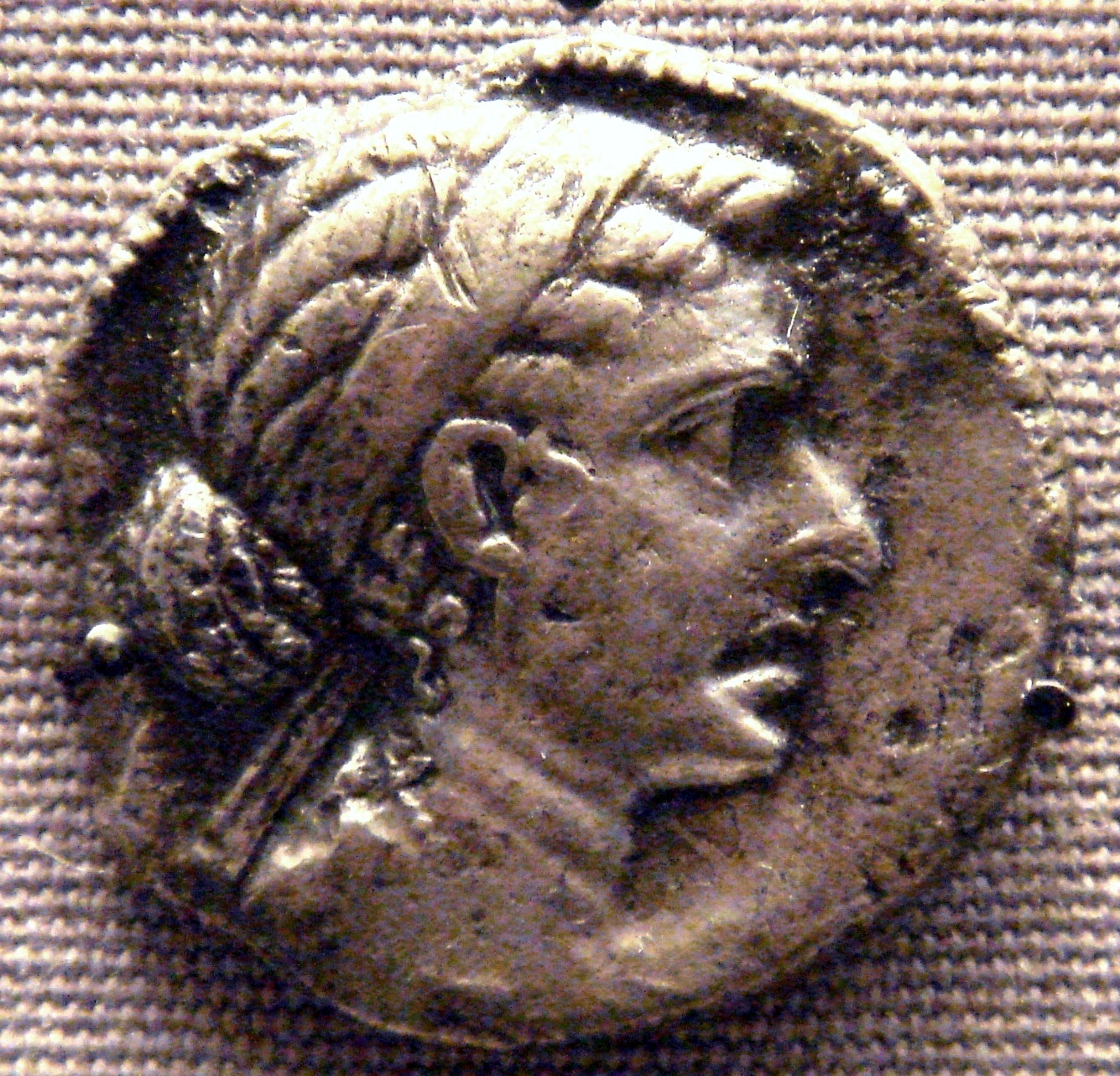
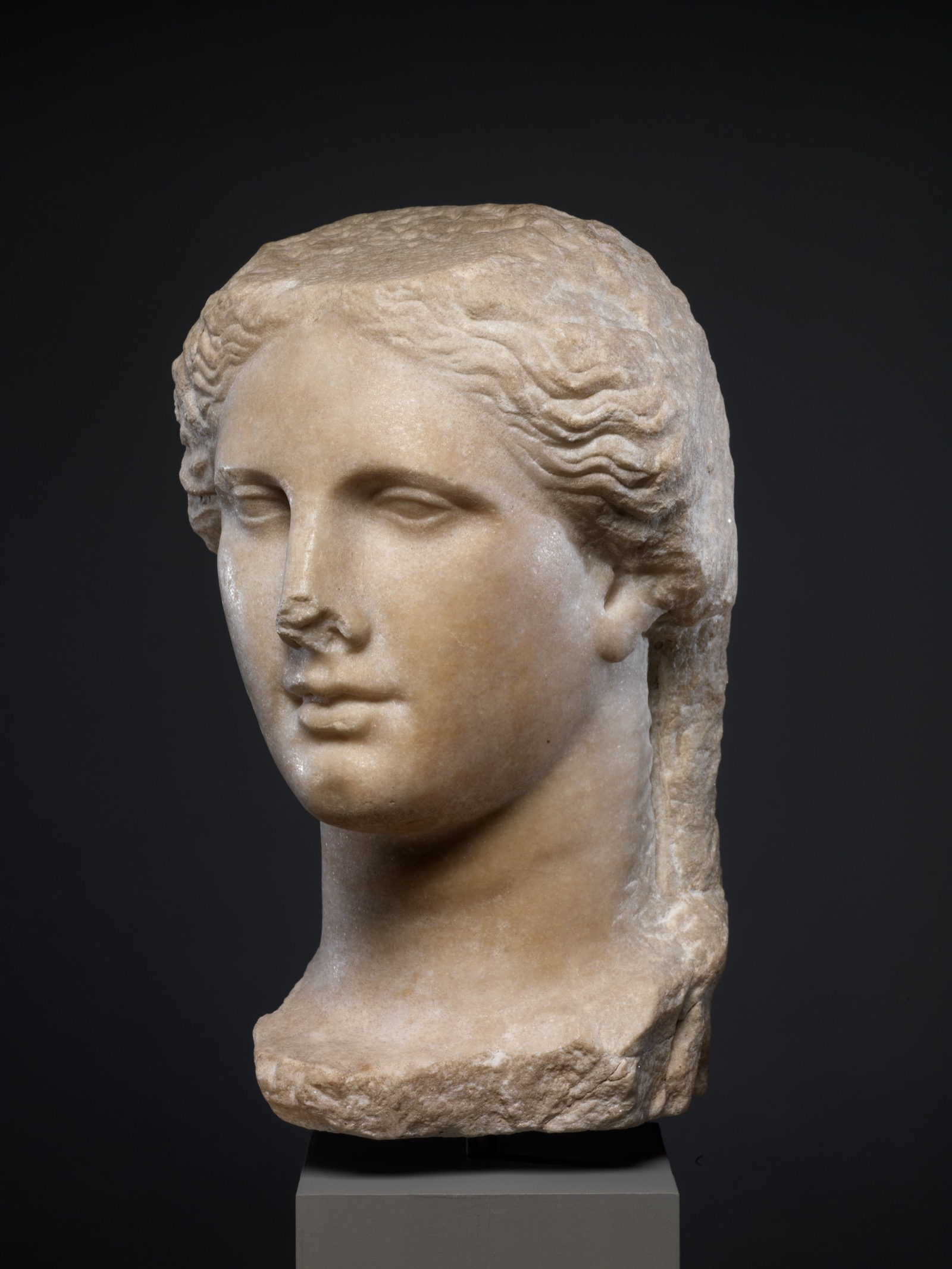
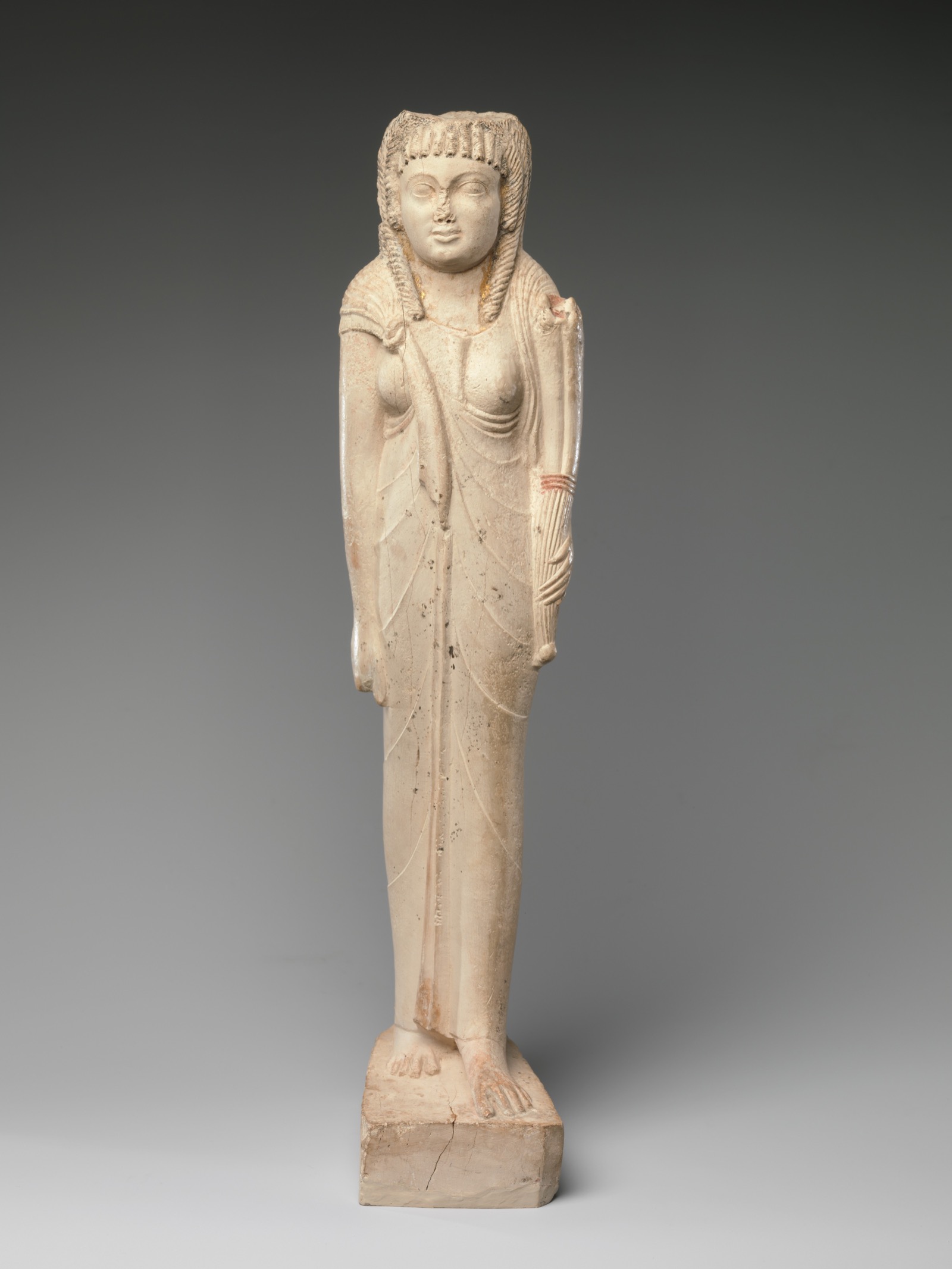
And Cleopatra — the last pharaoh, the most storied queen who ever lived — survives in only one confirmed contemporary likeness: her coins. Every painted Cleopatra, every marble seductress, every film is imagination; the woman herself chose to circulate as a diademed profile on silver, "Queen Cleopatra, the Younger Goddess," minted in a closed currency system that forced her face into every trader's hand by law. Rome answered with the first great character assassination of a reigning queen — Horace's fatale monstrum, the seductress of the Odes — a propaganda template that, as we will see, has never really been retired. And three centuries later the ancient world produced its last great challenger in the same mold: Zenobia of Palmyra, who conquered Egypt claiming Cleopatra's mantle, styled herself Augusta, and fell to the Emperor Aurelian in 272 CE — the final queen to contest Rome itself.
2. Asia: The Curtain, the Coin, and the Blank Stele
Asia's queenship traditions are the world's most institutionally inventive, and the inventions cut both ways — machinery for exercising female sovereignty, and machinery for hiding it.
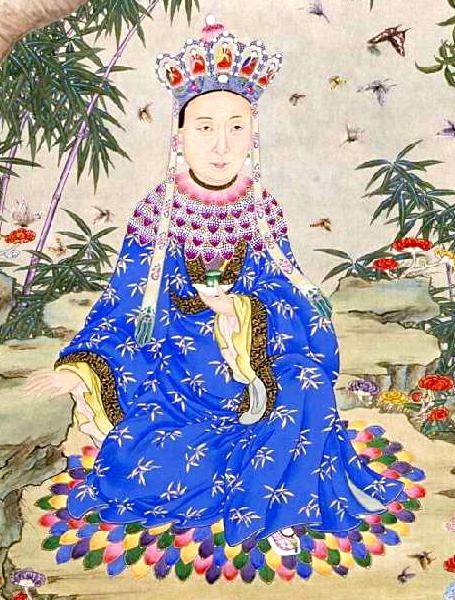
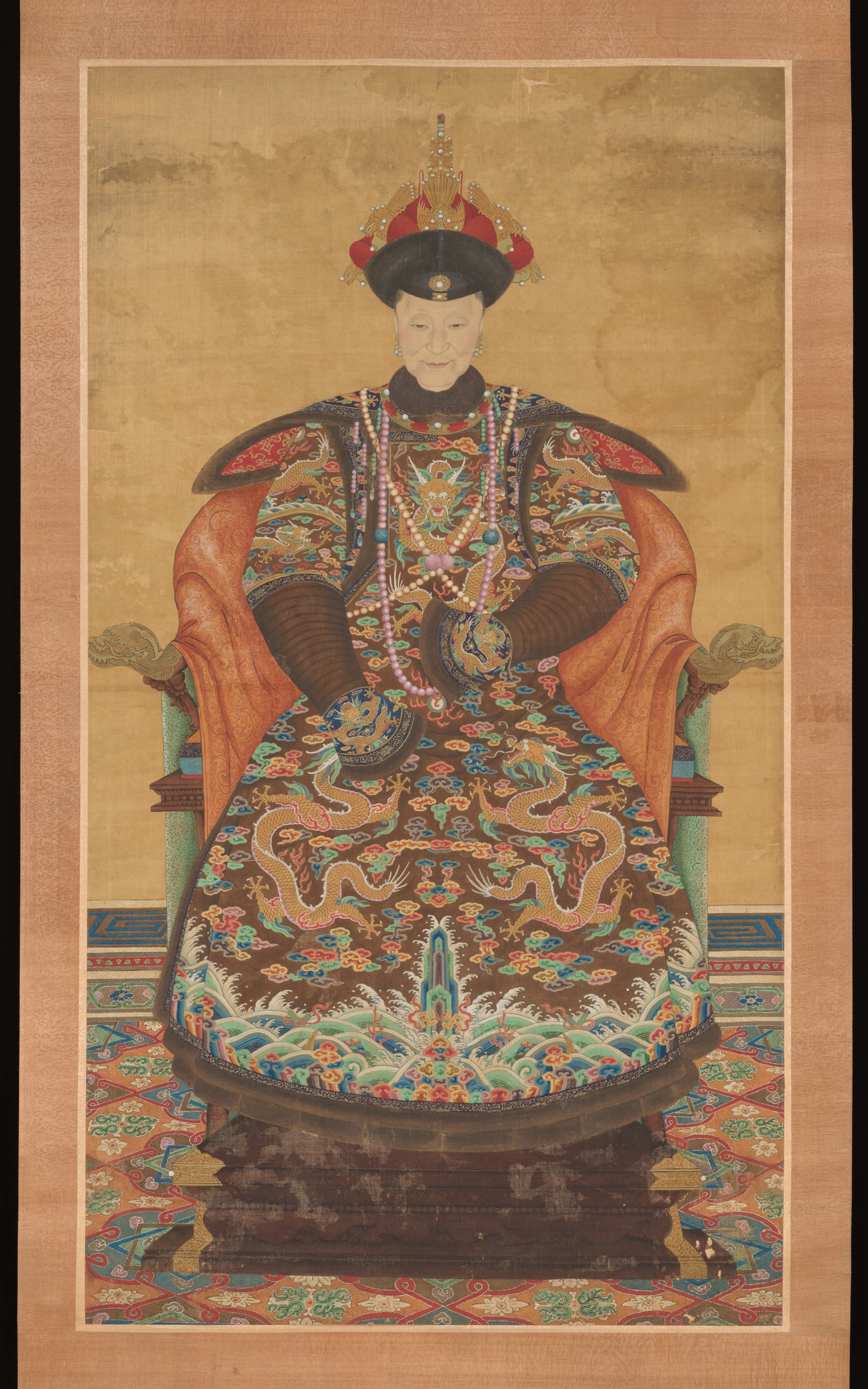
The masterpiece of concealment is Chinese: chuilian tingzheng, "administering government from behind the lowered curtain." A child sits on the throne; behind a sheet of yellow gauze, the empress dowager rules. The Qing dynasty wrote the arrangement into its statutes — female regency as formal state procedure, provided the woman remain architecturally invisible. Empress Dowager Cixi governed China this way for the better part of five decades, then punctured the pretense in her final years by commissioning an American painter and a court photographer to manufacture her image for the world: the woman behind the curtain, orchestrating precisely how she would be seen.
Wu Zetian needed no curtain. Concubine, empress consort, dowager regent, and finally — alone in four thousand years of Chinese history — emperor in her own name, huangdi, the masculine title unmodified, founder of her own dynasty. Her preferred portrait was not a painting: at the Longmen Grottoes she funded, partly from her cosmetics allowance, a Vairocana Buddha seventeen meters tall whose serene face tradition holds was modeled on her own — the largest royal portrait in Chinese history, disguised as a god. The Confucian historians spent the next thousand years disassembling her reputation (usurper, murderer, monster: the Cleopatra treatment, in a different key), and her own tomb monument answers them still: she left her memorial stele blank. Not one carved word. Historians have argued about the silence for thirteen centuries, which was perhaps the point.
Elsewhere the office kept asserting itself in forms Europe never imagined. Japan crowned eight empresses regnant — six of them in a single remarkable window from 593 to 770, beginning with Suiko, under whom Buddhism became state religion and Japan's first constitution was issued; the title tennō, uniquely among the world's great sovereign titles, carries no gender at all. Korea's Seondeok of Silla answered doubts about a woman on the throne with astronomy: her Cheomseongdae observatory, the oldest standing in East Asia, is built of roughly 365 stones in 27 tiers — the days of the calendar, and her place as the twenty-seventh monarch of Silla, stacked into a tower. Legitimacy, in stone, by arithmetic. Vietnam's Trưng sisters ruled jointly — two queens, equal title, the only verified co-queenship in Southeast Asian history — after driving out the Han in 40 CE; they lasted two years and became eternal, their elephant-mounted images woodblock-printed into every subsequent Vietnamese war of resistance. And Islamic Southeast Asia went further than co-queenship: the Sultanate of Aceh crowned four consecutive sultanas between 1641 and 1699, a half-century female succession recorded matter-of-factly in Dutch East India Company ledgers, with contemporaries noting the Acehnese view that women governed with less appetite for plunder.
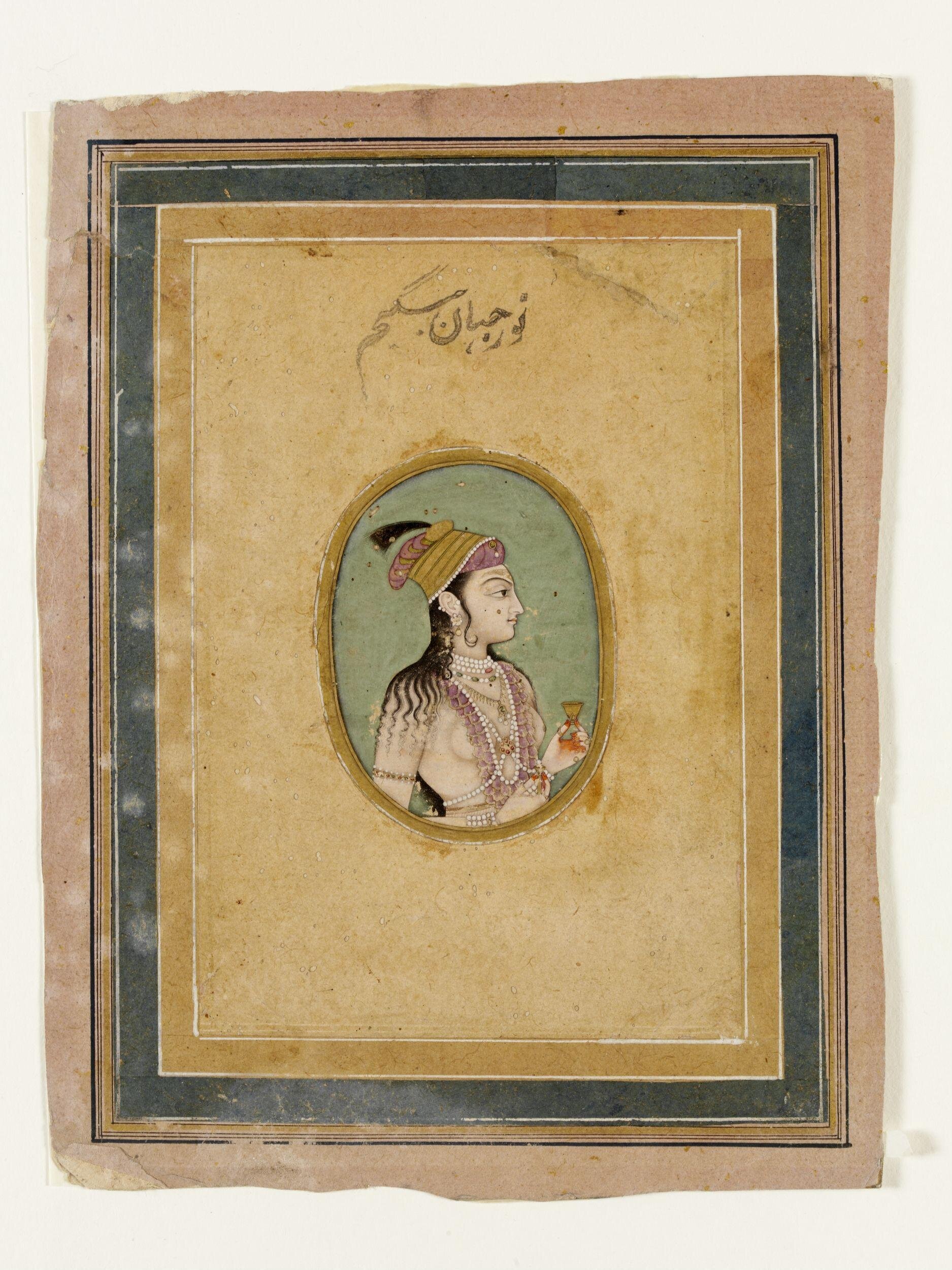
In the Islamic world, where court portraiture barely existed, two women wrote themselves into the most unforgeable medium there is: money. Razia of Delhi — who refused the feminine Sultana and reigned as Sultan, unveiled, commanding from elephant-back — survives as silver tankas reading "The Greatest Sultan… Rāḍiyya, daughter of Iltutmish." And Nur Jahan, the Mughal empress who governed while her husband declined into opium, struck rupees in her own name — such a threat to the succession's dignity that Shah Jahan recalled them, melted them, and made trading in one a capital offense. A queen so dangerous her currency had to be criminalized: the surviving defaced coins are among the rarest in Islamic numismatics, and the most eloquent. The Ottomans, meanwhile, institutionalized what the Mughals punished: for a century and a half — the era their own historians called the Sultanate of Women (c. 1530–1683) — power ran through the valide sultan, the sultan's mother, whose office commanded its own revenues, building programs, and foreign correspondence. Leslie Peirce's landmark study made the point that reorients the whole subject: the imperial harem was not a domestic space but a political institution — and at its apex, Kösem Sultan governed the empire as regent for two successive sultans, the most powerful woman in Ottoman history (Peirce 1993).
The steppe, meanwhile, simply handed women the empire. Töregene Khatun ruled the entire Mongol dominion — the largest contiguous empire in history — as regent for five years; Sorghaghtani Beki, called by Persian, Chinese, and Armenian chroniclers alike "the most intelligent woman in the world," placed all four of her sons on thrones and thereby designed the next century of Eurasia; Mandukhai the Wise reunified Mongolia while pregnant with twins, giving birth, the chronicles insist, mid-campaign and resuming command. Their title, khatun, is the one that would later wear down into the ordinary Turkish word for "woman" — as if the steppe had concluded that empress and woman were, in the end, the same word.
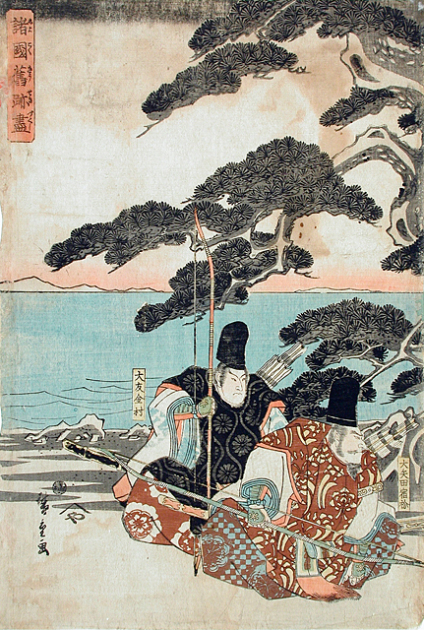
Asia also contributes the survey's strangest category: the queens with no face. Himiko of Yamatai, Japan's first named ruler, governed unseen from inside her palace through a thousand attendants and one speaking brother — no image of her exists or ever did. Empress Myeongseong of Korea evaded every camera on political principle; when Japanese agents murdered her in her own palace in 1895, they killed a woman whose face history genuinely does not know. And Rani Lakshmibai of Jhansi, who died at twenty-nine leading cavalry against the British in 1858 — sword drawn, adopted son knotted to her back — left no verified likeness either; the equestrian image on half the statue plinths of India was designed by a Jaipur lithographer thirty years after her death. Three empty frames, three faces invented afterward by the nations that needed them. The blank, it turns out, is one of queenship's recurring portraits.
3. Africa: The Office at Its Most Constitutional
If a reader takes one structural insight from this survey, it should come from Africa — because the African traditions are the strongest evidence on earth against the assumption that "queen" is a courtesy title defined by proximity to a king. On this continent, female sovereignty was repeatedly engineered: written into constitutions, endowed with palaces and courts, and severed — deliberately, formally — from marriage and even from motherhood.
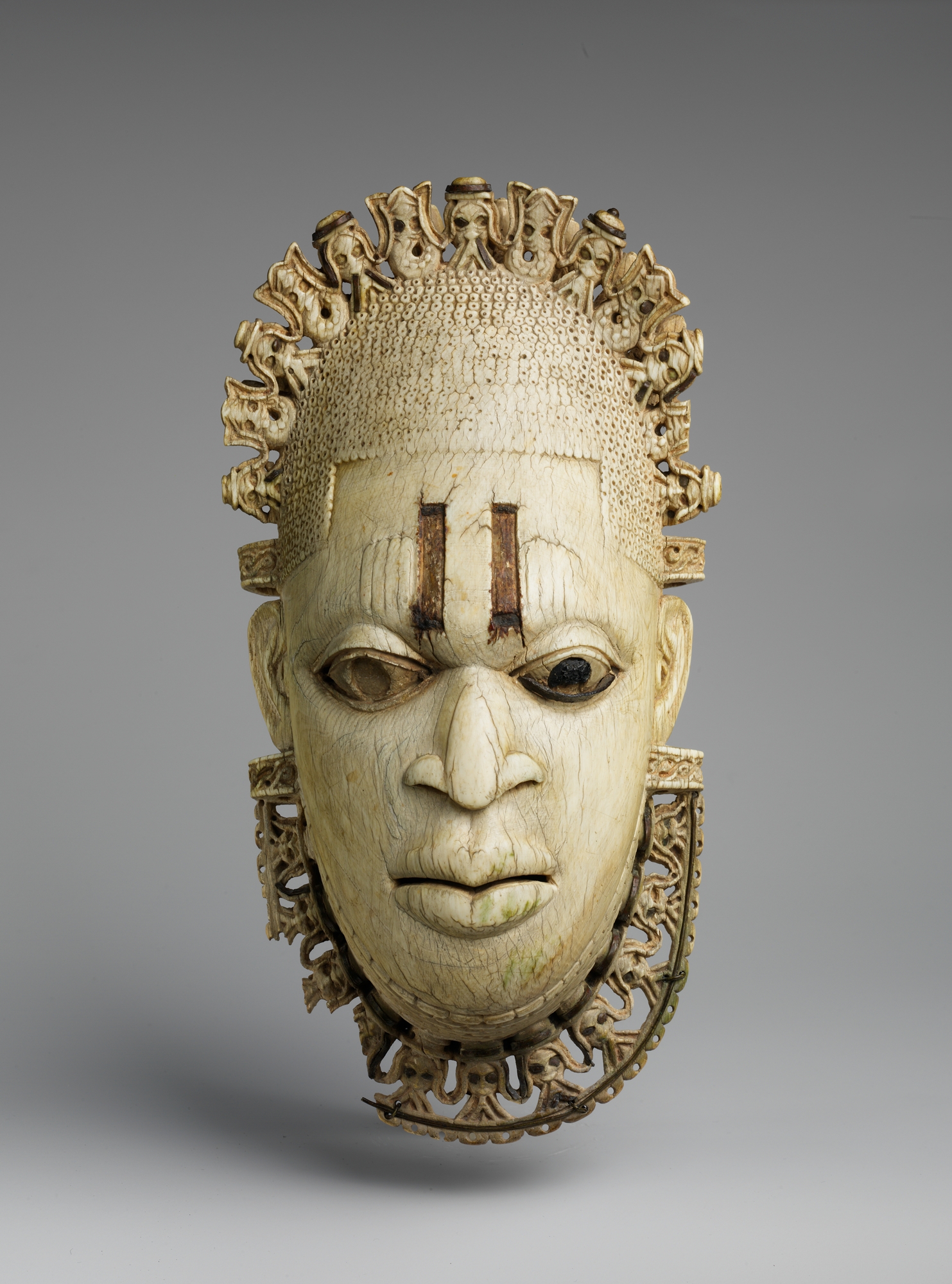
Begin in Benin, with the mask. The ivory pendant portrait of Idia — carved in the early 1500s, worn at the Oba's hip during royal festivals, its crown ringed with the tiny heads of Portuguese traders absorbed into Benin's vocabulary of power — is one of the most reproduced African artworks in existence. But the mask is the second most important thing about her. The first is what her son did: Oba Esigie, whose throne Idia's war-craft and medicine had secured, created for her an office that had never existed — iyoba, queen mother — with its own palace, its own court, and rank equal to the senior chiefs. Before Idia there was no iyoba; after her, Benin could not imagine governance without one. A woman so indispensable that the constitution was amended to describe her: that is the African queenship story in miniature. (The mask's afterlife carries its own lesson in sovereignty. Looted by British forces in 1897 along with thousands of Benin bronzes, it became the emblem of FESTAC '77, the great pan-African festival — for which Nigeria asked to borrow its own mask back, deposited two million pounds sterling as security, and was refused. Benin answered twice over: the hereditary Igbesamwan guild — which had carved the original — carved new ivory replicas for the ceremonies, and the Edo artist Erhabor Emokpae's monumental bronze of Idia's face became the festival's public emblem.)
Among the Asante of Ghana, the engineering goes deeper still. The asantehemaa holds her own stool — the Akan seat of sovereignty, counterpart to the Golden Stool itself — sits on the executive council, runs her own court under her own oath with her own jurisdiction, and is the sole authority empowered to nominate a candidate to be Asantehene, king; she can initiate his removal, too. No man reaches the Asante throne except through her judgment. This is not influence; it is checks and balances, drafted centuries before the phrase. And when the British came for the Golden Stool in 1900, it was a holder of the parallel office — Yaa Asantewaa, queen mother of Ejisu, then about sixty — whom the assembled chiefs chose as war-leader, the only woman ever so named, commanding five thousand in the last armed Asante resistance to empire. Dahomey ran the same logic to its extreme: the kpojito, the king's "reign-mate," was not his mother at all — she was selected from the previous king's wives, often a woman of common or enslaved origin, elevated to co-sovereignty on merit and priestly authority over the vodun. Queen-motherhood without the mother: the office in its purest form, all structure, no sentiment (Bay 1998).
The regnants are here too, and they run the full register of the office's possibilities. Amina of Zazzau, the Hausa sarauniya whose earthen siege-walls — ganuwar Amina, "Amina's walls" — still stand across northern Nigeria, though her dates are contested by a century and a half and honesty requires saying so. Nzinga of Ndongo and Matamba (spelled Njinga in the modern scholarship), who fought and out-negotiated the Portuguese empire for four decades; the famous scene in which, denied a chair at the 1622 Luanda negotiations, she seated herself on a kneeling attendant and met the governor's gaze level — a story resting on a single near-contemporary source, the Cavazzi manuscript in Modena, whose watercolors remain the only near-contemporary visual record of any named sub-Saharan queen regnant of the era. Ranavalona I of Madagascar, who reigned thirty-three years, kept the colonial powers out for all of them, and banned her own portrait — she had watched her husband die soon after sitting for a French painter and concluded, not unreasonably, that giving Europe her face was giving Europe a weapon. Every image of her is posthumous; missionary historiography called her "the Cruel," Malagasy nationalism calls her a patriot, and the scholarship now says both labels are projections onto a sovereign who understood image politics three generations early. And in South Africa's Limpopo province the Rain Queens of Balobedu still reign — a strictly mother-to-daughter line, sovereign by cosmology rather than armies, secluded from public view, in an unbroken matrilineal succession from around 1800 to Masalanabo Modjadji VII, formally recognized by the South African state in 2024: the only legally recognized female traditional monarch in the country, and arguably the purest living instance of the office this article describes.
Above them all, chronologically first and ideologically deepest, stands Makeda — the Queen of Sheba as Ethiopia tells her. The Kebra Nagast, Ethiopia's national epic, was compiled around 1314–1322 to legitimize a dynasty; the mechanism it chose is the point. Menelik I, founder of the Solomonic line that ruled Ethiopia until 1974, is Makeda's son. The entire male legitimacy of a dynasty that reigned into the 1970s was made to descend from one African queen's decision — her journey, her judgment, her body. Whatever the historians conclude about the woman herself, the idea of her held up a throne for six and a half centuries. That is what this article means by the office.
4. Europe: The Body Politic Meets the Body Natural
Europe's contribution to the office is a problem — a genuinely productive one. Medieval political theology held that a sovereign has two bodies: the mortal body natural and the undying body politic, the institution that never errs and never dies (Kantorowicz 1957). The doctrine was built for kings; every European queen had to make it fit, and the ways they made it fit produced the most self-conscious queenship in world history — and, not coincidentally, the most self-conscious queenship art.
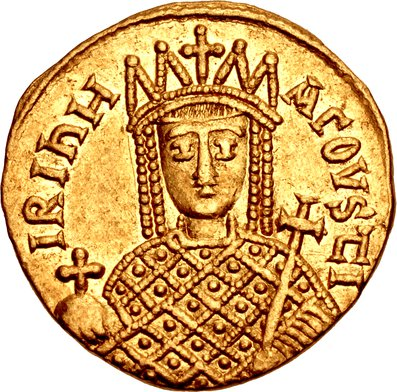
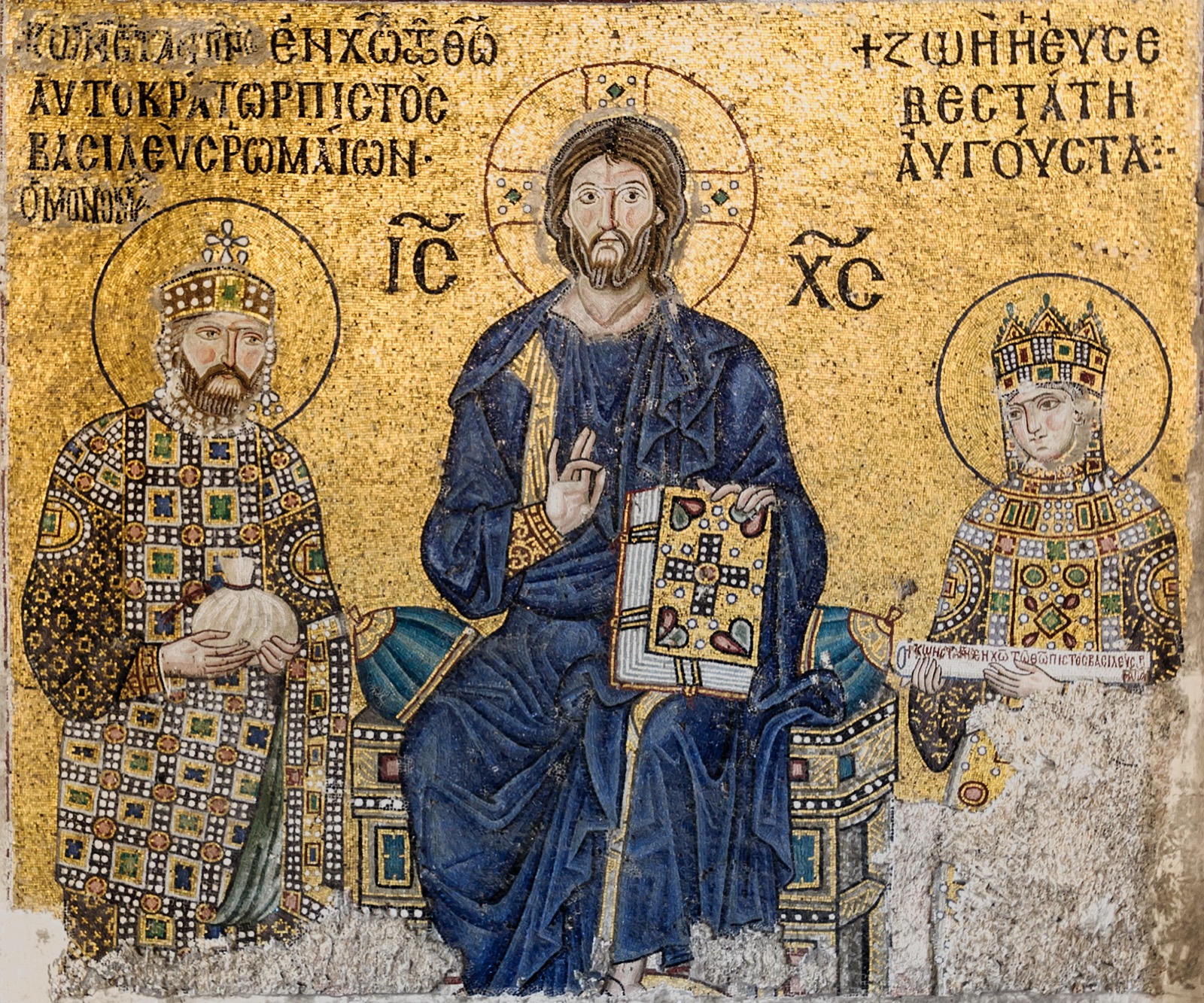
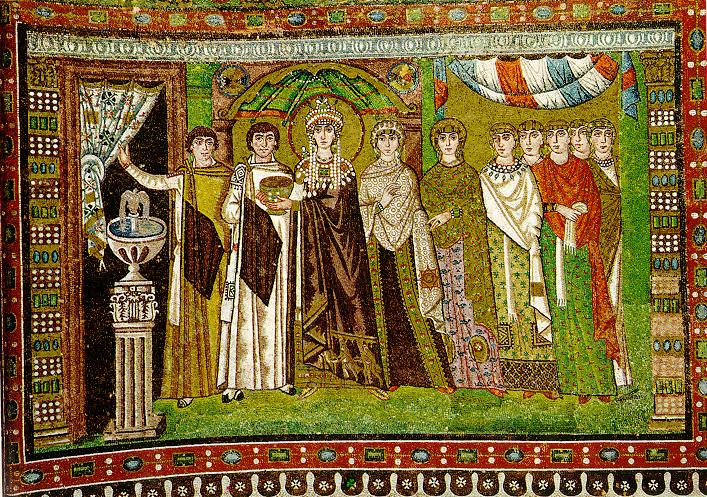
Theodora of Byzantium set the template. A bear-keeper's daughter and former actress, never formally crowned co-emperor, she nonetheless appears in the imperial legislation, and officials across the empire swore loyalty to Justinian and Theodora by name. When the Nika riots of 532 had the court packing for the ships, she delivered the most famous refusal in Byzantine history — the purple is the finest of shrouds — and the throne held. Her mosaic at San Vitale in Ravenna, gold-haloed, chalice in hand, facing Justinian's mosaic as an equal across the apse, is the founding image of European queenship: sacred, sovereign, and installed in the architecture itself. Two and a half centuries later, Empress Irene went where Theodora had not: she ruled the empire alone (797–802), signing as basileus — emperor, the masculine title unmodified — and her presence on the Roman throne handed Charlemagne's circle its legal pretext: the imperial seat, they reasoned, was vacant, since a woman sat in it, and so a pope crowned a Frankish king emperor on Christmas Day 800. The map of Europe forked on the question of whether a woman's reign counted. And Orthodox Christendom's answer arrived four centuries on, in the Caucasus: Tamar of Georgia (r. 1184–1213) reigned as mepe — king, again the male title unmodified — commanded armies, presided over Georgia's Golden Age, and was canonized a saint.
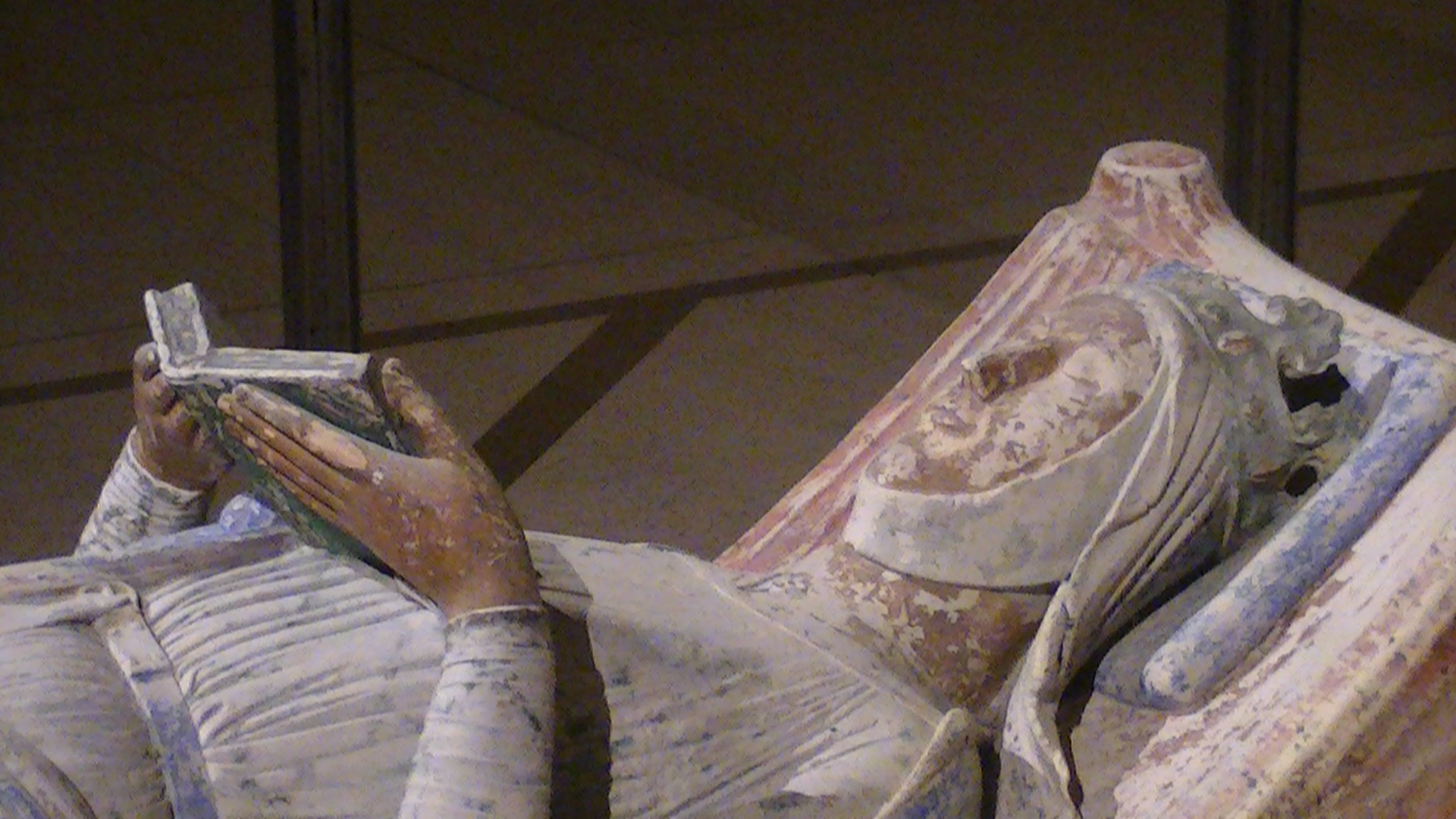
Six centuries later, Eleanor of Aquitaine demonstrated what the office looked like when a woman held territory in her own right. Duchess of a third of France at fifteen, queen of France, then — after an annulment that returned Aquitaine to her, not to the French crown — queen of England within eight weeks, mother of kings, prisoner of her husband for fifteen years, then effective governor of England while Richard crusaded, personally hauling his ransom across Europe past the age of seventy. Her tomb effigy at Fontevraud, which she commissioned herself, shows her neither praying nor mourning but reading — the earliest funerary monument in Europe to show a woman with a book. She chose the attribute of a mind.
Isabella of Castile — reina propietaria, proprietary queen, sovereign in her own right beside a husband who was consort in her kingdom — ran the most consequential decade in early modern history: Granada, Columbus, the Inquisition, the expulsion of the Jews; glory and atrocity issued under the same signature, and the article's global frame requires saying both. Her strangest legacy, though, is sixty-four squares wide. Chess arrived in Europe carrying the firzan, the vizier — a male counselor, the weakest piece on the board. Just before 1000 CE a Latin poem from a Swiss monastery first calls the piece regina; and in the 1490s, in Spain, in the exact years Isabella was the most powerful ruler in Europe, the queen abruptly acquired unlimited movement in every direction — the greatest power increase any chess piece has ever received, in a variant contemporaries called scacchi alla rabiosa, "mad-queen chess" (Yalom 2004). The board had caught up with the news.
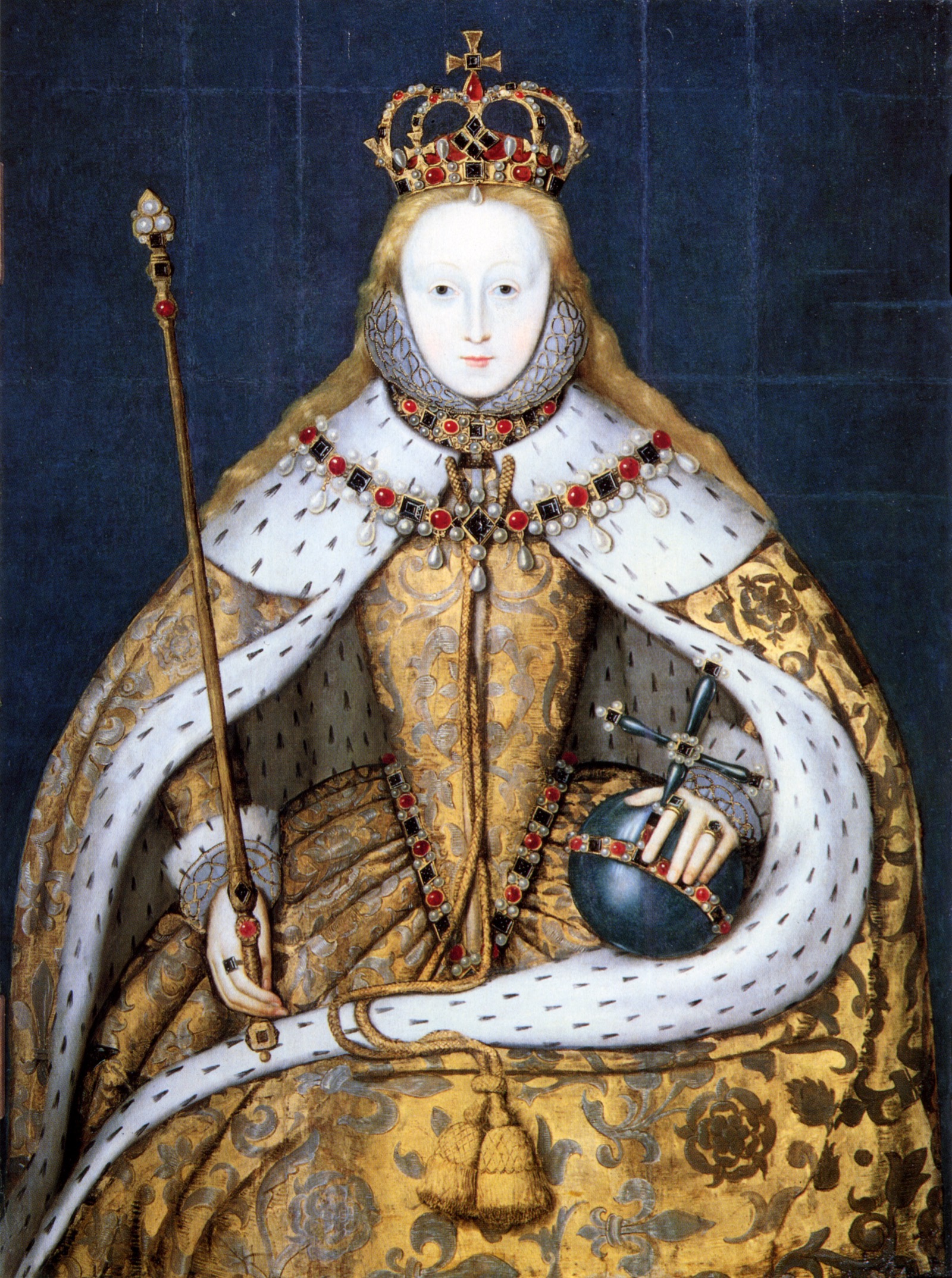
Elizabeth I made the image itself the instrument of rule. No monarch before her — arguably none since — managed a portrait program so deliberately: the "mask of youth" that froze her face outside time while the succession question aged everyone else; the Armada Portrait with her hand resting on the globe while providential storms wreck Spain in the window behind her; the Ditchley Portrait, in which she stands on England — not ruling the land but being it; the Rainbow Portrait, painted near seventy, her gown embroidered with eyes and ears, the surveillance state rendered in silk, gripping a rainbow above the motto Non sine sole iris — no rainbow without the sun, and she is the sun. Her lawyers, meanwhile, spent the reign welding Kantorowicz's two-bodies doctrine onto a female sovereign (Axton 1977). The portraits are the welds made visible.
The rest of the European register fills out every shape the office can take. Catherine de' Medici, the widow-regent in perpetual black, governing France through three sons and the wars of religion — the massacre of St. Bartholomew's Day on her ledger. Christina of Sweden, who abdicated at twenty-seven in a plain white dress, watching the regalia lifted off her body piece by piece — the queen who proved the office was performative by walking out of it, then spent thirty-five years in Rome as Europe's most argued-about mind. Catherine the Great, a minor German princess who seized the Russian throne by coup and legitimized it with three and a half decades of empire-building and Enlightenment stagecraft; her canonical portrait shows her crowned not with a crown but a laurel wreath, sovereign by reason, the body politic entirely self-constructed. Maria Theresa, who held Hungary and Bohemia for forty years, rebuilt the Habsburg state, bore sixteen children — and could never be Holy Roman Empress in her own right, because Salic Law barred women from the one title above her: the glass ceiling of 1740, visible from every direction.
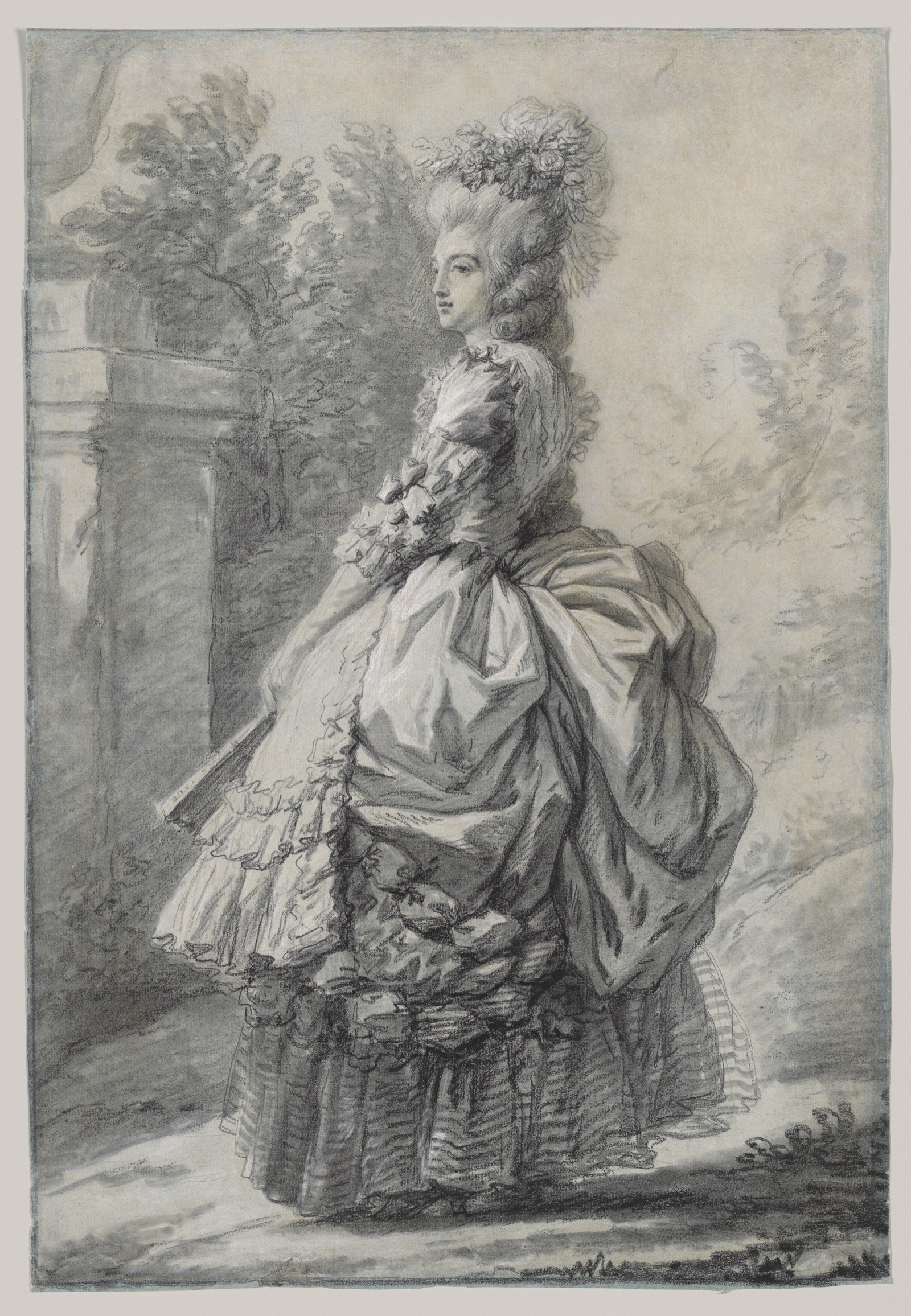
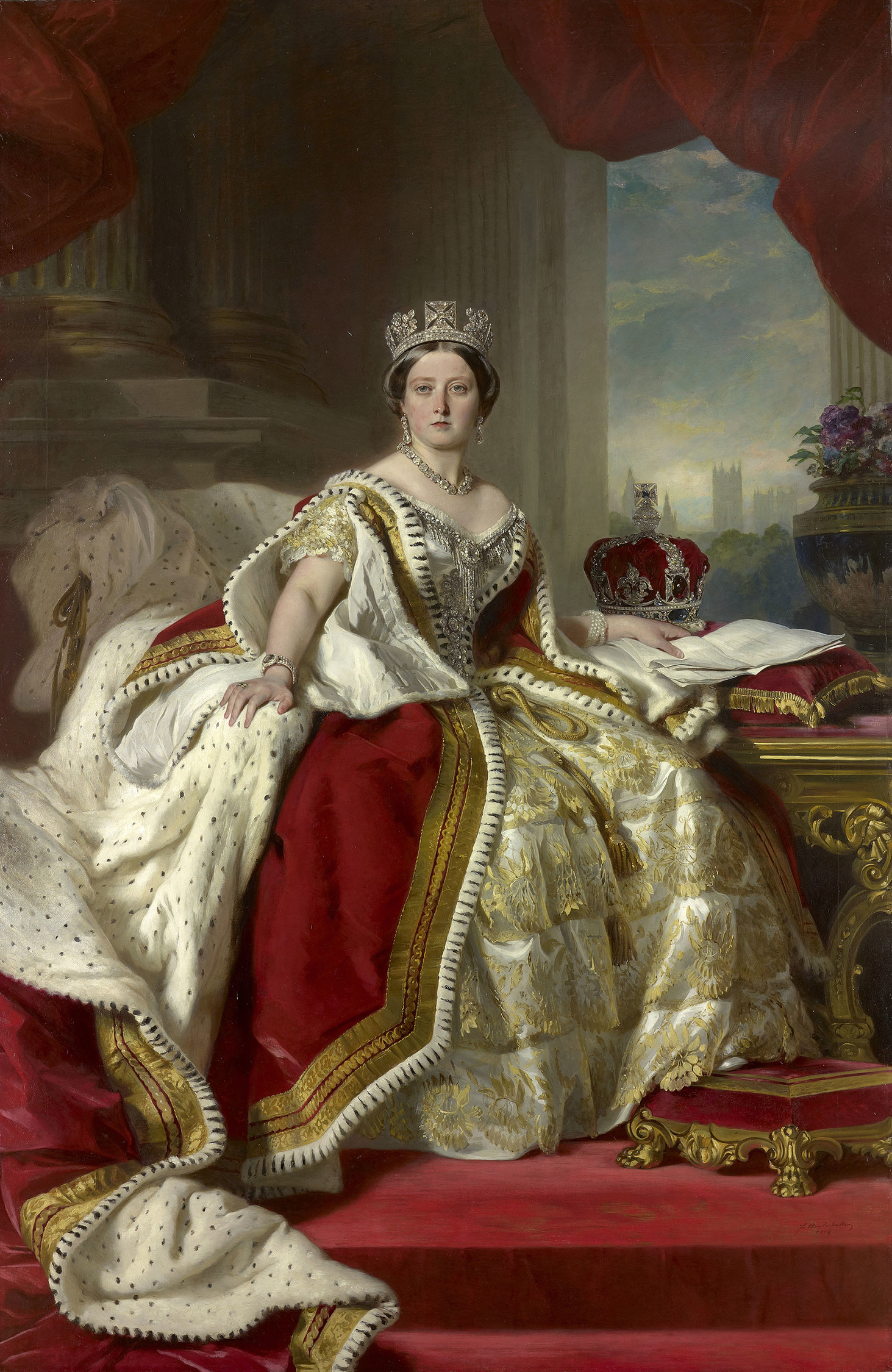
Then the office industrialized. Victoria was the first British monarch photographed, and she understood the machine immediately: the cartes-de-visite of the royal family sold in the millions, monarchy rebranded as domesticity, the queen in every parlor album. Her great-great-granddaughter completed the trajectory: Elizabeth II's profile appeared on the coinage of at least forty-five countries — a verified world record — and the Machin effigy on British stamps, printed in the billions across five decades, has a serious claim to being the most reproduced human image ever made. From Theodora installed in a church apse to a queen in every wallet on five continents: the European arc of the office is, among other things, the history of reproduction technology.
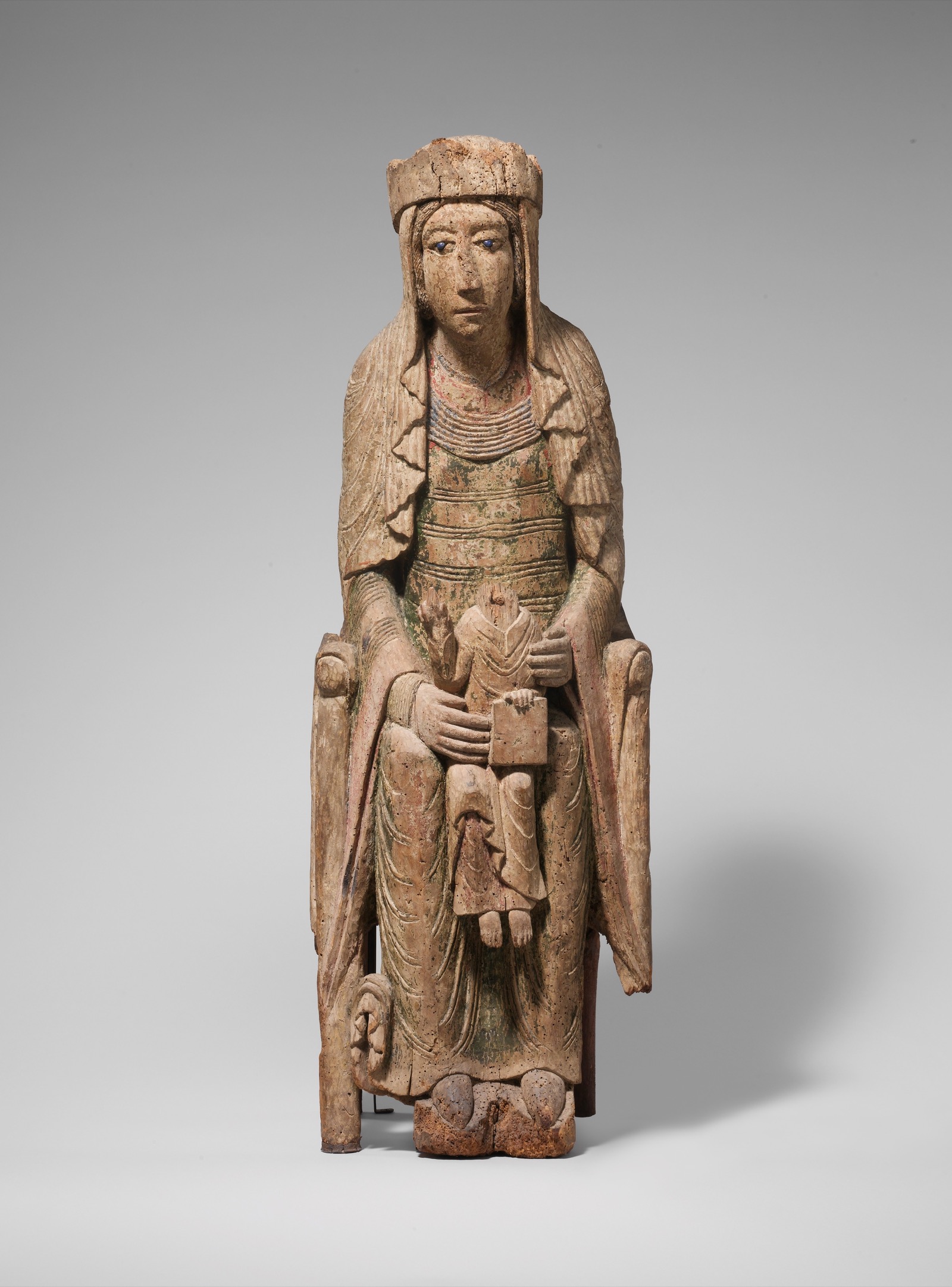
And running beneath all of it, out-painted only by no one: the Queen of Heaven. The Coronation of the Virgin — Christ or the Trinity setting a crown on Mary's head — emerged in the twelfth century and became one of the commonest subjects in Italian panel painting, from Fra Angelico's twin masterworks (Uffizi and Louvre) to Velázquez. Its theological root is older than Christianity: the Hebrew gebirah, the queen-mother of the house of David, for whom Solomon rises from his throne and sets a seat at his right hand. The most-painted queenship image in Western art is a coronation no earthly dynasty performed — the office in its ideal form, the crown descending from above. Readers who have followed the Crowning imagery of this publication's own harbor will recognize the composition.
5. The Americas and the Pacific: Parallel Thrones and the Last Queen
The Americas held sovereign women Europe never learned to see, and in several cases actively deleted. In the Maya lowlands, Lady K'abel of El Perú-Waka bore the title Ix Kaloomte' — Supreme Warlord — which outranked her husband the king; her stela stands in Cleveland, her tomb, opened in 2012 beneath the city's main pyramid, held an alabaster jar carved as a snail shell. Lady Six Sky arrived at the broken kingdom of Naranjo in 682 CE, rebuilt it by war, and had herself carved on Stela 24 in the pose reserved for warrior-kings — trampling a captive — while wearing the Maize God's net skirt: masculine-martial and feminine-cosmic coding fused on one monument. Lady Xoc of Yaxchilán commissioned the lintels that show her drawing a thorn-studded cord through her own tongue — the blood sacrifice that fed the cosmos and legitimized the dynasty, performed by the queen, recorded on a building she commissioned. In the Andes, the Inca Coya headed an entire parallel hierarchy — the Sapa Inca descended from the Sun and ruled the men; the Coya descended from the Moon and ruled the women, with her own officials from Cuzco to the provinces: "gender parallelism," in Irene Silverblatt's formulation — dual sovereignty as cosmology, without European analogue. And in Tenochtitlan, Atotoztli II, daughter of Moctezuma I and mother of three emperors, is recorded in surviving annals as having ruled the Triple Alliance herself — perhaps for decades — before being deliberately written out of the official dynastic history because she was a woman: the erasure is admitted in the sources. Hatshepsut's chisels, again, an ocean away. And north of the Rio Grande, the Haudenosaunee confederacy vested its clan mothers with the constitutional power to nominate — and depose — the sachems who governed: the asantehemaa's office in a confederal key, on a second continent, invented independently.
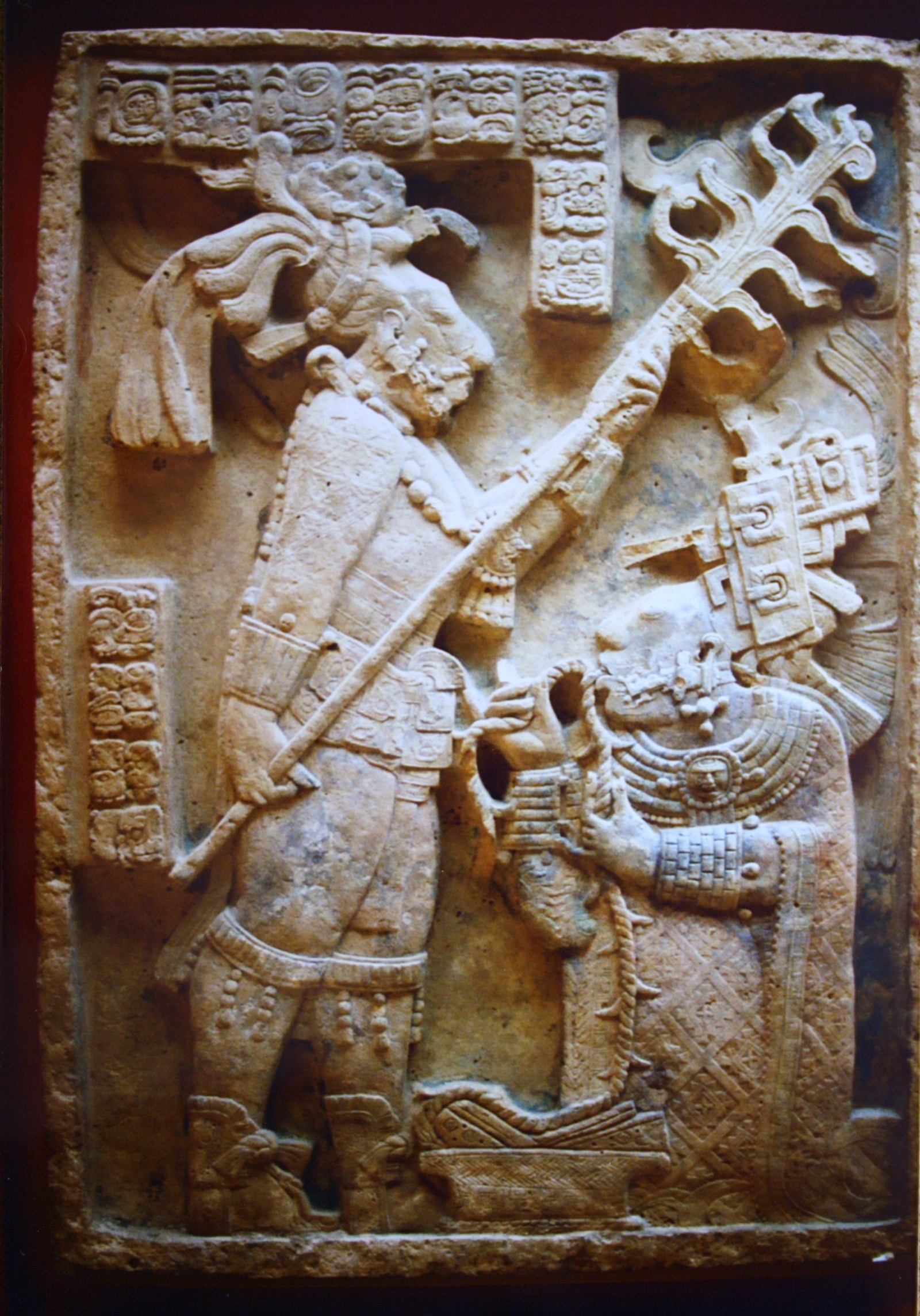
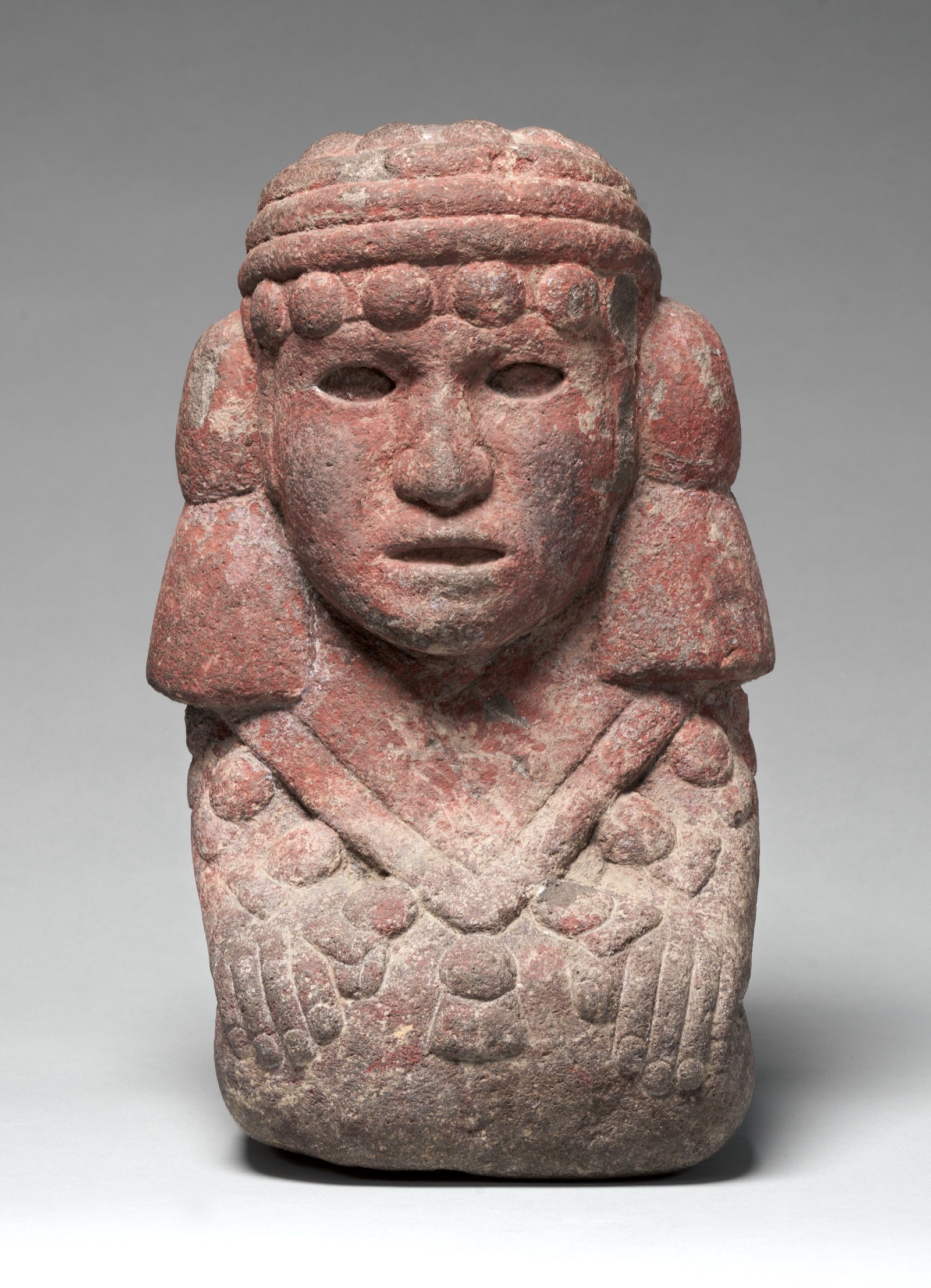
The colonial encounter then targeted precisely these women. Anacaona of Xaragua — sovereign cacica of the last independent Taíno polity, celebrated composer of areítos, "golden flower" — was lured to a feast in 1503 at which the Spanish governor burned the assembled Taíno leadership alive; she was taken to Santo Domingo and hanged, at about twenty-nine, "to show her honor," in Las Casas's acid record. She is a national hero of Haiti; no contemporary image of her exists, which by this point in the article the reader will recognize as its own kind of portrait.
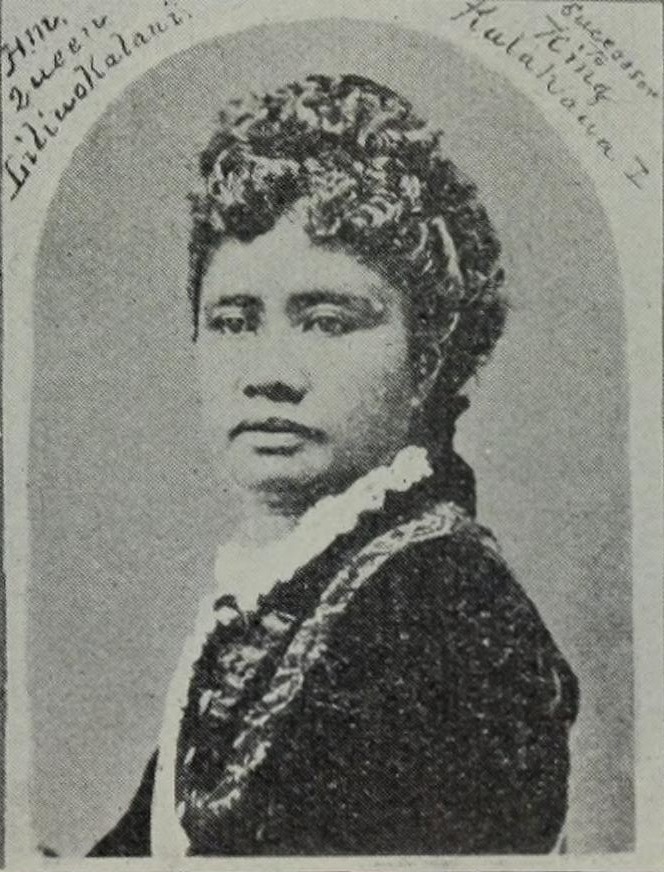
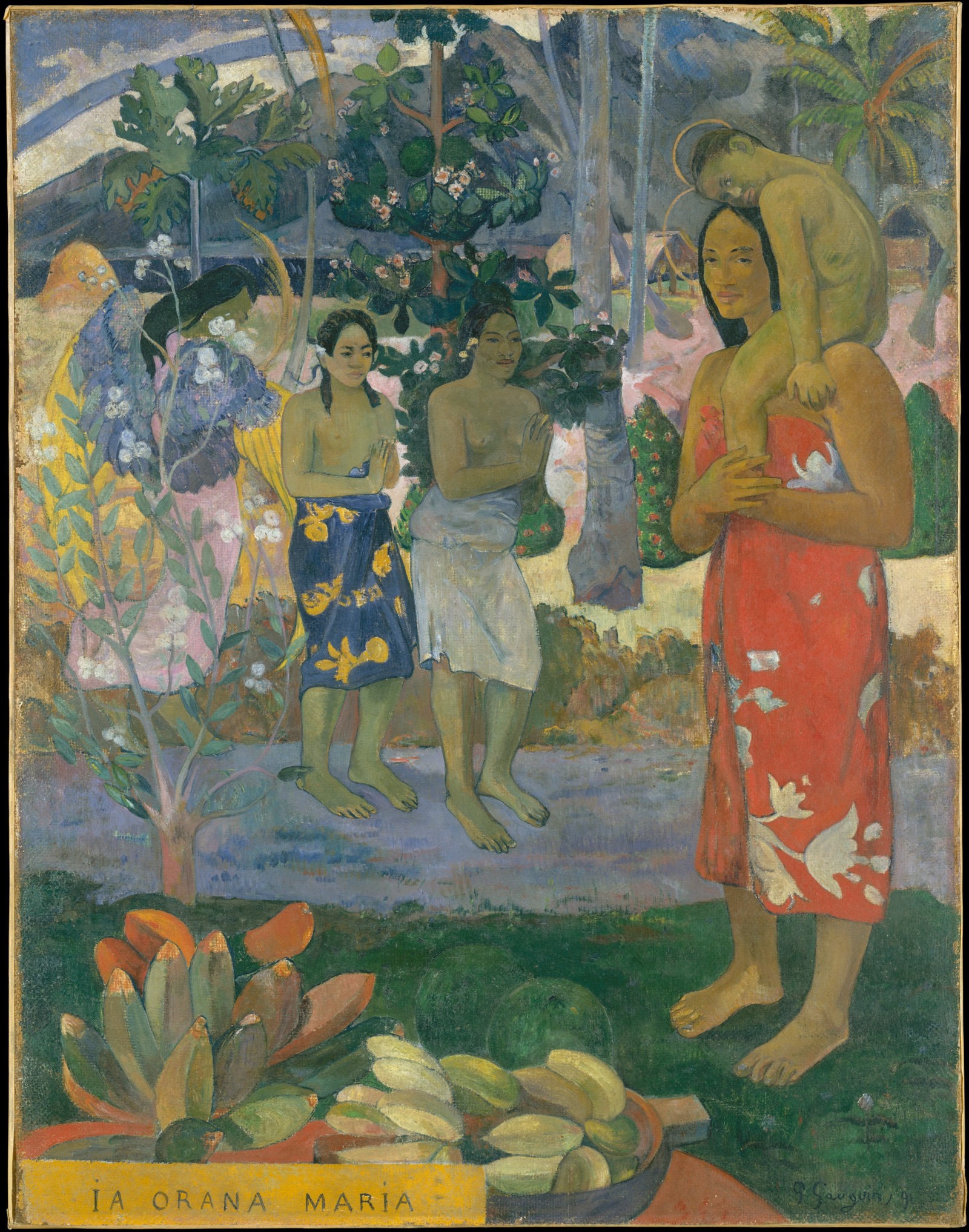
The Pacific closes the survey, because the Pacific is where the office met the modern age with the most on the line. Liliʻuokalani — the only queen regnant Hawaiʻi ever had, and its last sovereign — composed "Aloha ʻOe" before she reigned and translated the 2,102-line Kumulipo creation chant while imprisoned in her own palace, preserving her civilization's cosmology in the language of the people who had taken her throne. When American businessmen backed by U.S. Marines overthrew her in 1893, she surrendered under protest not to them but explicitly to the United States, anticipating legal restoration — a constitutional precision that still anchors Hawaiian sovereignty claims. President Cleveland found the overthrow illegal; Congress kept the islands anyway. Her portrait hangs in the Hawaiʻi State Archives; her song is sung at every departure from her harbor. Around her stand her Pacific peers — Pōmare IV, who reigned in Tahiti for half a century as France closed its hand; Sālote of Tonga, whose open carriage in the London rain of 1953 charmed an empire that had somehow failed to notice hers; Te Atairangikaahu, the first Māori Queen, four decades on a throne born of resistance. Sovereignty over the sea's largest nation of islands, held — again and again — by women.
V. The Twelve Traditions: How Art Has Depicted the Queen
Asked how many kinds of queen-image exist — from cave wall to anime frame — art history returns a surprisingly stable answer: twelve traditions, each with its own rules of pose, gaze, scale, and regalia; each invented for a reason; most of them still alive. Learn the twelve and you can place almost any queen-image ever made.
1. The contested prehistoric origin. The two hundred–odd Paleolithic female figurines — Willendorf, Hohle Fels, Laussel — are the oldest sustained tradition of female imagery on earth, and honesty requires saying what they are not: they are not queens. Faceless, nameless, palm-sized, they lack everything royal portraiture requires — a named subject, a political address, a legitimizing program. Scholars have read them as goddesses, fertility tokens, teaching objects, even women's self-portraits. They belong to this taxonomy only as its wordless prologue: proof that the female form was the first thing humans depicted obsessively, tens of millennia before anyone had a throne to put it on.
2. Ancient hieratic monument. The first system that unambiguously depicts women as power: scale hierarchy (the more powerful, the larger), frontality, regalia as legible language — uraeus, vulture crown, double crown, each a specific constitutional claim. Hatshepsut's terraced temple at Deir el-Bahri is the genre's masterwork; the colossal group statue of Amenhotep III and Tiye in Cairo breaks the code's deepest rule by carving the consort at equal height with the pharaoh — a seven-meter statement that everyone literate in the convention could read from across the courtyard. The Maya built a parallel hieratic system an ocean away: Lady Xoc's Yaxchilán lintels, carved by a sculptor proud enough to sign them, are its peak.
3. The coin — the queen in your pocket. For two thousand years the most widely distributed portrait medium in existence. Profile view (the nose is the signature), regalia condensed to a diadem, name wrapped around the rim — and politics encoded in the layout: on Cleopatra's alliance coinage with Antony, her face takes the obverse, the senior side. Her coins are the only likenesses of her that exist; her mint was her portrait gallery, and the law that forced foreign traders to exchange currency at Egypt's border forced her face into every purse in the eastern Mediterranean. The tradition runs unbroken to Elizabeth II — at least forty-five countries' coinage, a verified world record, with the honest innovation that her effigy was updated five times to age with her, something no king's coinage ever did.
4. Byzantine and medieval icon. Gold ground removes the queen from earthly space; the frontal gaze claims sacred presence; the halo does the rest. Theodora at San Vitale — purple-robed, chalice in hand, the Three Magi embroidered on her hem so that her gift equals theirs — faces Justinian across the apse as the most-studied paired sovereign portraits in the world. The same conventions built the era's dominant female image altogether: the enthroned Virgin, whose crown, throne, and gaze fed back into how earthly queens demanded to be painted.
5. The illuminated manuscript — the private queen. A portrait inside a book small enough to hold: the queen inscribed literally within the word. Jean Pucelle's grisaille Hours of Jeanne d'Evreux (with its seven hundred marginal creatures running riot around the praying queen) and Bourdichon's Grandes Heures of Anne of Brittany — a botanical encyclopedia disguised as a prayer book, made for a woman who was twice queen of France and the last sovereign of independent Brittany — are the twin peaks. This is the tradition where queenship reads rather than reigns, and where her self, not her office, is the subject.
6. Renaissance and Baroque state portraiture. The queen as managed image-program. Elizabeth I's government drafted the first state attempt at image rights (a 1563 proclamation controlling her likeness); her portraits are semiotic machines — the globe under the hand, the feet on the map, the gown embroidered with eyes and ears. And the tradition's maximal statement belongs to Marie de' Medici, who — exiled, restored, and needing her regency legitimized retroactively — commissioned Rubens to produce twenty-four canvases, 292 square meters, the largest painted propaganda commission in European history, in which the gods of Olympus personally advise her. The lesson she left every image-maker since: propaganda executed beautifully enough stops being read as propaganda and enters the canon.
7. The non-Western court traditions — not a single category but a continent of them, flattened here only by the page. Benin's guilds carved Idia's ivory face with iron-inlaid eyes that stare back, Portuguese traders miniaturized into her crown as trophies of commerce. Mughal painting, which almost never depicted royal women at all, shows Nur Jahan standing in the jharokha — the emperor's appearance balcony — holding Jahangir's portrait in her hands: the dynastic legitimacy pose, performed by a woman, with the emperor reduced to the artifact she carries. Qing ancestor portraits encode empresses in a dress-code so precise the painting functions as a legal document; Heian Japan's Genji scrolls render court women as pure pattern — identity carried entirely by the twelve layered sleeve-edges of the jūnihitoe. Four traditions, four different answers to the same question the West was answering with oil paint.
8. Print, caricature, satire. The printing press ends court control of the queen's face. Mary Queen of Scots is placarded through Edinburgh as a mermaid — Renaissance code for a whore — within weeks of her Bothwell marriage; Marie Antoinette's body is pamphleteered into the case against monarchy itself. This is the taxonomy's shadow tradition: the anti-portrait, and it is precisely as old, as conventional, and as politically effective as the official kind. Elizabeth I understood that; her Virgin-Queen image program was built in explicit answer to the sexualized destruction of her cousin.
9. Photography. The camera makes the queen traceable: age can no longer be painted away, and the private body enters the public archive. Victoria — first photographed British monarch, 1844 — grasped the machine's political power faster than her ministers: the family cartes-de-visite she authorized from 1860 sold in the millions and rebranded monarchy as domesticity. The tradition's closing diptych belongs to Elizabeth II: the black-and-white portrait she personally selected years in advance to announce her own death, and the candid taken two days before it — a working queen receiving her fifteenth prime minister. The controlled image and the documentary one, still negotiating after 180 years.
10. Cinema. The biopic queen inherits everything — hieratic stillness, chronicle, spectacle — and adds the star. Garbo's Queen Christina (1933) ends on the most analyzed face-shot in film history, the abdicated queen at the prow of her ship, instructed by her director to think of nothing; Dietrich's Scarlet Empress (1934) buries Catherine the Great inside a meditation on Dietrich. The genre's engine, from the pre-Code masterpieces forward, is almost always the same: a woman whose authority, androgyny, or appetite refuses the era's femininity — which is to say, cinema discovered that the office itself is the drama.
11. Animation and comics — the structural queen. Here the queen stops being a person and becomes a slot in narrative grammar. Disney's first feature fixed the code in 1937: the Evil Queen — regnant, beautiful, black-and-purple, designed to a brief Disney summarized as "a mixture of Lady Macbeth and the Big Bad Wolf" — against the warm, passive, rescuable princess. Run that binary for half a century and the lesson children absorbed worldwide is exact: a woman who exercises royal power is the villain; the good female royal is the one who waits. The counter-tradition took decades to assemble — Marston's Hippolyta bringing the warrior-queen into comics in 1941, Takeuchi's three-generation queenship in Sailor Moon, and at last Elsa of Arendelle in 2013: the first protagonist in the Disney canon to rule as queen regnant and remain the hero. It took the studio seventy-six years to forgive the office.
12. The digital queen. Two streams. In games, the queen tends toward quest-giver or final boss — with the occasional masterpiece of structure like Elden Ring's Marika, the absent sovereign whose single act broke the world, present only as statue and consequence. And in the culture at large, the constructed media persona: Lemonade-era Beyoncé assembling a sovereign self from Oshun's yellow dress and the Black feminist canon is a state portrait in the exact Renaissance sense — a powerful individual deploying every available image-technology to legitimize a crown no state can grant. The virtual persona pushes the logic to its limit: like Elizabeth controlling her portraitists, the digital queen controls every pixel; there is no candid photograph because there is no camera. What began at Deir el-Bahri as image-repetition at monumental scale ends, for now, as image-repetition at network scale. The program is the same. Only the stone changed.
Threaded through all twelve runs one constant worth naming. Art criticism's famous formula — men act, women appear — collapses in front of a queen regnant. Elizabeth's unsmiling stare, Theodora's frontal gold, the iron pupils of Idia's mask: these are images that look back, built to make the viewer the one who is seen. And beneath that constant, a darker one: the recurring art form of unmaking queens — Hatshepsut's chiseled cartouches, Mary's mermaid placards, Atotoztli's deletion, Nur Jahan's melted rupees. The history of depicting queens cannot be written apart from the history of defacing them, and both histories say the same thing: the images were doing real political work, or no one would have bothered to destroy them.
VI. The Imagined Queen: Legend, Fairy Tale, and the Long Argument
Fiction has been arguing about queens for twenty-five centuries, and the argument has a shape. Strip the costumes and nearly every imagined queen is an answer to one question: is female sovereignty legitimate, monstrous, or redemptive? The answers cycle; the question never retires.
It begins with an inflation. The historical Sammu-ramat, a ninth-century BCE Assyrian queen documented by exactly four inscriptions and a stele at Ashur, was inflated by Greek writers — Ctesias, then Diodorus — into Semiramis: builder of Babylon, conqueror of India, seductress, demigoddess. The founding move of queen-fiction, right there: antiquity could not represent a politically significant woman at scale one. She had to become supernatural to be plausible. Dido of Carthage received the same treatment with a nobler arc — the historical Phoenician founder-queen reworked by Virgil into tragedy; when J. M. W. Turner painted Dido Building Carthage in 1815 he called it his masterpiece and willed it to the National Gallery to hang beside Claude forever: a fictional queen's founding morning as the measuring-stick of an artist's whole career.
The medieval cycle ran the argument in reverse — demotion instead of inflation. Morgan le Fay enters Geoffrey of Monmouth around 1150 as the healer-queen of Avalon, wise, benevolent, sovereign of the isle where kings go to be made whole; by Malory in 1485 she is the arch-villainess of the entire Arthurian world. Three centuries of retelling systematically converted a sovereignty figure into a menace — and yet even Malory couldn't finish the job: at the end of Le Morte d'Arthur it is Morgan, unexplained, who leads the queens on the barge that carries Arthur home to Avalon. The old office outlasted its own demonization.
The fairy tale then codified the argument for children, and the codification has a documented smoking gun. In the Brothers Grimm's 1812 first edition, Snow White's murderous queen is her own mother. In 1819 the Grimms — who, as Jack Zipes put it, held motherhood sacred — quietly split her in two: a good mother, safely dead, and an evil stepmother who inherited the crown and the mirror. That single edit is the founding gesture of the genre's gender ideology, and Disney industrialized it in 1937: the regnant queen as villain, the passive princess as heroine, a binary broadcast to more human beings than any political theory ever written. Which is why Frozen (2013) reads, against this history, as a genuine constitutional event: Elsa is the first queen regnant in the Disney canon who is the protagonist — Andersen's cold, isolating Snow Queen rebuilt from antagonist into sovereign heroine, coronation scene and all. The argument moved.
Fiction's most precise word on the office, though, may belong to Tolkien. Offered the One Ring, Galadriel names exactly what it would make her — "In place of the Dark Lord you will set up a Queen. And I shall not be dark, but beautiful and terrible as the Morning and the Night!" — and refuses. It is the road-not-taken of every tyrant-queen arc fantasy has run since (Daenerys is the case study in taking the road), and it reframes sovereignty itself: the greatest exercise of the office, in the deepest fiction we have about power, is declining its final form.
Meanwhile the word "queen" itself kept walking out of the palace and into the culture, and every departure stuck: the chess queen (a Persian vizier who changed sex crossing into Europe and became, in Isabella's decade, the strongest piece on the board); the queen bee (shown female in print by the Spanish apiarist Luis Méndez de Torres in 1586, then christened for the English world by Charles Butler's Feminine Monarchie in 1609 — together retiring two millennia of writers who had assumed the hive's ruler must be a king); the playing-card queen; the beauty queen (Spa, Belgium, 1888); the drag queen (attested 1941, out of a performance lineage decades older) — each one the office abstracted into pure precedence: the sovereign instance of a category. English now uses "queen" for the best, the biggest, the defining example of nearly anything. No other title in the language does that work. Nobody says "the king of the prom."
VII. Coda: The Office Continues
This survey began with a scribe in Kish who had no word for the woman on the throne, and it ends in an age that generates new queens in software. The through-line, across forty-four centuries, is that the office of queen has always been made — argued into existence by a coronation rite, a carved torso wearing two genders of clothing at once, a title invented for one indispensable mother, a blank stele, a mask of youth, a woodblock print, a melted coin, an animated frame. Every era builds the queen it needs with the tools it has, and every era's tools leave the argument visible.
The reader will permit a closing disclosure, in the spirit of the twelve traditions. This article is published from San Diego by the stewards of a 1938 wooden yacht called JADA — a vessel her city calls the Queen of San Diego — whose crew is presently engaged in a small, openly artificial exercise in the twelfth tradition: commissioning original drawn and digital art toward a crowned persona for the harbor she sails, in the golden-age style of the year of her launch. The contemporary illustrations accompanying this final section are from that commission — our own workshop's contribution to a lineage that runs back through Fra Angelico's descending crown and Idia's iron-eyed ivory to a tavern-keeper the scribes could only call king. The office is very old. It is not finished.
— Published by JADA — The Queen of San Diego. All historical artworks reproduced here are in the public domain or released under open license by their holding institutions; attributions accompany each image. Contemporary illustrations are original commissioned works © the publisher.
Select Bibliography
Every work below was verified against publisher, library-catalog, or review records during the research for this article. Primary sources are marked •.
The field of queenship studies
- Earenfight, Theresa. Queenship in Medieval Europe. Queenship and Power series, vol. 1. New York: Palgrave Macmillan, 2013.
- Earenfight, Theresa. The King's Other Body: María of Castile and the Crown of Aragon. Philadelphia: University of Pennsylvania Press, 2009.
- Parsons, John Carmi, ed. Medieval Queenship. New York: St. Martin's Press, 1993.
- Fradenburg, Louise Olga, ed. Women and Sovereignty. Edinburgh: Edinburgh University Press, 1992.
- Woodacre, Elena, ed. A Companion to Global Queenship. Leeds: Arc Humanities Press, 2018.
- Walthall, Anne, ed. Servants of the Dynasty: Palace Women in World History. Berkeley: University of California Press, 2008.
- Nelson, Sarah Milledge, ed. Ancient Queens: Archaeological Explorations. Walnut Creek, CA: AltaMira Press, 2003.
Political theology and the queen's two bodies
- Kantorowicz, Ernst H. The King's Two Bodies: A Study in Mediaeval Political Theology. Princeton: Princeton University Press, 1957.
- Axton, Marie. The Queen's Two Bodies: Drama and the Elizabethan Succession. London: Royal Historical Society, 1977.
Egypt, the ancient Near East, and Kush
- Cooney, Kara. When Women Ruled the World: Six Queens of Egypt. Washington, D.C.: National Geographic, 2018.
- Cooney, Kara. The Woman Who Would Be King: Hatshepsut's Rise to Power in Ancient Egypt. New York: Crown, 2014.
- Robins, Gay. Women in Ancient Egypt. Cambridge, MA: Harvard University Press, 1993.
- Tyldesley, Joyce. Cleopatra: Last Queen of Egypt. London: Profile Books, 2008.
- Welsby, Derek A. The Kingdom of Kush: The Napatan and Meroitic Empires. London: British Museum Press, 1996.
- • Budge, E. A. Wallis, trans. The Queen of Sheba and Her Only Son Menyelek (Kebra Nagast). London: Medici Society / Oxford University Press, 1922.
Asia
- Rothschild, N. Harry. Wu Zhao: China's Only Female Emperor. New York: Pearson Longman, 2008.
- Rothschild, N. Harry. Emperor Wu Zhao and Her Pantheon of Devis, Divinities, and Dynastic Mothers. New York: Columbia University Press, 2015.
- Piggott, Joan R. The Emergence of Japanese Kingship. Stanford: Stanford University Press, 1997.
- Ko, Dorothy, JaHyun Kim Haboush, and Joan R. Piggott, eds. Women and Confucian Cultures in Premodern China, Korea, and Japan. Berkeley: University of California Press, 2003.
- Lee, Ki-baik. A New History of Korea. Trans. Edward W. Wagner. Cambridge, MA: Harvard University Press, 1984.
- Findly, Ellison Banks. Nur Jahan: Empress of Mughal India. New York: Oxford University Press, 1993.
- Peirce, Leslie P. The Imperial Harem: Women and Sovereignty in the Ottoman Empire. New York: Oxford University Press, 1993.
- Weatherford, Jack. The Secret History of the Mongol Queens. New York: Crown, 2010.
- • Chen Shou. Sanguo Zhi (Records of the Three Kingdoms), c. 297 CE — the Wei Zhi account of Himiko.
- • Juvaini, 'Ata-Malik. Tarikh-i Jahan Gusha (History of the World Conqueror), c. 1260. Trans. J. A. Boyle, Manchester University Press, 1958.
- • Rashid al-Din Hamadani. Jami' al-Tawarikh (Compendium of Chronicles), c. 1307.
Africa
- Heywood, Linda M. Njinga of Angola: Africa's Warrior Queen. Cambridge, MA: Harvard University Press, 2017.
- Kaplan, Flora Edouwaye S., ed. Queens, Queen Mothers, Priestesses, and Power: Case Studies in African Gender. Annals of the New York Academy of Sciences, vol. 810. New York: New York Academy of Sciences, 1997.
- Bay, Edna G. Wives of the Leopard: Gender, Politics, and Culture in the Kingdom of Dahomey. Charlottesville: University Press of Virginia, 1998.
- Blier, Suzanne Preston. Art and Risk in Ancient Yoruba: Ife History, Power, and Identity, c. 1300. Cambridge: Cambridge University Press, 2015.
- • Cavazzi da Montecuccolo, Giovanni Antonio. Missione Evangelica al Regno del Congo (the Araldi Manuscript), c. 1665–1668. Biblioteca Estense Universitaria, Modena.
The Americas and the Pacific
- Silverblatt, Irene. Moon, Sun, and Witches: Gender Ideologies and Class in Inca and Colonial Peru. Princeton: Princeton University Press, 1987.
- • Liliʻuokalani. Hawaii's Story by Hawaii's Queen. Boston: Lee and Shepard, 1898.
Europe and its image programs
- Weissberger, Barbara F., ed. Queen Isabel I of Castile: Power, Patronage, Persona. Woodbridge: Tamesis Books, 2008.
- Strong, Roy. Gloriana: The Portraits of Queen Elizabeth I. London: Thames & Hudson, 1987.
- Evans, James Allan. The Empress Theodora: Partner of Justinian. Austin: University of Texas Press, 2002.
- Fraser, Antonia. The Warrior Queens. London: Weidenfeld and Nicolson, 1988.
- Chang, Jung. Empress Dowager Cixi: The Concubine Who Launched Modern China. New York: Knopf, 2013.
The word, the game, and the image
- Fortson, Benjamin W., IV. Indo-European Language and Culture: An Introduction. 2nd ed. Oxford: Wiley-Blackwell, 2009.
- Yalom, Marilyn. Birth of the Chess Queen: A History. New York: HarperCollins, 2004.
- Murray, H. J. R. A History of Chess. Oxford: Clarendon Press, 1913.
- • Butler, Charles. The Feminine Monarchie. Oxford: Joseph Barnes, 1609.
- Berger, John. Ways of Seeing. London: BBC / Penguin, 1972.
- Hollander, Anne. Seeing Through Clothes. Berkeley: University of California Press, 1978.
- Zipes, Jack. The Brothers Grimm: From Enchanted Forests to the Modern World. 2nd ed. New York: Palgrave Macmillan, 2002.
Corrections are welcome and will be acknowledged: scholarship is a fleet, not a flagship.
Appendix: The Register of Queens in Art
The Register of Queens in Art
Chronological register of queens depicted in art. Compiled from nine source files: `etymology.md`, `ancient-near-east-egypt-kush.md`, `asia.md`, `africa.md`, `europe.md`, `americas-pacific.md`, `art-taxonomy.md`, `scholarship.md`, `popular-fictional.md`. Ordered by floruit (BCE earliest-first; CE ascending). Figures appearing in multiple files merged to richest entry. Purely fictional characters excluded. Unknown cell values marked —.
| # | Name | Dates | Region / Polity | Office | Canonical depiction (work, medium, date) | Where it lives now |
|---|---|---|---|---|---|---|
| 1 | Merneith | c. 2950 BCE | First Dynasty Egypt | regent (possible regnant) | Granite stelae from Tomb Y, stone, c. 2950 BCE | Egyptian Museum, Cairo |
| 2 | Puabi of Ur | c. 2550 BCE | First Dynasty of Ur, Sumer | regnant (nin; uncertain) | Reconstructed headdress, gold and lapis lazuli, c. 2550 BCE | Penn Museum, Philadelphia (B17711A) |
| 3 | Kubaba† | fl. c. 2400 BCE | Third Dynasty of Kish, Mesopotamia | regnant (lugal) | Hittite relief sculptures at Carchemish, limestone, 8th–7th c BCE | Museum of Anatolian Civilizations, Ankara; British Museum, London |
| 4 | Sobekneferu | r. c. 1806–1802 BCE | Twelfth Dynasty Egypt | regnant | Quartzite torso, c. 1806–1802 BCE | Louvre, Paris (E 27135) |
| 5 | Hatshepsut | r. c. 1479–1458 BCE | Eighteenth Dynasty Egypt | regnant | Large Kneeling Statue, granite, c. 1479–1458 BCE | Metropolitan Museum of Art, New York (30.3.1) |
| 6 | Tiye | c. 1398–1338 BCE | Eighteenth Dynasty Egypt | consort; queen-mother | Wooden portrait head, yew wood with gold, lapis lazuli, silver, faience, c. 1355 BCE | Neues Museum, Berlin (ÄM 21834) |
| 7 | Nefertiti | c. 1370–1330 BCE | Eighteenth Dynasty Egypt | consort; possible co-regent | Painted limestone bust, c. 1345 BCE | Neues Museum, Berlin (ÄM 21300) |
| 8 | Fu Hao | fl. c. 1250 BCE | Shang Dynasty China | consort; military commander; high priestess | Fu Hao Owl Zun (pair, bronze), c. 1250 BCE | Henan Museum, Zhengzhou; National Museum of China, Beijing |
| 9 | Makeda / Queen of Sheba† | 10th c BCE (traditional) | Ethiopia / South Arabia | mythic regnant | Illuminated Kebra Nagast manuscripts, vellum, 15th–18th c | British Library, London; BnF, Paris; Aksum / Lalibela monasteries |
| 10 | Dido / Elissa† | c. 9th c BCE (legendary) | Phoenicia / Carthage | regnant (legendary founder) | J.M.W. Turner, Dido Building Carthage, oil on canvas, 1815 | National Gallery, London (NG498) |
| 11 | Sammu-ramat / Semiramis† | r. 811–806 BCE (historical regent) | Neo-Assyrian Empire; Mesopotamia | regent (historical); mythic regnant (legendary) | Guercino, Semiramis Receiving News of the Revolt of Babylon, oil on canvas, c. 1624 | Galleria Spada, Rome |
| 12 | Shanakdakhete | r. c. 170–150 BCE | Meroitic Kush (Sudan) | regnant (kandake) | Relief from pyramid chapel of Shanakdakhete, red sandstone, c. 170–150 BCE | British Museum, London (EA 1650) |
| 13 | Cleopatra VII | 69–30 BCE | Ptolemaic Egypt | regnant | Silver tetradrachm, 37–33 BCE | Art Institute of Chicago (2008.173) |
| 14 | Amanirenas | r. c. 40–10 BCE | Meroitic Kush (Sudan) | regnant (kandake / qore) | Meroë Head (bronze head of Augustus), 27–25 BCE | British Museum, London (GR 1911.9-1.1) |
| 15 | Amanishakheto | r. c. 10 BCE–1 CE | Meroitic Kush (Sudan) | regnant (kandake) | Gold jewelry hoard from Pyramid N6, early 1st c BCE/CE | Egyptian Museum, Berlin |
| 16 | Amanitore | r. c. 1–20 CE | Meroitic Kush (Sudan) | regnant (kandake; co-reigning with Natakamani) | Lion Temple reliefs, Naqa, stone, c. 1–20 CE | In situ, Naqa, Sudan |
| 17 | Virgin Mary (Regina Caeli) | 1st c CE (traditional) | Western Christianity | mythic-divine | Fra Angelico, Coronation of the Virgin, tempera on panel, c. 1432 | Uffizi Gallery, Florence |
| 18 | Trưng Trắc & Trưng Nhị | fl. 39–43 CE | Giao Chỉ (northern Vietnam) | regnant (joint; nữ vương) | Đông Hồ folk woodblock prints, điệp paper, 19th c onward | Đông Hồ village, Bắc Ninh; Hai Bà Trưng Temple, Hanoi |
| 19 | Himiko† | fl. c. 189–248 CE | Yamatai, ancient Japan | mythic-divine (sacral ruler) | Described in Wei Zhi (Chen Shou, c. 297 CE); no contemporary image | — |
| 20 | Theodora of Constantinople | c. 500–548 CE | Byzantine Empire | consort; co-ruler | Mosaic panel, c. 547 CE | Basilica of San Vitale, Ravenna, Italy (in situ; UNESCO) |
| 21 | Empress Suiko | 554–628 CE | Yamato Japan | regnant (Tennō; 33rd sovereign) | Tamamushi Shrine, lacquer, gilt-bronze, tamamushi-wing inlay, early 7th c CE | Hōryūji Temple Treasury, Nara (National Treasure, Japan) |
| 22 | Queen Seondeok of Silla | c. 595–647 CE | Kingdom of Silla, Korea | regnant (wang) | Cheomseongdae Observatory, granite, 633–647 CE | In situ, Gyeongju, Korea (National Treasure No. 31) |
| 23 | Empress Kogyoku / Saimei | 642–645; 655–661 CE | Yamato Japan | regnant (Tennō; two reigns) | — | — |
| 24 | Lady K'abel (Ix Kaloomte') | r. 672–692 CE | El Perú-Waka (Wak kingdom), Guatemala | regnant (Ix Kaloomte'; superior rank over co-ruler) | Stela 34, El Perú-Waka, limestone, 692 CE | Cleveland Museum of Art, Cleveland, Ohio |
| 25 | Lady Six Sky (Wak Chanil Ajaw) | arrived Naranjo 682 CE; died 741 CE | Naranjo (Sa'al), Guatemala | regnant / regent | Stela 24, Naranjo, limestone, 699 CE | Museo Nacional de Arqueología y Etnología, Guatemala City |
| 26 | Empress Jitō | 686–697 CE | Yamato Japan | regnant (Tennō) | — | — |
| 27 | Wu Zetian | 624–705 CE; r. 690–705 CE | Tang / Zhou Dynasty China | regnant (sole female huangdi) | Vairocana Buddha, Fengxian Temple, Longmen Grottoes, stone, 675 CE | In situ, Luoyang, Henan (UNESCO) |
| 28 | Lady Xoc (Lady K'abal Xook) | active c. 700–730 CE | Yaxchilan, Chiapas, Mexico | consort | Yaxchilan Lintel 24, limestone relief, c. 723–726 CE | British Museum, London (Room 27) |
| 29 | Empress Genmei | 707–715 CE | Yamato Japan | regnant (Tennō) | — | — |
| 30 | Empress Genshō | 715–724 CE | Yamato Japan | regnant (Tennō) | — | — |
| 31 | Empress Kōken / Shōtoku | 749–758; 764–770 CE | Yamato Japan | regnant (Tennō; two reigns) | — | — |
| 32 | Eleanor of Aquitaine | c. 1122–1204 CE | France / England / Aquitaine | consort (France; England); duchess regnant (Aquitaine) | Painted limestone tomb effigy, c. 1200–1204 | Royal Abbey of Fontevraud, Maine-et-Loire, France (in situ) |
| 33 | Moremi Ajasoro† | fl. 12th c (legendary) | Ile-Ife, Nigeria | consort / legendary civic heroine | Bronze statue (commissioned 2017), 42 ft | Ile-Ife Royal Palace, Ile-Ife, Nigeria |
| 34 | Börte | c. 1161–c. 1230 CE | Mongol Empire | khatun (first wife of Genghis Khan) | — | — |
| 35 | Sorghaghtani Beki | c. 1190–1252 CE | Mongol Empire | khatun (consort; widow; power-broker) | Rashid al-Din, Jami' al-Tawarikh, folio 164v, Persian manuscript painting, c. 1307 (copy c. 1430) | BnF, Paris |
| 36 | Razia Sultana | c. 1205–1240 CE | Delhi Sultanate (Mamluk / Slave Dynasty) | regnant (sultan) | Silver tanka coin, Kufic script, c. 1236–1240, Delhi mint | Lahore Museum (D-166); Sarmaya Arts Foundation, Mumbai |
| 37 | Lý Chiêu Hoàng | 1218–1278 CE | Đại Việt (Vietnam) | regnant (sole empress regnant in Vietnamese history) | — | — |
| 38 | Töregene Khatun | died 1246 CE; regent 1241–1246 | Mongol Empire | khatun; regent (post-Ögedei) | — | — |
| 39 | Chabi | c. 1227–1281 CE | Yuan Dynasty | khatun (wife of Kublai Khan) | — | — |
| 40 | Jeanne d'Évreux | c. 1310–1371 CE | France | consort (wife of Charles IV) | Hours of Jeanne d'Évreux, Jean Pucelle, grisaille illuminated manuscript, c. 1324–1328 | The Cloisters, Metropolitan Museum of Art, New York |
| 41 | Coya (institution) | c. 1438–1533 CE | Inca Empire, Peru | consort (co-sovereign; coya institution) | Mama Ocllo, First Coya, anonymous colonial portrait, oil on canvas, c. 18th c | San Antonio Museum of Art, Texas |
| 42 | Mandukhai Khatun | c. 1449–1510 CE | Northern Yuan Mongolia | khatun; regent (military commander) | — | — |
| 43 | Isabella I of Castile | 1451–1504 CE | Kingdom of Castile, Spain | regnant | The Virgin of the Catholic Monarchs, attr. Master of the Catholic Monarchs, oil on panel, c. 1491–1493 | Museo Nacional del Prado, Madrid |
| 44 | Atotoztli II | c. 1469–1479 CE (traditional) | Tenochtitlan, Triple Alliance | regnant or regent (contested) | Colonial genealogical manuscripts, Anales de Tula | — (manuscript in scholarly collections) |
| 45 | Anacaona | c. 1474–c. 1503 CE | Xaragua, Hispaniola | regnant (cacica) | — | — |
| 46 | Anne of Brittany | 1477–1514 CE | Brittany / France | consort (France); sovereign duchess (Brittany) | Grandes Heures of Anne of Brittany, Jean Bourdichon, illuminated manuscript, 1503–1508 | BnF, Paris (Ms lat. 9474) |
| 47 | Idia of Benin | fl. c. 1500–1550 CE | Benin Kingdom, Nigeria | queen-mother (iyoba; constitutional office) | Ivory Pendant Mask of Iyoba Idia, ivory and iron inlay, early 16th c | British Museum, London (Af1910.0513.1); MMA, New York (1978.412.323) |
| 48 | Catherine de' Medici | 1519–1589 CE | France | consort → regent (gouvernante de France); queen-mother | Portrait attr. François Clouet workshop, oil on panel, c. 1561 | Uffizi Gallery, Florence |
| 49 | Amina of Zazzau | c. 1533–c. 1610 CE | Zazzau (Hausa Bakwai), Nigeria | regnant (sarauniya; historicity debated) | Queen Amina Statue, bronze, mid-20th c | National Arts Theatre, Lagos, Nigeria |
| 50 | Elizabeth I of England | 1533–1603 CE | England | regnant | Ditchley Portrait, Marcus Gheeraerts the Younger, oil on canvas, c. 1592 | National Portrait Gallery, London (NPG 2561) |
| 51 | Marie de' Medici | 1575–1642 CE | France | consort → regent (gouvernante); queen-mother | Rubens Marie de' Medici Cycle, 24 canvases, oil on canvas, 1621–1625 | Louvre Museum, Paris (Salle 801, Galerie Médicis) |
| 52 | Nur Jahan | 1577–1645 CE | Mughal Empire | consort (empress consort; de facto power) | Nur Jahan Holding a Portrait of Emperor Jahangir, attr. Bishandas, gum tempera and gold on paper, c. 1627 | Cleveland Museum of Art (2013.325) |
| 53 | Nzinga of Ndongo and Matamba | c. 1583–1663 CE | Ambundu kingdoms, Angola | regnant | Watercolor series, Araldi Manuscript (Giovanni Antonio Cavazzi), c. 1665–1668 | Biblioteca Estense Universitaria (Gallerie Estensi), Modena, Italy |
| 54 | Empress Meishō | r. 1629–1643 CE | Japan (Edo period) | regnant (Tennō) | — | — |
| 55 | Christina of Sweden | 1626–1689 CE | Sweden / Rome | regnant (abdicated 1654) | Christina of Sweden on Horseback, Sébastien Bourdon, oil on canvas, 1653 | Museo Nacional del Prado, Madrid |
| 56 | Maria Theresa | 1717–1780 CE | Habsburg Empire (Hungary, Bohemia) | regnant (Hungary, Bohemia); consort (Holy Roman Empire) | Portrait, Martin van Meytens, oil on canvas, c. 1740s–1760s | Kunsthistorisches Museum, Vienna |
| 57 | Kpojito Adonon of Dahomey | fl. c. 1718–1740 CE | Kingdom of Dahomey (Fon), Bénin | kpojito (first holder; constitutional co-regent queen-mother) | Palace bas-reliefs, Abomey | Abomey, Republic of Bénin (UNESCO) |
| 58 | Catherine the Great | 1729–1796 CE | Russia | regnant (empress; seized power by coup) | Portrait of Catherine II the Legislatress, Dmitry Levitsky, oil on canvas, 1783 | State Russian Museum, St. Petersburg |
| 59 | Kpojito Hwanjile of Dahomey | fl. c. 1740–1774 CE | Kingdom of Dahomey (Fon), Bénin | kpojito (constitutional co-regent; co-ruled with King Tegbesu) | Palace bas-reliefs, Abomey | Abomey, Republic of Bénin (UNESCO) |
| 60 | Empress Go-Sakuramachi | r. 1762–1771 CE | Japan | regnant (Tennō; last empress regnant to date) | — | — |
| 61 | Ranavalona I | c. 1778/1788–1861 CE | Merina Kingdom, Madagascar | regnant (33-year reign) | Posthumous oil portrait, Philippe-Auguste Ramanankirahina, c. 1880s | — (reproduced in Encyclopaedia Africana) |
| 62 | Maselekwane Modjadji I | c. 1800–1854 CE | Balobedu, Limpopo, South Africa | regnant (Rain Queen; sacred matrilineal) | — | — |
| 63 | Pōmare IV | 1813–1877 CE | Kingdom of Tahiti | regnant (50-year reign) | Portrait of Queen Pōmare IV, Sébastien Charles Giraud, oil on canvas, 1851 | Musée de Tahiti et des Îles (Te Fare Manaha), Papeete |
| 64 | Queen Victoria | 1819–1901 CE | United Kingdom / British Empire | regnant; empress of India (1876–1901) | Portrait, Franz Xaver Winterhalter, oil on canvas, 1843 | Royal Collection Trust, Windsor |
| 65 | Rani Lakshmibai of Jhansi | c. 1828–1858 CE | Jhansi (Maratha / colonial India) | consort; resistance commander (de facto regent) | Equestrian lithograph, Jaipur court artist, c. 1890 | — (nationalist publications; equestrian statues across India) |
| 66 | Empress Dowager Cixi | 1835–1908 CE | Qing Dynasty China | dowager; de facto ruler (chuilian tingzheng) | Portrait, Katharine Augusta Carl, oil on canvas, 1904 | Arthur M. Sackler Gallery, Smithsonian Institution, Washington DC (S2011.16.1) |
| 67 | Liliʻuokalani | 1838–1917 CE | Kingdom of Hawaiʻi | regnant (last sovereign of Hawaiian Kingdom) | Portrait, William F. Cogswell, oil on canvas | Hawaiʻi State Archives / ʻIolani Palace, Honolulu |
| 68 | Yaa Asantewaa | c. 1840–1921 CE | Asante Empire (Ejisu), Ghana | queen-mother (ohemaa, Ejisu stool) | Yaa Asantewaa Inspecting the Dispositions at Ejisu, Kimathi Donkor, oil on canvas, 2014 | British Museum, London (Africa gallery) |
| 69 | Empress Myeongseong | 1851–1895 CE | Joseon Korea / Korean Empire | consort (wangbi; posthumously hwanghu) | — | — |
| 70 | Sālote Tupou III | 1900–1965 CE | Kingdom of Tonga | regnant (47-year reign) | Formal portrait photograph | Alexander Turnbull Library, National Library of New Zealand, Wellington |
| 71 | Elizabeth II | 1926–2022 CE | United Kingdom / Commonwealth | regnant (70-year reign) | Coronation photographs, Cecil Beaton, June 1953 | — (public record; Royal Collection) |
| 72 | Te Atairangikaahu | 1931–2006 CE | Waikato, Aotearoa New Zealand | Māori Queen (Kīngitanga; ariki tapairu) | — | — |
| 73 | Queen Sirikit | b. 1932 CE | Kingdom of Thailand | consort (1950–2016); regent (1956); queen-mother (2016–2025) | Official royal portraits, 20th c | — |
| 74 | Farah Pahlavi | b. 1938 CE | Imperial Iran | shahbanu (consort empress; Shahbanu 1967–1979) | — | — |
† Legendary or mythologized: attributed historical existence debated or embellished by tradition; rows so marked depict the figure as received by historical, religious, or oral tradition rather than confirmed biography.
Count by office type (primary label, 74 rows): regnant 43 · consort 14 · khatun 5 · regent 4 · mythic-divine 3 · queen-mother 2 · kpojito 2 · dowager 1
Note: several figures held multiple offices across career phases (e.g. Tiye: consort + queen-mother; Töregene: khatun + regent; Queen Sirikit: consort + regent + queen-mother); counted above under primary / most historically significant office.