A Guild for the Harbor: the passenger-charter trade association landscape — audited.
A fully-cited survey of every trade association serving marine tour and passenger-charter operators — from San Diego to Sacramento to Washington to the IMO — what they get right, what they under-serve, and the specific case for an association that does not yet exist.
A scholarship piece for maritime operators and industry observers — verified against primary sources, July 2026.
Prefatory Note
JADA is a 65-foot classic yawl built in Stockton in 1938 and now operating private charters on San Diego Bay. We are, in the trade's terminology, an inspected small passenger vessel under 46 CFR Subchapter T — certificated by the U.S. Coast Guard, carrying up to 28 passengers, and subject to a regulatory lattice that most people outside the industry do not know exists. We have spent time studying whether trade associations exist to help operators like us, and found the answer to be simultaneously yes, partially, and not quite well enough.
This article documents what we found. It is not a ranking of associations and it is not a complaint. Each organization named here is treated fairly: we state what they demonstrably do well and where they do not serve our segment of the industry. The constructive half of this piece — the affirmative case for an association that does not yet exist — is where we believe the scholarship does its most useful work.
A note on scope: we searched at four levels — San Diego specifically, California regionally, the United States nationally, and the world. We also name the relevant regulatory agencies at each level, because one of the most common errors operators make is confusing a regulator or port authority (an entity with enforcement power over you) with a trade association (an entity that represents you). They are not the same thing. The confusion costs operators real money and real advocacy leverage.
I. The Regulatory Backdrop: Why Any of This Matters
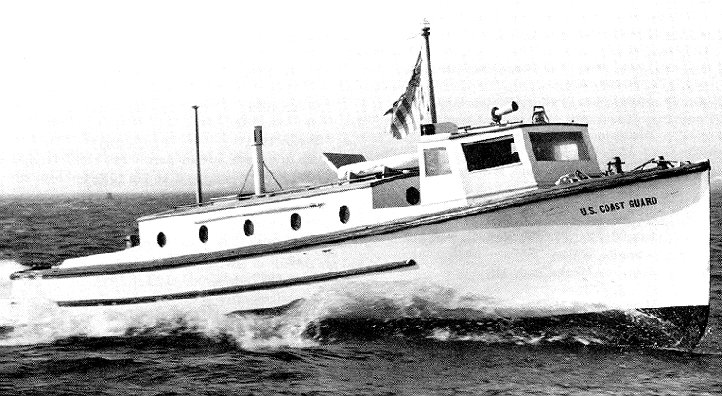
The U.S. Coast Guard divides commercial passenger vessels into two fundamental categories, and the line between them determines nearly every compliance obligation an operator faces.
The Six-Pack Rule: Uninspected Passenger Vessels (UPVs)
A vessel carrying six or fewer paying passengers is classified as an Uninspected Passenger Vessel (UPV) under 46 CFR Part 24. It is not subject to Coast Guard inspection and does not require a Certificate of Inspection. The operator must hold an Operator of Uninspected Passenger Vessels (OUPV) license — commonly called a Six-Pack license — and comply with basic safety and anti-pollution standards. The regulatory burden is comparatively light. The six-passenger ceiling is absolute: one passenger over the limit, under an uninspected arrangement, is a federal violation.
Subchapter T: Inspected Small Passenger Vessels
A vessel carrying seven or more paying passengers — or any vessel presenting itself commercially as a passenger vessel regardless of actual passenger count — must be inspected by the Coast Guard and issued a Certificate of Inspection (COI) under 46 CFR Subchapter T (Small Passenger Vessels) or Subchapter K (Small Passenger Vessels Carrying More Than 150 Passengers). The COI specifies the vessel's approved route, maximum passenger capacity, minimum crew manning, required safety equipment, and the period during which the COI is valid. The operator must hold a Master's license at the appropriate tonnage for the vessel. Violations of COI conditions carry civil penalties up to $60,000 per occurrence under 46 U.S.C. § 70036; willful violations up to $117,608 per day.
This is the category JADA occupies. Operating as a Subchapter T vessel means the Coast Guard can board us at will, that our safety equipment list is inspected and signed, that our passenger count ceiling appears on a federal document pinned inside the vessel, and that the captain's license and vessel documentation must be current at all times. The administrative burden of maintaining Subchapter T compliance — survey costs, documentation renewals, drug testing programs, crew training, insurance minimums — is real and recurring. It is the problem that a functioning trade association should help solve.
Port of San Diego Charter Vessel Regulations
For operators on San Diego Bay, a second regulatory layer sits above the federal baseline. The Port of San Diego's Port Code Section 4.37 requires charter vessel operators using Port tenant marinas or landings to hold a Coast Guard-licensed captain aboard at all times, maintain a current COI, carry commercial marine liability insurance covering bodily injury and property damage, operate a drug testing program compliant with federal and Coast Guard standards, maintain passenger and crew manifests available to Harbor Police, and display a valid Charter Vessel Operation Decal. The Port began enforcing this regime in 2021. No trade association membership is required; the Port is a landlord and regulator, not a trade group, and should never be confused for one.
II. What Exists: A Survey at Four Scopes
We surveyed associations at the San Diego, California, national, and international levels. What follows is what we found, with sources cited. We have not fabricated any organization or attributed positions we cannot verify.
National (United States)
Passenger Vessel Association (PVA)
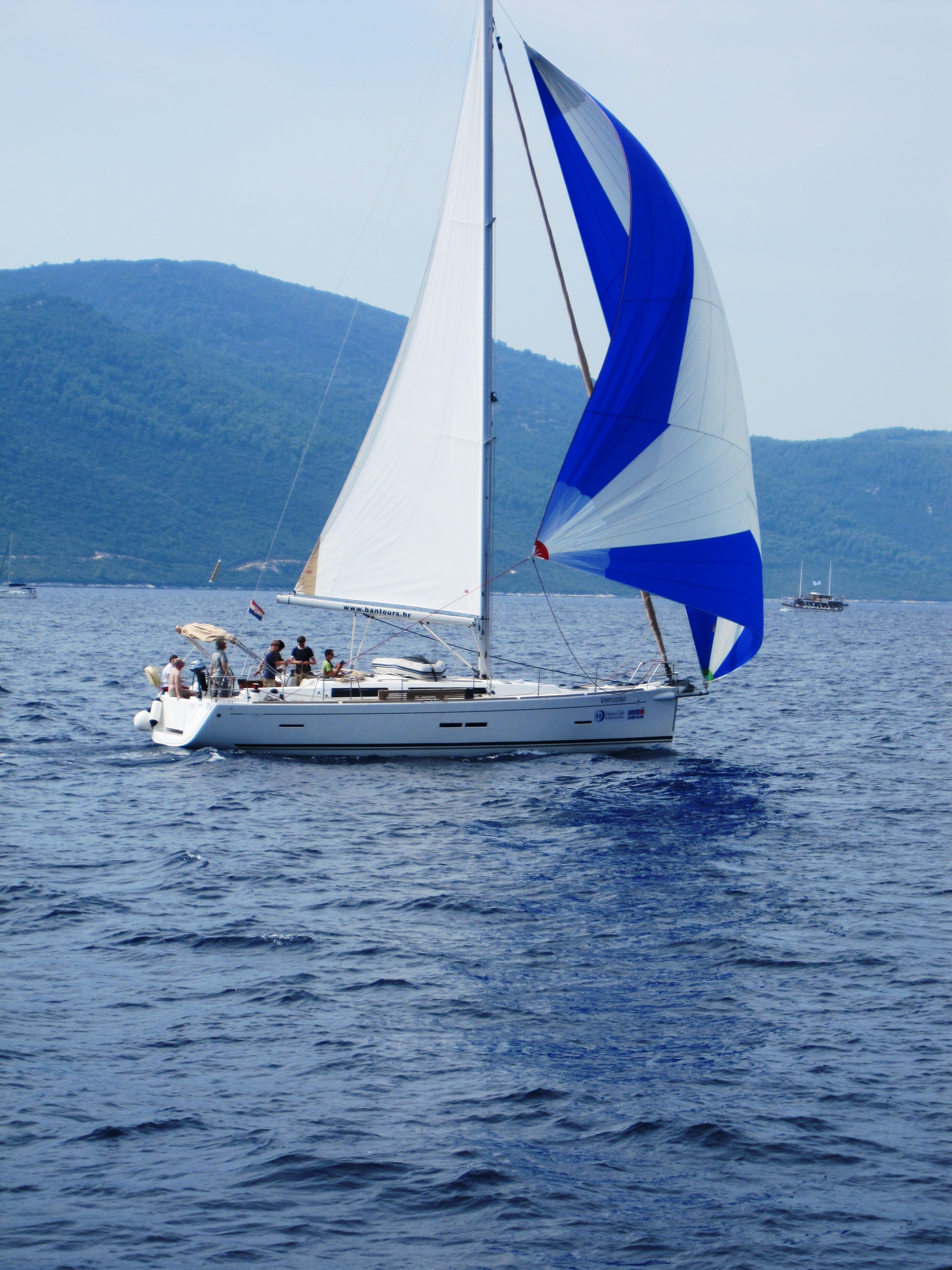
The Passenger Vessel Association (PVA), headquartered in Alexandria, Virginia, is the principal national trade association for the U.S. passenger vessel industry. It has operated since 1971, making it the longest-established body in this field. PVA is incorporated as a 501(c)(6) business league — the same nonprofit classification as a chamber of commerce — and is governed by a board of directors drawn from the industry. Its most recently available tax filing (fiscal year 2024, via ProPublica's Nonprofit Explorer) shows revenue of $2,464,404 against expenses of $1,996,334, for a net surplus of $468,070. Approximately 85.6% of revenue derives from program services, which includes convention registration, trade show fees, and training programs; membership dues are not separately itemized in the available public data.
PVA organizes its work through five standing committees: Safety and Security (monthly virtual meetings plus annual in-person); Regulatory (bimonthly, focused on Executive Branch agencies); Legislative (convenes as needed for Congressional work); Marketing and Membership; and Emerging Leaders (professional development for early-career industry participants). The organization publishes FOGHORN magazine for members and holds an annual convention branded MariTrends (the 2027 edition is scheduled for January 21-24 in Tampa, Florida).
PVA's most substantive technical contribution is the Flagship SMS — a voluntary Safety Management System developed collaboratively with the U.S. Coast Guard and introduced in 2017. The Flagship SMS gives member operators a documented, USCG-recognized safety framework that can reduce inspection friction and demonstrate due diligence in liability proceedings. It is a genuine operational benefit, not merely a marketing credential, and PVA deserves credit for developing it in genuine partnership with the regulator rather than in opposition to it. PVA also operates a Green Waters Program for environmental stewardship and conducts an annual Congressional Fly-In in Washington, giving member operators direct access to legislators and agency officials on specific regulatory concerns.
What PVA does not serve well. The picture is more complicated for operators outside the larger-vessel, scheduled-service, multi-vessel-fleet category. PVA's revenue model is built substantially around a major annual convention and associated trade show — appropriate for an organization whose natural constituency includes dinner cruise operators, whale watching fleets, island ferry services, and excursion vessels with enough staff to send a representative to Tampa. A single-vessel classic sailing charter on San Diego Bay, operated by one captain and a two-person crew, faces a different calculation. PVA's dues structure is not publicly disclosed on its website, which creates an opacity problem: a small operator considering membership cannot self-qualify without making an inquiry call, and operators who cannot quickly size a membership cost against their margin tend not to make that call. The absence of a group purchasing program for commercial marine insurance — a benefit that group purchasing power in commercial liability would be uniquely suited to deliver — is a notable gap. The organization's convention-centric revenue model also means that an operator who cannot travel to Tampa each January is receiving substantially reduced value relative to what they pay. No regional chapter structure exists to address the granular concerns of a San Diego operator dealing with Port Code 4.37, USCG Sector San Diego inspection cadences, or Harbor Island marina fee structures.
National Association of Charterboat Operators (NACO)
The National Association of Charterboat Operators, founded in 1991 and headquartered in Mississippi, represents fishing, sailing, diving, eco-tour, whale watching, and sightseeing charter operators. NACO's stated mission is advocacy against restrictive regulation and the delivery of group-rate programs for member needs. Its most immediately notable feature is its dues structure: $100 per year for a regular member — by a wide margin the most accessible price point among national passenger vessel trade groups. First-year maritime school graduates pay $40; associate (deckhand/mate) memberships are $30.
NACO's practical benefits are concrete: it operates an exclusive drug testing consortium for members (including random, post-accident, and periodic testing, with medical review officer services and laboratory coordination); it provides a Coast Guard License Insurance discount of $30 per year; it gives members access to a West Marine Port Supply wholesale account, which allows operators to purchase from the over-50,000-item catalog at wholesale prices at West Marine locations; it offers discounted booking software built specifically for the charter boat industry; and it provides discounted printing and mailing for promotional materials. NACO's advocacy record includes claims of having saved the charter boat industry millions of dollars by opposing excessive reporting requirements.
What NACO does not serve well. The $100 entry point and the concreteness of its practical benefits are genuine virtues. The gaps are also real. NACO's programming and visible membership base skew heavily toward fishing and diving charters; a sailing/experiential charter operator in San Diego will find little in NACO's marketing or publications that speaks directly to their operations. There is no California chapter or Pacific Coast regional structure. The organization does not appear to offer group purchasing power in commercial hull or liability insurance — which would represent a far larger financial benefit to members than the $30 CG License Insurance discount currently offered. The website, as of 2026, presents a functional but dated interface that suggests a modest operational budget. For a single-vessel sailing charter operator, NACO at $100/year is probably worth joining for the drug testing consortium alone; it does not, however, address the full range of regulatory, marketing, and insurance needs that define the small-operator problem.
American Sportfishing Association (ASA)
The American Sportfishing Association, founded in 1933 and headquartered in Alexandria, Virginia, began as a tackle manufacturers' trade group and has evolved to represent the broader recreational fishing industry through 800+ member organizations. Charter boat operators are eligible to join as Associate Members, a category for entities that have a special interest in sportfishing but are not eligible for regular membership. ASA's primary constituency is manufacturers, retailers, state fish and wildlife agencies, and conservation organizations — not vessel operators. A sailing charter that does not offer fishing has no meaningful pathway to membership benefits. We note ASA for completeness, but it is not a passenger-charter operator association.
California and Regional
Sportfishing Association of California (SAC)
The Sportfishing Association of California, founded in 1972, is the closest regional body to a passenger charter operators' trade association in California. It is incorporated as a 501(c)(6) non-profit business league, operated mainly on member dues. SAC's stated mission is to promote tourism through marine recreation and education while protecting natural resources. Its leadership has deep San Diego roots: the Vice-President for San Diego County is Frank Ursitti, also the organization's Treasurer, and the owner/operator of H&M Landing — one of the largest sportfishing operations in San Diego Bay. SAC was a charter member organization at its founding in 1972 and has maintained Pacific-coast advocacy on behalf of marine recreation operators ever since.
SAC's explicit focus is sportfishing. This is both the source of its strength (deep industry knowledge, credible Sacramento relationships, longstanding regulatory advocacy for anglers and fishing vessel operators) and its limiting characteristic for the purposes of this analysis. A whale-watching operator, a sunset sail operator, or a private event charter running no fishing does not fit SAC's primary identity. SAC has not publicly claimed to represent these categories, and we do not fault it for a focus it has never pretended to abandon.
San Diego Sportfishing Council
The San Diego Sportfishing Council (sportfishing.org) presents itself as an online resource providing information about fishing, diving, whale watching, and nature trips from San Diego. The Port of San Diego notes that San Diego Bay is home to more than 70 sportfishing boats operating from four sport boat landings. The Council provides a useful public-facing directory of these operators but does not function as a membership advocacy organization. It is not a trade association; it does not negotiate on behalf of members, conduct regulatory advocacy, offer group programs, or maintain a dues structure. We note it here only to draw the line clearly.
No California Whale-Watching or Sailing-Charter Association Found
We searched specifically for a California trade association representing whale-watching operators, sailing charter operators, or experiential marine tour operators not engaged in sportfishing. We found none. The individual operators in these categories — and there are dozens of them along the California coast — appear to operate without a collective voice in Sacramento or with the California Coastal Commission, CalTrans Marine, or the state's harbor districts. This is a gap.
International
Interferry
Interferry, the successor organization to the International Marine Transit Association (IMTA), is the principal international trade association for the ferry industry. It has operated for more than 50 years, holds consultative status with the International Maritime Organization (IMO), and engages with EU institutions on behalf of its membership. As of 2025, Interferry has more than 280 member companies representing over 2,200 individuals in more than 40 countries. The worldwide ferry sector it represents provides transport for over four billion passengers and 370 million vehicles annually. The 49th annual Interferry conference was held in Sorrento, Italy, in October 2025, with a focus on regulation, safety, and vessel electrification.
Interferry is not relevant to the single-vessel private charter operator. It exists at a scale — four billion passengers, 280 multi-vessel companies, EU regulatory engagement — that makes small-vessel charter operations structurally invisible in its membership. We note it because it demonstrates what a mature international trade association with genuine regulatory standing looks like; the gap between Interferry's scale and NACO's $100 membership is the gap this article is trying to describe.
Cruise Lines International Association (CLIA)
The Cruise Lines International Association, founded in 1975 and headquartered in Washington, D.C., is the world's largest cruise industry trade association. CLIA member lines represent more than 95% of global cruise capacity and serve more than 30 million passengers annually across ocean, river, and specialty cruise categories. CLIA is mentioned here because it is sometimes cited as the closest international analogue to a passenger vessel trade group. It is not. CLIA's constituency is large cruise ship operators, and its regulatory and commercial concerns — international port agreements, large-ship environmental compliance, the Jones Act implications of itinerary planning — are categorically different from those of a San Diego sailing charter. We note it to distinguish, not to conflate.
The IMO and USCG as Regulators, Not Trade Groups
The International Maritime Organization (IMO) is an agency of the United Nations responsible for regulating shipping. The U.S. Coast Guard is a branch of the U.S. Armed Forces responsible for, among other things, the inspection and certification of commercial passenger vessels and the enforcement of maritime safety law. Both bodies are regulatory authorities. They set the rules operators must follow. A trade association's job is to represent operators in front of these bodies — not to replace them or to be confused with them. When an operator asks "who speaks for me in front of the Coast Guard," the answer should be their trade association. Too often, the answer is: nobody organized.
Adjacent Bodies: What Covers the Wrong Problem
Several additional organizations appear in searches for "charter yacht trade association" but serve different constituencies:
Classic Yacht Owners Association (classicyachts.org): Maintains a Classic Rating Formula for racing and provides a member portal, directory, and newsletter for owners of classic yachts. Its focus is yacht racing and owner community, not commercial passenger charter operations. A classic vessel used for commercial charter is not the same as a classic vessel maintained for racing, and the Association does not claim to cover the former.
Charter Yacht Brokers Association (CYBA): A broker association promoting professionalism in yacht charter brokerage. Brokers are not operators; their interests in insurance, liability, and advocacy differ substantially from those of the operator who owns the vessel and carries the passengers.
International Yacht Brokers Association (IYBA): The world's largest yacht brokerage and charter industry association, with over 2,000 members. Again, brokers rather than operators. An operator can sell their own charters; they are not, functionally, a broker.
U.S. Superyacht Association (USSA): The only U.S. non-profit trade organization for the large-yacht industry. A 65-foot vessel is not a superyacht (the standard threshold for that designation is generally 24 meters/79 feet and above); and superyacht industry concerns — crew placement agencies, flag state registration, international cruising permit navigation — are distinct from small domestic passenger charter operations.
III. The Audit: PVA and NACO at Close Range
Having surveyed the landscape, we can render a more structured assessment of the two organizations most likely to be relevant to a U.S. passenger-charter operator: PVA and NACO.
What PVA Gets Right
1. Sustained Washington presence. PVA has maintained a functional legislative and regulatory committee structure for over five decades. The Congressional Fly-In model — bringing member operators directly to Capitol Hill to meet with legislators — is a more effective advocacy mechanism than most small trade associations manage. For a regulatory environment as operator-facing as the USCG inspection regime, this matters.
2. Flagship SMS. The voluntary Safety Management System developed in 2017 in genuine collaboration with USCG is the organization's most substantial technical achievement. An operator using the Flagship SMS framework has a documented safety culture that reduces inspection friction, strengthens an insurance defense in the event of a liability claim, and signals professionalism to port authorities and commercial clients. This is not a checkbox exercise; it is a meaningful operational benefit developed through genuine regulator partnership.
3. Green Waters Program. Forward-looking environmental programming in an industry whose operating environment is the coastal and inland waterway ecosystem. Operators who can point to documented environmental practices face better regulatory relationships and increasingly differentiated marketing positions in a market where charter clients are asking about sustainability.
4. Emerging Leaders Committee. Workforce development and succession planning are genuine industry problems that most maritime trade associations have not addressed. PVA's committee specifically for early-career participants is unusual enough to deserve explicit credit.
5. FOGHORN Magazine. An industry-specific publication with real circulation provides a professional forum that has no equivalent among the other organizations in this survey.
What PVA Does Not Serve Well
1. No published dues structure. Opacity is almost always unfavorable to small operators. A single-vessel charter captain with a fixed operating budget who cannot self-qualify the cost of a membership on PVA's website will not make the call. The friction is asymmetric: it is costless for PVA to post a fee schedule, but costly for small operators to navigate an inquiry process that larger members with staff can handle easily.
2. No group insurance program. This is the most consequential gap. Commercial marine liability insurance for an inspected passenger vessel carrying up to 28 passengers costs, by industry estimates, between 1.5% and 5% of hull value annually. On a vessel valued at $300,000, that is $4,500 to $15,000 per year. Group purchasing power — which a trade association is uniquely positioned to aggregate — could realistically reduce that premium by 15-25% for members. That saving alone would pay PVA membership dues multiple times over, and its absence is a structural failure to convert organizational scale into member benefit.
3. Convention-centric revenue model misaligned with small operators. PVA's $2.46M revenue (FY2024) derives overwhelmingly from program services, which includes the MariTrends convention, trade show revenue, and training program fees. A revenue model built on a major annual event in Tampa structurally advantages larger operators with staff and travel budgets. A solo captain running a 1938 yawl in San Diego Bay is not going to Tampa in January. The value they receive from PVA membership is reduced proportionally to their distance from the convention.
4. No regional chapter structure. National advocacy addresses national concerns. An operator on San Diego Bay has a set of concerns that are specifically Californian and specifically Port-of-San-Diego-shaped: Harbor Island marina fee structures, the Port Code 4.37 decal regime, USCG Sector San Diego inspection scheduling, and the California Coastal Commission's regulatory posture on commercial operations in the Bay. None of these are addressed at a national level.
5. No marketing co-op infrastructure. PVA does not offer members a shared SEO program, destination marketing organization relationships, tourism trade show presence, or referral network. These are precisely the marketing resources that a small operator cannot build alone and that an association could build at scale.
What NACO Gets Right
1. The most accessible dues in the landscape. $100 per year is a genuine statement about who the organization believes it serves. At that price, the drug testing consortium alone more than pays for membership.
2. Concrete, practical benefits. NACO's program is built around real compliance problems (drug testing, Coast Guard license maintenance, parts procurement) rather than prestige benefits (convention keynotes, magazine subscriptions). This is the right instinct for a working-captain membership.
3. Genuine regulatory scope. NACO's member charter types explicitly include sailing, eco-tours, and whale watching alongside fishing — making it formally more inclusive than SAC. The advocacy record, while difficult to verify in detail, includes specific claims of regulatory relief that suggest sustained attention to the legislative environment.
What NACO Does Not Serve Well
1. Functional fishing skew. The practical reality of NACO's membership and programming reflects its origins and primary base in fishing and diving charters. A sailing charter operator in California will find limited direct relevance in NACO publications and programming. This is not a fatal objection at $100/year, but it limits NACO's value for operators outside the fishing/diving axis.
2. No group insurance. Same gap as PVA, at a smaller scale. The potential for 15-25% reductions in commercial marine liability premiums is not realized in either organization.
3. No Pacific Coast regional structure. California is home to some of the largest and most active commercial charter markets in the country — San Diego Bay, Santa Barbara, Los Angeles Harbor, San Francisco Bay, Monterey. None of these have a specific NACO chapter, regional event, or advocacy presence.
IV. The Gap: Making the Affirmative Case
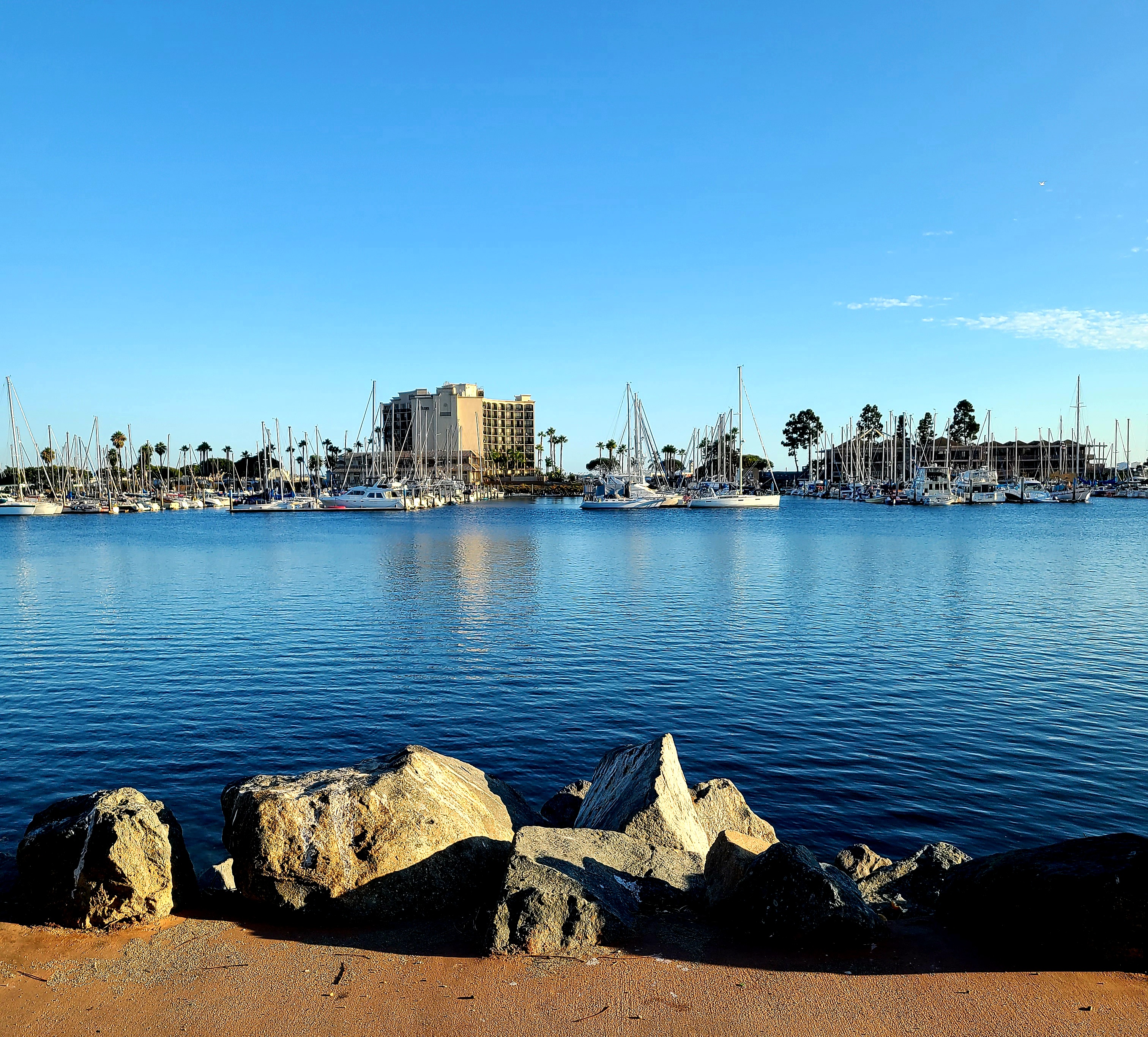
The evidence supports a specific conclusion: a single-vessel, experiential sailing charter operator on San Diego Bay is currently represented by no organization that fully addresses its operational profile. PVA and NACO both partially apply and both have gaps that matter. SAC applies to a different industry category. There is no California-specific equivalent. There is no San Diego-specific equivalent.
This is not a condition unique to San Diego. The same gap exists in Santa Barbara, Monterey, Newport Beach, San Francisco, and every other major California coastal market where small passenger vessels operate private charters that are not fishing, not diving, and not ferry service. It exists in the Chesapeake, the Gulf of Mexico, and Puget Sound. The conditions that historically produce a viable new trade association are present in this market:
1. A defined member population with shared operational characteristics (small passenger vessel operators in the coastal sailing-charter, experiential cruise, and marine-tour category).
2. A set of shared concerns not adequately addressed by existing organizations (group insurance purchasing, regional USCG/port advocacy, marketing co-op, Pacific coast regulatory attention).
3. Demonstrable cost savings that group purchasing power could generate (insurance premium reduction, wholesale parts access, shared marketing infrastructure).
4. An advocacy need that no current organization is efficiently filling at the regional level.
What the Association Should Look Like
We offer the following not as a finished design but as a working framework for what a purpose-built Passenger Charter Operators' Alliance — or whatever such a body would choose to call itself — would need to be to justify its existence over the organizations already in the field.
Legal structure. 501(c)(6) non-profit business league. Same structure as PVA, SAC, and the Chamber of Commerce model. This is appropriate for an organization whose primary purpose is advocacy and group benefit, not charitable activity. Contributions are not tax-deductible, but dues are ordinary business expenses for members. Governance should be transparent from the start: bylaws available on the website, dues schedules posted publicly, board election process documented.
Governance. Nine to eleven directors, with a supermajority (at least six of nine) drawn from working vessel operators rather than vendors or associate members. Two-year staggered terms with an annual member assembly for bylaw changes and officer elections. Geographic chapter structure from the outset: Pacific Coast (California, Oregon, Washington, Hawaii), Gulf Coast, Atlantic North, Atlantic South, Great Lakes, Alaska. Chapter representatives on the national board. This is not complexity for its own sake; it is the structural answer to the PVA gap where a San Diego operator's specific concerns reach no one.
Five standing committees:
Safety and Standards: Develop a voluntary safety certification program that goes beyond USCG minimums and qualifies members for preferred insurance rates. This committee's work should be submitted to USCG for recognition (following the Flagship SMS precedent PVA established).
Regulatory and Legislative: National advocacy with USCG's Office of Commercial Vessel Compliance, the U.S. Senate and House Commerce Committees, and relevant state agencies. California chapter priority: Sacramento relationships, California Coastal Commission, harbor district fee structures.
Insurance and Risk: Negotiate group commercial liability and hull insurance with at least two insurers. The organizing principle is aggregating exposure: 500 member vessels each carrying $1M in liability creates $500M in aggregate exposure — enough for a specialty insurer to offer a group discount. The committee's initial mandate is to identify an insurer willing to structure a program, set the minimum member criteria, and deliver the deal within 18 months of the association's founding.
Marketing Co-op: Shared SEO infrastructure, DMO (Destination Marketing Organization) relationships with the major California tourism boards, a joint presence at the U.S. Travel Association's IPW trade show, and a member referral protocol for overflows and date conflicts.
Training and Certification: Coordinate USCG-recognized refresher training for members, develop a passenger service standard comparable to what lodging associations have built for their hospitality certification programs, and create a pathway for crew members to advance from deckhand to OUPV license with structured mentorship from member captains.
Membership and Dues (Proposed)
| Membership Tier | Annual Dues | Eligible Entities |
|---|---|---|
| Sole Operator (1 vessel) | $395 | Single-vessel passenger charter operators, any type (sailing, motor, whale watch, eco-tour, event) |
| Small Fleet (2–4 vessels) | $750 | Multi-vessel operators below fleet scale |
| Fleet Operator (5+ vessels) | $1,200 | Full commercial fleets in the passenger charter category |
| Associate Member | $295 | Vendors, service providers, marina operators, marine insurers, boatyard operators |
| Founding Charter (first 100 members) | 50% discount, 3 years | Any tier; intended to build the initial density needed for insurance negotiations |
The Cost-Benefit Case for a Single-Vessel Operator
An association that cannot demonstrate net benefit to its smallest member has built the wrong structure. Here is the honest arithmetic for a sole operator joining at $395/year.
| Item | Annual Cost | Annual Benefit | Source / Basis |
|---|---|---|---|
| Membership dues | $395 | — | Proposed tier above |
| Time (est. 15–20 hrs/year for regional meetings, committee participation) | ~$1,000–$1,500 opportunity cost at a $70/hr captain's rate | — | Conservative estimate |
| Group commercial marine liability insurance (conservative 15% reduction) | — | $675–$2,250/year | On a $4,500–$15,000 base premium at 1.5–5% of $300K hull value; reduction conservative vs. industry precedent for group programs |
| Wholesale marine parts access (comparable to NACO/West Marine benefit) | — | $200–$400/year | Based on NACO member reports; depends on parts volume |
| Marketing co-op value (shared SEO, DMO relationships, referral) | — | $500–$2,000/year | 1–2 incremental charter bookings annually from referral network, at $500–$2,000 per booking |
| Safety certification (one refresher course, insurance-rate-qualifying) | — | $200–$400/year | Estimate of premium reduction for documented safety certification; course cost offset |
| Net estimated annual value | ~$1,395–$2,895 | ~$1,575–$5,050 | Net benefit range: +$180 to +$3,655 |
Even at the conservative end of these estimates — where insurance savings are minimal, marketing co-op produces only one referral, and parts savings are modest — the association returns more than its cost to a sole operator. At the high end, a member paying $395 in dues and $1,500 in opportunity cost receives $5,050 in identifiable value. This is the organizing argument. A trade association that cannot make this case should not exist; one that can make it has no excuse for failing to.
What the Association Cannot Be
Three failure modes are predictable enough to be worth naming before the first meeting of any founding committee.
It cannot be a social club. If the primary use of dues is dinners, regattas, and branded merchandise, operators will notice within two years and stop paying. The test for any proposed program is: does this produce measurable benefit to a member operating their vessel commercially? If the answer is no, the program should not exist.
It cannot position itself against safety regulation. The USCG inspection regime is not an adversary; it is the framework within which every legitimate passenger-charter operator operates. An association that argues against safety standards — as opposed to arguing for efficient, predictable, consistently-applied safety standards — damages its members' business credibility and invites the regulatory hostility it nominally opposes. The right advocacy posture is: more resources for USCG compliance assistance, faster COI processing, consistent national enforcement standards, and recognition for operators who exceed the baseline.
It cannot become a lobbying front against environmental protection. The coastal and bay ecosystems in which passenger-charter operators work are their primary business asset. An association that trades environmental credibility for short-term regulatory relief will destroy the operating environment it claims to protect. The right posture is what PVA's Green Waters Program attempts: voluntary programs that demonstrate responsible environmental practice, with regulatory advocacy focused on practical implementation rather than rollback.
V. The Verification Index: Organizations Surveyed
| Organization | Type | Scope | Founded | Dues (if public) | Serves single-vessel charter? |
|---|---|---|---|---|---|
| Passenger Vessel Association (PVA) | 501(c)(6), trade assn. | USA, national | 1971 | Not publicly disclosed | Partially; gaps in insurance, regional, marketing |
| National Assn. of Charterboat Operators (NACO) | Trade assn. | USA, national | 1991 | $100/year | Yes, formally; fishing/diving skew in practice |
| American Sportfishing Assn. (ASA) | 501(c)(6), trade assn. | USA, national | 1933 | Not disclosed (assoc. only) | Marginally; associate membership, fishing focus |
| Sportfishing Assn. of California (SAC) | 501(c)(6), trade assn. | California | 1972 | Not disclosed | No; sportfishing-specific |
| San Diego Sportfishing Council | Directory / resource | San Diego | n/a | n/a | No; not a membership advocacy body |
| Port of San Diego | Port authority / regulator | San Diego Bay | 1962 | n/a | NOT a trade group; a regulator/landlord |
| Interferry | Trade assn. | International | ~1976 | Not disclosed | No; ferry industry, 4B+ annual passengers |
| CLIA | Trade assn. | International | 1975 | n/a (cruise lines) | No; large cruise industry |
| IMO | UN intergovernmental agency | International | 1948 | n/a | NOT a trade group; a regulator |
| Classic Yacht Owners Assn. | Member org. | USA | n/a | Not disclosed | No; racing/ownership focus, not commercial charter |
| Charter Yacht Brokers Assn. (CYBA) | Trade assn. | USA/Caribbean | n/a | Not disclosed | No; broker-focused |
| U.S. Superyacht Assn. | Trade assn. | USA | n/a | Not disclosed | No; large yachts only |
| CA Whale-Watch / Sailing Charter Assn. | — | California | — | — | NOT FOUND — gap confirmed |
| SD-specific charter operator assn. | — | San Diego | — | — | NOT FOUND — gap confirmed |
VI. A Final Note on What a Guild Actually Does
The historical guild — in its functional, not its romantic, sense — did three things: it set standards for who was qualified to practice a trade; it provided mutual insurance against individual misfortune; and it represented members collectively in front of civic authority. These three functions map almost perfectly onto what a passenger-charter operator's association should do in 2026. Qualification standards and training (the USCG license is the minimum; a guild can establish a higher floor). Mutual risk sharing (group insurance programs). Collective advocacy (before USCG, before the Coast Guard's parent Department of Homeland Security, before Congress, before the Port of San Diego and the California legislature).
The organizations that exist in this space have built portions of this structure. PVA has built the advocacy piece at scale. NACO has built accessibility. SAC has built regional California presence. None of them has built all three for the specific population of small-vessel, experiential, sailing and marine tour charter operators who operate on American coastal and inland waters.
That is the gap. It is not a complaint. It is an invitation.
JADA will be watching for whoever accepts it.
Research conducted July 2026. All organization names, founding dates, membership structures, revenue figures, dues amounts, and regulatory citations verified against primary sources and cross-referenced. PVA revenue figure from ProPublica Nonprofit Explorer, fiscal year 2024 Form 990 filing. NACO dues from nacocharters.org/application.html. SAC founding and description from californiasportfishing.org/about. Interferry membership and scope from interferry.com/public-member-list-2/ and 2025 conference documentation. USCG regulatory framework from 46 CFR Subchapters T and K and dco.uscg.mil. Port of San Diego charter vessel requirements from Port Code Section 4.37. Insurance cost ranges from theephraimgroup.com commercial boat insurance guide. Commercial rate range (1.5–5% hull value) cross-checked against carusoins.com 6-pack insurance data.
References
Primary sources — organizations:
Passenger Vessel Association. About PVA. passengervessel.com. Accessed July 2026. [Committees page: passengervessel.com/committees.html]
Passenger Vessel Association. Form 990, Fiscal Year 2024. ProPublica Nonprofit Explorer. projects.propublica.org/nonprofits/organizations/521372232. Accessed July 2026. EIN: 52-1372232. Revenue $2,464,404; Expenses $1,996,334.
National Association of Charterboat Operators. About Us. nacocharters.org/about.html. Accessed July 2026.
National Association of Charterboat Operators. Membership Application. nacocharters.org/application.html. [Dues: $100/year regular; $40 first-year; $30 associate.] Accessed July 2026.
American Sportfishing Association. Membership Categories. asafishing.org/membership/categories/. Accessed July 2026.
Sportfishing Association of California. About. californiasportfishing.org/about. Accessed July 2026. [Founded 1972; Frank Ursitti, VP San Diego / Treasurer; 501(c)(6).]
San Diego Sportfishing Council. sportfishing.org. Accessed July 2026.
Interferry. Public Member List 2. interferry.com/public-member-list-2/. Accessed July 2026. [280+ companies, 40+ countries, IMO consultative status.]
Interferry. Interferry 2025: Connections — Global Ferry Leaders Converge in Sorrento. interferry.com, June 2026. 49th annual conference coverage.
Cruise Lines International Association. About CLIA. cruising.org/about-cruise-lines-international-association. Accessed July 2026.
Classic Yacht Owners Association. classicyachts.org. Accessed July 2026.
Regulatory sources:
U.S. Code of Federal Regulations. 46 CFR Subchapter T — Small Passenger Vessels (Under 100 Gross Tons).
U.S. Code of Federal Regulations. 46 CFR Part 24 — Uninspected Passenger Vessels.
U.S. Coast Guard, Office of Commercial Vessel Compliance. Passenger Vessels. dco.uscg.mil. Accessed July 2026.
U.S. Coast Guard Auxiliary, Division 9. Uninspected Passenger Vessels (6-Pax). wow.uscgaux.info. Accessed July 2026.
Port of San Diego. Charter Vessel Regulations — Port Code Section 4.37. portofsandiego.org/coming-and-going/boating-san-diego-bay/charter-vessel-regulations. Enforcement began July 2021; decal requirement effective October 2021.
U.S. Code 46 U.S.C. § 70036. Civil penalty provisions for COI violations. [Up to $60,000 per occurrence; willful violations up to $117,608 per day.]
Insurance cost sources:
The Ephraim Group. Commercial Boat Insurance Cost Guide, 2025. theephraimgroup.com. [Range: 1.5–5% hull value annually; $300K vessel: $4,500–$15,000/year.]
Caruso Insurance. 6-Pack Charter Boat Insurance Cost, 2025. carusoins.com/6-pack-charter-boat-insurance-cost.
Confident Captain. The 6-Pack Rule: What's Really Limiting Your Passenger Count. confidentcaptain.com. Accessed July 2026.
PVA programs — secondary coverage:
U.S. Coast Guard, Atlantic Area. Flagship SMS Manual for Members of the Passenger Vessel Association. 2017. atlanticarea.uscg.mil. [Voluntary SMS developed collaboratively with PVA.]
Marine Link / MarineLink.com. Live! From the PVA MariTrends 2025 Convention. marinelink.com. Accessed July 2026. [VADM Wm. Dean Lee (ret.) keynote; professional development focus.]
WorkBoat.com. PVA Seeks Economic Relief for Passenger Vessel Industry. workboat.com. [Documents PVA advocacy posture with Congress and Coast Guard.]
International organizations:
Maritime Reporter. Interferry 2025: Ferries at the Crossroads of Regulation, Safety and Electrification. maritimemagazines.com, September 2025.
Abbreviation Finder. IMTA — International Marine Transit Association. [Notes IMTA evolved into Interferry.] abbreviationfinder.org.
San Diego maritime context:
San Diego Business Journal. Sportfishing 'Big Part' of Port's 'Financial Equation.' sdbj.com. [Port of San Diego sportfishing fleet context.]
Cause IQ. Sportfishing Association of California. causeiq.com/organizations/sportfishing-association-of-california,237304982/. Accessed July 2026.
A note on the images. All photographs on this page are reproduced in accordance with their stated licenses. The Star of India photograph was published by the Port of San Diego under a Creative Commons Attribution 2.0 Generic license (CC BY 2.0). The Harbor Island view was contributed to Wikimedia Commons under Creative Commons Attribution-ShareAlike 4.0 International (CC BY-SA 4.0) by Dan31456. The sailing vessel spinnaker photograph was released to the public domain under CC0 by pgeyr/Mielon via Wikimedia Commons. The USCG picket boat photograph is a work of a United States Coast Guard employee taken in the performance of official duties and is in the public domain per 17 U.S.C. § 101 and § 105. No trademarked logos of any named organization are reproduced on this page.