The Movie Cartel: a century of self-governance in American cinema.
The MPA and Cinema United — the two trade organizations that govern how American films are made, rated, exhibited, and marketed — have operated for over a hundred years as a privately managed system deliberately designed to keep the government out. This is the history, the legal architecture, the key figures, and the one thing it cannot regulate: a story told in pieces, one frame at a time, from a boat.
A scholarship piece for the Captain's Log — verified against primary sources, July 2026
Prefatory Note
Two organizations govern American commercial cinema. Neither is a government agency. Neither has legal authority to compel anything. Yet their rules — a voluntary content rating on a film, a two-and-a-half-minute cap on a theatrical trailer, the architectural separation between studios that make movies and theaters that show them — shape every theatrical experience in the United States and most of the world beyond it.
The Motion Picture Association (MPA; founded 1922 as the MPPDA, renamed MPAA 1945, renamed MPA 2019) represents the major studios and streaming services that produce and distribute films. The organization now known as Cinema United (founded as the Theatre Owners of America in 1948, merged and renamed the National Association of Theatre Owners — NATO — in 1965, rebranded Cinema United on March 18, 2025) represents the owners of movie theaters. Together they constitute the institutional spine of the American film industry, a spine built not by Congress but by the industry itself — deliberately, expensively, and not without controversy — to avoid being built by Congress instead.
This article traces that spine from its origins in early-1920s Hollywood scandal to the present day. It covers the Hays Code, the CARA voluntary rating system, the Paramount antitrust decrees, the constitutional arc from censorship to First Amendment protection, and the current membership and functions of both bodies. A closing section addresses what this apparatus means — and does not mean — for a work of cinema that operates entirely outside it.
I. The MPPDA and the Hays Era (1922–1945)
The founding crisis
By 1921, Hollywood had a scandal problem. The silent era had produced a string of tabloid catastrophes — the Fatty Arbuckle manslaughter trial (September 1921), the unsolved murder of director William Desmond Taylor (February 1922), the drug-related death of actor Wallace Reid (January 1923) — that generated congressional pressure for federal film censorship. A dozen state censorship boards already existed. The major studios, understanding that fragmented state regulation would be more damaging than a unified industry standard, moved to preempt it.
On March 4, 1922, the Motion Picture Producers and Distributors of America (MPPDA) was incorporated. Its explicit purpose, as articulated in its founding documents, was to represent the industry in matters of public relations and government affairs, and — crucially — to provide the moral leadership that would convince legislators and reformers that external regulation was unnecessary.1
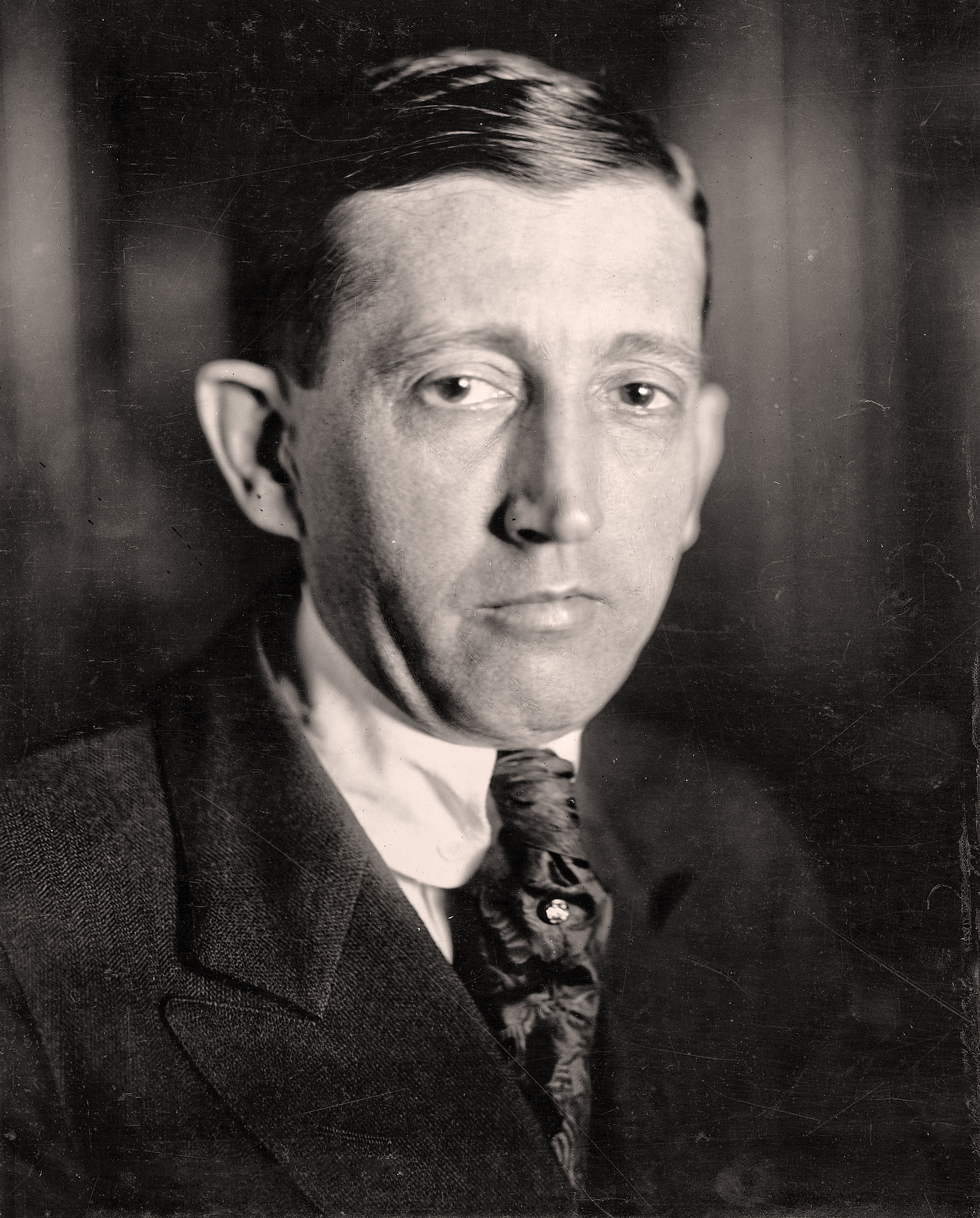
Will H. Hays (1879–1954)
William Harrison Hays was born November 5, 1879, in Sullivan, Indiana, the son of a strict Presbyterian lawyer. He graduated from Wabash College in 1900, was admitted to the bar, and entered Republican politics in Indiana. By 1918 he was chairman of the Republican National Committee; his organizational skill was widely credited with managing Warren G. Harding's successful 1920 presidential campaign. Harding rewarded him with the postmastership of the United States — a position Hays held from March 1921 to January 1922.2
Hays resigned his cabinet position on January 14, 1922, to assume the MPPDA presidency, beginning his duties on March 6, 1922, at an annual salary of $35,360 (equivalent to approximately $680,000 in 2025 purchasing power). The salary reflected how seriously the studios took the appointment: they were not hiring a public relations man; they were buying a political operator with ties to Washington that they lacked.2
His value was strategic. Hays's Presbyterian rectitude, his political connections, and his genuine belief that Hollywood could and should police itself gave him credibility with reform groups that no studio executive could have achieved. Between 1922 and 1930 he assembled a set of informal guidelines — the "Don'ts and Be Carefuls" of 1927 — that represented the first systematic attempt at industry self-censorship, covering topics from nudity and drug use to the mockery of the clergy.3
Hays served until 1945, a tenure of 23 years, and the office he ran became so associated with his name that both the organization and its content guidelines were called "the Hays Office" and "the Hays Code" for decades after his departure. He died March 7, 1954, in Sullivan, Indiana, at 74.
The Motion Picture Production Code (1930 / enforced 1934)
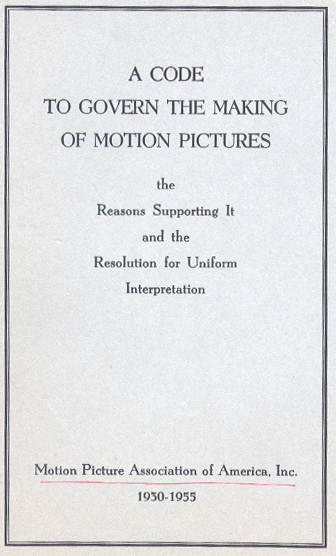
The Motion Picture Production Code — the document that would bear Hays's name in popular memory — was written primarily by two Catholic laymen: Father Daniel A. Lord, a Jesuit priest at St. Louis University, and Martin Quigley, a prominent Catholic trade publisher. They drafted it in late 1929; the MPPDA formally adopted it in February 1930.3
The Code was a document of 36 pages organized under two principles: first, that no picture shall be produced which will lower the moral standards of those who see it; second, that correct standards of life, subject only to the requirements of drama and entertainment, shall be presented. It prohibited, among other things: depictions of drug trafficking, sex perversion (including homosexuality), miscegenation, profane or obscene language, nudity, and the "sympathy of the audience" with criminals. It required that crime not pay, that sin be punished, and that the sanctity of marriage be upheld in all narrative outcomes.3
For its first four years, the Code was largely unenforced. Studios paid lip service to it while producing the frank and often scandalous films of what film historians call the "Pre-Code" era (1930–1934). The enforcement crisis came from outside the industry: in 1933, the Roman Catholic National Legion of Decency was founded and began independently rating films, organizing boycotts of productions it deemed immoral. Protestant and women's groups joined the campaign. The threat of a mass Catholic boycott of Hollywood product — Catholics constituted approximately a third of American moviegoers — was existential.3
Hays responded by establishing the Production Code Administration (PCA) in June 1934 and appointing Joseph I. Breen, a devout Catholic journalist, to run it. An amendment to the Code adopted on June 13, 1934, required all films released on or after July 1, 1934, to obtain a PCA Seal of Approval before theatrical distribution. Without the Seal, no MPPDA member studio would distribute a film and no member theater would exhibit it. The Code went from advisory guideline to iron gate in the span of three weeks.4
Breen ran the PCA with meticulous severity until his retirement in 1954. His office read every submitted script, flagged every scene, and required revisions before a Seal was granted. Film scholars have documented thousands of PCA decisions from this period — the insistence that Clark Gable's famous "frankly, my dear, I don't give a damn" in Gone with the Wind (1939) be treated as a conditional exception rather than a precedent; the repeated reworkings of the script of Double Indemnity (1944) to ensure that its murderers received appropriate punishment. The Breen Office was not a suggestion box. It was a co-author.4
II. Transition and Constitutional Transformation (1945–1966)
Eric Johnston and the MPAA
Will Hays retired in 1945. His successor, Eric Johnston, four-term president of the United States Chamber of Commerce, took the helm and immediately renamed the organization. In 1945, the MPPDA became the Motion Picture Association of America (MPAA). The new name reflected an institutional pivot: the organization would be less a moral watchdog and more a trade association and Washington lobbying operation.1
The Paramount Decrees (1948)
The federal government had been building an antitrust case against the major studios since 1938. On May 4, 1948, the United States Supreme Court decided United States v. Paramount Pictures, Inc., 334 U.S. 131, affirming a lower court ruling that the five major studios — Paramount, RKO, Warner Bros., Twentieth Century-Fox, and Loew's (MGM) — had violated the Sherman Antitrust Act by vertically integrating production, distribution, and exhibition.5
The practices the Court condemned were specific. Block booking — requiring theaters to license entire packages of films, including the undesirable ones, in order to obtain the desirable ones — was banned. Circuit dealing — negotiating blanket agreements across entire chains rather than theater by theater — was prohibited. Resale price maintenance (studios setting minimum ticket prices) was ended. And most consequentially, the major studios were required to divest themselves of their theater chains, breaking the vertical integration that had allowed them to control the entire supply chain from script to screen.5
The Paramount Decrees did not eliminate studio power; they reconfigured it. The resulting separation between production and exhibition — a wall between makers and showers of films — structured the American film industry for more than seven decades. It is the structural reason that the MPA and Cinema United (formerly NATO) exist as two distinct organizations rather than one: they represent two sides of an industry that the government forced apart.
On August 7, 2020, the U.S. District Court for the Southern District of New York granted a motion to terminate the Paramount Decrees, ending 72 years of federal oversight. The Department of Justice argued the decrees were obsolete: the rise of streaming services, the decline of sequential theatrical windows, and the evolution of antitrust enforcement doctrine made continued judicial management unnecessary. The court agreed. The block booking and circuit dealing bans were allowed a two-year sunset period, expiring in 2022.5
First Amendment: from Mutual to Burstyn
The Production Code's force rested on an anomaly of constitutional law. In Mutual Film Corporation v. Industrial Commission of Ohio, 236 U.S. 230 (1915), a unanimous Supreme Court ruled that motion pictures were not protected speech under the First Amendment. The Court classified films as "a business, pure and simple, originated and conducted for profit," not as expression entitled to constitutional protection. This nine-to-nothing decision enabled seven states and nearly one hundred municipalities to establish film censorship boards with legal impunity — and it was the constitutional underpinning that made the MPPDA's private censorship the industry's only rational alternative to governmental censorship.6
The decision stood for 37 years. In 1952, the Supreme Court reconsidered it in a case arising from an Italian neorealist film. Joseph Burstyn, Inc. v. Wilson, 343 U.S. 495 (1952) — decided May 26, 1952 — held that "expression by means of motion pictures is included within the free speech and free press guaranty of the First and Fourteenth Amendments." The case, which became known as "the Miracle Decision," arose from New York State's attempt to suppress Roberto Rossellini's 1948 film L'Amore (specifically its segment "Il Miracolo") on grounds that it was "sacrilegious." The Court held that New York's censorship power was an unconstitutional prior restraint and overturned Mutual in its entirety.6,7
The Burstyn decision did not eliminate the Production Code; it simply made the Code's enforcement legal rather than constitutionally necessary. For fourteen years the Code continued to function, now as a purely private agreement among industry members. But the constitutional architecture had changed: studios could, in principle, distribute films without PCA approval and face only private industry sanctions, not state prosecution. That precedent would matter when the next crisis arrived.
III. Jack Valenti and the Ratings Revolution (1966–2004)
Jack Valenti (1921–2007)
Jack Joseph Valenti was born September 5, 1921, in Houston, Texas. He flew 51 combat missions as a B-25 pilot in World War II, earned degrees from the University of Houston and Harvard Business School, and built an advertising agency before becoming a special assistant to President Lyndon B. Johnson. He was aboard Air Force One in Dallas when Johnson took the oath of office beside Jacqueline Kennedy on November 22, 1963 — one of the most documented moments of mid-century American political life. He joined the MPAA on June 1, 1966, as its president and chief executive, a position he would hold for 38 years.8
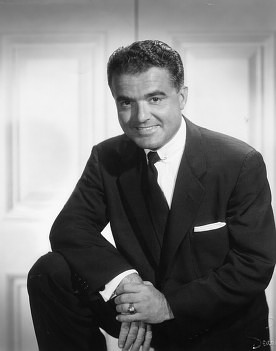
Valenti inherited an organization whose central product — the Production Code — was collapsing. European imports, independent distributors who had never joined the MPPDA, and domestic studios testing the limits of the newly liberated constitutional landscape were all releasing films that would not have passed Breen's office a decade earlier. The Code was visibly failing. In 1966, the MPAA granted a special exception for Who's Afraid of Virginia Woolf? — containing language explicitly prohibited by the Code — and another for Alfie, which dealt openly with abortion. By 1967, the Code's enforcement was selective at best and farcical at worst.
Valenti's solution was to replace censorship with classification. He spent two years negotiating with the studios, the theater owners, and various advocacy groups before announcing the new system on November 1, 1968: the voluntary Classification and Rating Administration (CARA), operating under MPAA oversight.
The Rating System: from G/M/R/X to the present
The original 1968 CARA ratings were four:
| Rating | Meaning | Year introduced |
|---|---|---|
| G | General audiences — all ages admitted | 1968 |
| M | Mature audiences — parental guidance suggested (but all ages admitted) | 1968 |
| R | Restricted — under 17 requires accompanying parent or adult guardian | 1968 |
| X | No one under 17 admitted | 1968 |
The M rating was soon found to be confusing — audiences understood the letter M as implying something harder than G but ignored the parenthetical "parental guidance suggested" clarification. The MPAA changed M to GP in 1969 and to PG (Parental Guidance Suggested) in 1972. The current PG meaning — "some material may not be suitable for children" — dates from that 1972 revision.9
The X rating proved fatally flawed from the beginning. Because the MPAA did not trademark the designation, the pornographic film industry adopted it freely: the marketing phrase "rated X" became synonymous with adult films regardless of whether they had ever been submitted to CARA. Mainstream films awarded an X rating for legitimate artistic reasons — John Schlesinger's Midnight Cowboy (1969, the only X-rated film to win the Academy Award for Best Picture), Stanley Kubrick's A Clockwork Orange (1971) — suffered commercial damage through association with a category dominated by pornography.9
The PG-13 rating was added in 1984. The proximate cause was public concern about two Steven Spielberg productions released in the summer of 1984: Indiana Jones and the Temple of Doom (directed by Spielberg) and Gremlins (produced by Spielberg's Amblin Entertainment). Both received PG ratings despite containing content — a man's beating heart extracted from his chest in the former, a Gremlin dispatched in a microwave oven in the latter — that many parents found wildly inappropriate for young children but that the MPAA's reviewers did not consider sufficient to warrant a full R. Spielberg himself proposed the intermediate designation. The first film to receive a PG-13 rating was Red Dawn (1984).9
In 1990, the MPAA retired the untrademarkable X and introduced NC-17 (No Children Under 17 Admitted) as a trademarked replacement. The first NC-17 rating was granted to Philip Kaufman's Henry & June (1990). The change did not immediately solve the stigma problem: most major theater chains and video rental chains continued to refuse NC-17 titles, and many newspapers declined to accept advertising for them, making NC-17 commercially lethal for any film seeking wide release.9
The rating system as it stood when Valenti retired in September 2004 — and as it stands today — is:
| Rating | Current meaning |
|---|---|
| G | General Audiences — nothing that would offend parents of younger children |
| PG | Parental Guidance Suggested — some material may not be suitable for children |
| PG-13 | Parents Strongly Cautioned — some material may be inappropriate for children under 13 |
| R | Restricted — under 17 requires accompanying parent or adult guardian |
| NC-17 | Adults Only — no one 17 and under admitted |
Valenti died April 26, 2007, in Washington, D.C., at 85, of complications from a stroke. His successors were Dan Glickman (2004–2010), former U.S. Secretary of Agriculture; Chris Dodd (2011–2017), former U.S. Senator from Connecticut; and Charles H. Rivkin (2017–present), former U.S. Assistant Secretary of State for Economic and Business Affairs, whose contract was renewed through January 2027 — making him the longest-running MPA head since Valenti himself.1,8
IV. From Theatre Owners to NATO to Cinema United
The other half of the apparatus
While the MPPDA and its successors represented the studios, theatrical exhibitors — the people who own and operate movie theaters — organized separately. The Theatre Owners of America (TOA) was founded in 1948, the same year as the Paramount decrees that forced the studios to divest their theater chains. The timing was not coincidental: exhibitors who had previously operated as studio subsidiaries now needed their own independent voice.
In 1965, the Theatre Owners of America merged with the Allied States Association of Motion Picture Exhibitors to form the National Association of Theatre Owners — NATO. (The shared acronym with the North Atlantic Treaty Organization, founded in 1949, would prove a persistent source of confusion and eventual embarrassment, contributing to the 2025 rebrand.)10
John Fithian's 23-year tenure
John Fithian became NATO's president and CEO in 2000, after eight years as the organization's outside counsel. He served for 23 years, navigating the digital projection transition (2000s), the 3D boom and bust (2009–2013), the rise of streaming as a competing exhibition window (2010s), the COVID-19 theater closures (2020–2021), and the fitful post-pandemic recovery. He retired at the end of 2023 — the same year he was named by the trade press as among the most consequential executives in theatrical exhibition history. He subsequently co-founded The Fithian Group, a cinema consulting firm.10,11
Michael O'Leary and Cinema United (2025)
Michael P. O'Leary was named NATO's president and CEO in March 2023. On March 18, 2025 — timed to precede the organization's annual CinemaCon showcase in Las Vegas (March 31–April 3, 2025) — NATO announced it was rebranding as Cinema United. The new name was chosen to clarify the organization's mission (unifying theater owners in the promotion of moviegoing) and to eliminate the persistent confusion with the military alliance. O'Leary described the change as doubling down on the organization's advocacy for theatrical exhibition as a distinct cultural experience.10
Cinema United represents more than 31,000 movie screens in all 50 states and more than 30,000 screens in 80 countries through its international affiliations. Its annual CinemaCon (formerly ShoWest) is the industry's largest theatrical exhibition showcase, held in Las Vegas each spring.10
V. The Current State of Both Bodies
The MPA today: seven members and a global brief
As of mid-2025, the MPA has seven member companies:
| Member | Notes |
|---|---|
| The Walt Disney Studios | Founding-era member (as RKO predecessor; Disney joined MPAA mid-century) |
| Warner Bros. Discovery | Long-standing member through multiple ownership changes |
| Sony Pictures Entertainment | Successor to Columbia Pictures (Charter member as Columbia) |
| Paramount Pictures | Charter member; subject of the 1948 antitrust decree that bears its name |
| Universal Pictures (NBCUniversal) | Long-standing member |
| Netflix | Joined January 2019 — first streaming service admitted; approved under Chris Dodd's tenure |
| Prime Video & Amazon MGM Studios | Joined October 1, 2024; MGM had previously lost membership in 2005 following a Sony-led buyout |
The MPA's current functions fall into three categories. First, it operates CARA — the five-member rating board and appeals process that assigns ratings to films submitted voluntarily by distributors. Second, it conducts global anti-piracy operations: the MPA employs investigators on six continents, coordinates with foreign law enforcement, and pursues legal action against operators of infringing sites and services. Third, it lobbies the U.S. federal government and foreign governments on intellectual property protection, content regulation, and trade policy. The international offices — MPA EMEA (Europe, Middle East, Africa) and MPA APAC (Asia-Pacific) — handle the non-U.S. dimension of this mandate.1
Cinema United today: advocacy, CinemaCon, and the exhibitor mission
Cinema United's mission is simpler and more singular: it represents the commercial interests of theatrical exhibitors. Its advocacy work focuses on content windowing (the gap between theatrical release and streaming availability — a persistent source of tension with the MPA members), accessibility regulations, and the economic policies affecting brick-and-mortar cinema operations. Its annual CinemaCon convention is both a trade showcase — studios present upcoming product to exhibitors — and Cinema United's most visible public platform.
The MPA and Cinema United collaborate on several shared projects, including the voluntary guidelines governing theatrical trailers (see Section VI below) and joint anti-piracy campaigns in theaters. Their interests are not always aligned: the studios' desire to shrink the theatrical window conflicts directly with exhibitors' need for an exclusive period during which their screens are the only place a new film can be seen.
VI. The Legal Architecture: Why None of This Is Law
Voluntary self-regulation
No federal statute requires a film to carry an MPA rating. No law prohibits a theater owner from exhibiting an unrated film. No legislation mandates compliance with the trailer-length guidelines negotiated between the MPA and Cinema United. Every element of this governance apparatus is voluntary — a private contractual arrangement among private parties.1,9
This is not an accident; it is the central design principle. The system exists precisely to prevent government regulation from occupying the space. The Production Code was designed to preempt state censorship boards. The CARA rating system was designed to preempt legislative age-based censorship proposals that gained momentum in the late 1960s. The voluntary rating system's legal status was tested and upheld: because participation is voluntary (distributors submit films; theaters enforce age restrictions by policy, not by law), the ratings do not constitute a prior restraint on protected speech under the First Amendment framework established in Burstyn.6,7
Mutual Film Corporation v. Industrial Commission of Ohio (1915)
The constitutional baseline was set in Mutual Film Corporation v. Industrial Commission of Ohio, 236 U.S. 230 (1915). Ohio had established a state censorship board under the 1913 Ohio Censorship Act, requiring all films to be approved before exhibition. Mutual Film Corporation sued, arguing the prior approval requirement violated the First Amendment's free speech guarantee.
The Supreme Court ruled 9–0 against Mutual. Justice Joseph McKenna, writing for the Court, held that motion pictures were "a business, pure and simple, originated and conducted for profit" and therefore not entitled to constitutional free speech protections. The decision explicitly distinguished films from newspapers: unlike the press, films were "capable of evil" in ways that justified government regulation. The ruling authorized state and local film censorship boards and stood as good law for 37 years.6
Joseph Burstyn, Inc. v. Wilson (1952)
The reversal came in Joseph Burstyn, Inc. v. Wilson, 343 U.S. 495 (1952). New York's Board of Regents had revoked the license of Roberto Rossellini's Italian film L'Amore (1948) on grounds that its segment "Il Miracolo" — in which a peasant woman believes she has been visited by St. Joseph — was "sacrilegious." The distributor, Joseph Burstyn, challenged the revocation. Justice Tom Clark, writing for a unanimous Court, held that "expression by means of motion pictures is included within the free speech and free press guaranty of the First and Fourteenth Amendments." The decision explicitly overturned Mutual.7
The First Amendment Encyclopedia, maintained by the Free Speech Center at Middle Tennessee State University, summarizes the decision's practical consequence: "The constitutional guarantee of freedom of speech would be denied to movies for 37 years" — from 1915 to 1952 — enabling the state censorship infrastructure that made the MPPDA's private censorship both credible and necessary. Once Burstyn stripped that legal infrastructure away, the Production Code's authority became entirely contractual. The moment the major studios wanted to exit the Code, they could. They did so, one film at a time, starting in 1966.6
Trailer caps: the 2:30 standard and the 2014 NATO push
The MPA's pre-theatrical marketing guidelines — including the length of promotional trailers — are also purely voluntary, negotiated between the MPA (representing distributors) and exhibitor organizations (representing theaters). Prior to 2014, the MPAA's voluntary guideline limited theatrical trailers to two minutes and thirty seconds (2:30), with one annual exemption per studio for trailers of any length.12
In January 2014, NATO — observing that audience patience for pre-show content was declining — issued new voluntary exhibition guidelines proposing to reduce the maximum trailer length to two minutes (2:00), 30 seconds shorter than the existing norm. The guidelines, effective October 1, 2014, allowed each distributor two exemptions per year permitting trailers up to three minutes. The studios, who had invested heavily in two-and-a-half-minute formats, pushed back, and compliance remained uneven. Both sets of guidelines carried no enforcement mechanism: a distributor who submitted a 2:45 trailer to a NATO-member theater faced no legal penalty — only the theater's choice of whether to play it.12
The trailer-length negotiation illustrates the governance model in miniature: two private bodies representing competing economic interests negotiate voluntary standards, apply social and commercial pressure to secure compliance, and resolve disputes through contract rather than law. The result is a system that is simultaneously pervasive and legally fragile — it works because everyone profits from it working, not because anyone can be compelled.
VII. Key Figures: Brief Profiles
Will H. Hays (1879–1954) — The Moral Architect
Hays was chosen not because he understood movies but because he understood Washington. His 23-year tenure established the template for the trade association executive as political intermediary: a credentialed outsider whose personal reputation could be mobilized to make industry self-regulation credible to those who would otherwise demand government regulation instead. The Hays Code bore his name but was written by others; what Hays built was the institutional framework that gave it authority. He was, in the vocabulary of later organizational theory, a boundary object — an entity whose credibility spanned multiple communities (Hollywood, Washington, the Catholic Church, Protestant reform groups) without belonging fully to any of them.
Jack Valenti (1921–2007) — The System Builder
Valenti's contribution was structural rather than moral. Where Hays built a censorship office, Valenti built a classification system — the difference between telling the industry what it may not make and telling audiences what they are about to see. The CARA ratings system he created in 1968 has now operated for 58 years with only minor revisions (M to PG, addition of PG-13, X to NC-17). Its longevity is the measure of its design elegance: a system that satisfied enough constituencies — parents, studios, exhibitors, legislators — to remain voluntary by avoiding the alternative. Valenti's other lasting contribution was lobbying: he converted the MPAA into one of Washington's most effective advocacy organizations, establishing the legal and political infrastructure that the MPA uses today for digital copyright enforcement.
John Fithian (2000–2023) — The Exhibitor's Voice
Fithian spent 23 years as the public face of American theatrical exhibition, navigating the industry through its most disruptive technological and economic era since the introduction of sound. He was the chief exhibitor negotiator on windowing agreements, the primary industry voice opposing day-and-date simultaneous theatrical and streaming releases, and the architect of NATO's relationship with the studios during the post-pandemic period when those studios were most aggressively experimenting with compressed theatrical windows. His successor's first significant act was to rename the organization he built.
VIII. A Timeline of the Apparatus
| Year | Event |
|---|---|
| 1915 | Mutual Film Corp. v. Industrial Commission of Ohio — Supreme Court denies First Amendment protection to motion pictures, 9–0 |
| 1922 | MPPDA incorporated (March 4); Will H. Hays begins duties (March 6) |
| 1927 | MPPDA "Don'ts and Be Carefuls" — first formal content guidelines |
| 1930 | Motion Picture Production Code (the Hays Code) adopted, February |
| 1933 | Catholic National Legion of Decency founded; boycott campaigns begin |
| 1934 | Production Code Administration established; all films required to obtain Seal of Approval as of July 1 |
| 1938 | Federal government files antitrust suit against major studios |
| 1945 | MPPDA renamed Motion Picture Association of America (MPAA) under Eric Johnston |
| 1948 | Theatre Owners of America founded; U.S. v. Paramount Pictures decided (Supreme Court, May 4) |
| 1952 | Joseph Burstyn v. Wilson — Supreme Court grants First Amendment protection to motion pictures, overturning Mutual (May 26) |
| 1965 | NATO formed by merger of TOA and Allied States Association |
| 1966 | Jack Valenti joins MPAA (June 1) |
| 1968 | CARA voluntary rating system launched November 1 — G, M, R, X |
| 1972 | M rating changed to PG |
| 1984 | PG-13 rating added |
| 1990 | X rating replaced by trademarked NC-17 |
| 2004 | Jack Valenti retires (September 1) |
| 2014 | NATO issues voluntary guideline reducing trailer maximum to 2:00 (effective October 1) |
| 2019 | Netflix joins MPAA (January) — first streaming service admitted; MPAA rebrands as MPA (September) |
| 2020 | Paramount Decrees terminated by U.S. District Court (August 7) |
| 2024 | Prime Video & Amazon MGM Studios join MPA (October 1) |
| 2025 | NATO rebrands as Cinema United (March 18) |
IX. Outside the Apparatus: What No Rating Means
Every element of the governance system described above rests on a single premise: the film enters a formal exhibition system. It is submitted to CARA. It receives a rating. It is licensed to theaters whose chains belong to Cinema United. It is advertised with trailers whose length conforms to voluntary guidelines. It has a theatrical window, a streaming window, a home video window — each governed by private agreements negotiated under the shadow of the Paramount Decrees.
A film that bypasses theatrical release entirely — one that is never submitted to CARA, never licensed to a multiplex, never attached to a studio distribution deal — falls outside every layer of this apparatus. Not by violation but by absence: the apparatus does not reach it because the apparatus was not designed to regulate it. The MPA's authority derives from membership. The rating system's authority derives from submission. Cinema United's authority derives from the theaters its members own. An unrated film distributed on its own terms, to its own audience, through its own channel, exists in a space the 1922 founders of the MPPDA had no occasion to consider.
JADA's film is being made and released in exactly this way: in silence, in pieces, over time, from a boat. It will carry no rating because no rating authority has been asked to assign one. It will not play in a Cinema United member theater because it is not being made for theaters. It will not be subject to trailer length guidelines because it will have no trailer in the conventional sense — its advertisement is its existence, accumulated over time in the places where it lives.
This is not defiance of the apparatus. It is simply the condition of art made outside the commercial structures that the apparatus was built to govern. The MPPDA was founded to manage what happened when large studios made films for mass theatrical audiences, distributed through corporate exhibition chains, marketed through paid advertising in newspapers and on radio. Remove those conditions and the apparatus has no jurisdiction — not because anyone negotiated an exemption, but because the apparatus was not built for what this is.
The Hays Code governed stories told to millions in darkened theaters in 1934. The CARA rating system classifies films submitted to it by their distributors. The Paramount Decrees separated the studios that make films from the theaters that show them. None of these instruments was built for a story told in silence, one increment at a time, from a vessel that has been on this bay for 87 years.
What the century-long apparatus reveals, by negative space, is what it means to make a film that none of it anticipated. Not the absence of governance, but the presence of something that predates it — the older, simpler idea that a vessel has a story, and a story can be told, and the telling requires no approval from anyone.
References
All primary sources verified July 2026. Wikipedia cross-referenced against cited primary sources and independent scholarly sources throughout.
- Motion Picture Association. "About." motionpictures.org/about/. Accessed July 2026. — Also: Motion Picture Association — Wikipedia (citing founding documents and organizational histories); MPA Celebrates Its 100th Anniversary, mpa100.org, 2022.
- Will H. Hays — Wikipedia; Britannica, "Will H. Hays | U.S. Postmaster, Code, Movie Czar & Politician." The $35,360 salary and March 6, 1922 start date are from the Wikipedia article citing Hays's own memoirs, The Memoirs of Will H. Hays (Garden City: Doubleday, 1955). Miller Center, University of Virginia, "William H. Hays (1921–1922)" on his Postmaster General tenure.
- Hays Code — Wikipedia; Britannica, "Hays Code: Hollywood History, Films, Years, Rules, Era & Definition"; The Production Code and the Hays Office — Encyclopedia.com. Father Daniel A. Lord and Martin Quigley as drafters: documented in Leonard J. Leff and Jerold L. Simmons, The Dame in the Kimono: Hollywood, Censorship, and the Production Code (Lexington: University Press of Kentucky, 2001). Legion of Decency founding in 1933: America Magazine, "When Catholics Controlled Hollywood," January 7, 2025.
- Joseph Breen — Wikipedia; Joseph Breen — First Amendment Encyclopedia (Free Speech Center, MTSU). June 13, 1934 amendment and July 1, 1934 enforcement start: documented in Thomas Doherty, Hollywood's Censor: Joseph I. Breen and the Production Code Administration (New York: Columbia University Press, 2007).
- United States v. Paramount Pictures, Inc., 334 U.S. 131 (1948). Department of Justice, "Federal Court Terminates Paramount Consent Decrees," press release, August 7, 2020. Terminations of the Paramount Decrees — Columbia Undergraduate Law Review; The Paramount Decrees and the Deregulation of Hollywood Studios — ProMarket, December 12, 2022.
- Mutual Film Corporation v. Industrial Commission of Ohio, 236 U.S. 230 (1915). First Amendment Encyclopedia (MTSU), "Mutual Film Corp. v. Industrial Commission of Ohio (1915)." The "37 years" denial of First Amendment protection: confirmed in the Burstyn opinion and summarized in the First Amendment Encyclopedia article.
- Joseph Burstyn, Inc. v. Wilson, 343 U.S. 495 (1952). Justia U.S. Supreme Court Center. First Amendment Encyclopedia (MTSU), "Burstyn v. Wilson (1952)"; CBLDF, "Obscenity Case Files: Joseph Burstyn, Inc. v. Wilson (The Miracle Decision)."
- Jack Valenti — Wikipedia; TCM, "Jack Valenti (1921–2007)"; Hollywood Reporter, "Jack Valenti Dies at 85; Led MPAA for Four Decades." June 1, 1966 start date and September 1, 2004 retirement date from Wikipedia citing primary contemporaneous reporting. Charles Rivkin third term: Hollywood Reporter, "Charles Rivkin Set For Third Term as MPA CEO," January 2024; Deadline, "MPA Renews CEO Charles Rivkin's Contract For Three More Years," January 2024.
- Motion Picture Association film rating system — Wikipedia. November 1, 1968 CARA launch date confirmed by the MPAA's own 50th anniversary retrospective, 50th.filmratings.com. PG-13 history: Slashfilm, "The 5 Movie Ratings Explained: G, PG, PG-13, R & NC-17"; Cineparenting, "What Do PG-13, R and NC-17 Actually Mean? MPAA Ratings Fully Explained." PG-13 and Temple of Doom/Gremlins: documented in multiple contemporary sources and confirmed in Stephen Prince, A New Pot of Gold: Hollywood Under the Electronic Rainbow, 1980–1989 (New York: Scribner, 2000).
- Cinema United — Wikipedia; Hollywood Reporter, "NATO No More: Theater Owners Org Renamed Cinema United" (March 18, 2025); IndieWire, "NATO — The National Association of Theatre Owners — Has a New Name: Cinema United" (March 2025); Deadline, "Movie Theater Trade Org NATO Rebrands As Cinema United" (March 2025). John Fithian tenure: Deadline, "NATO President & CEO John Fithian Retiring After 22 Year Run" (October 2022); Hollywood Reporter, "Theater Owners Chief John Fithian Prepares His Exit After 23-Year Run." NATO/TOA 1948 and 1965 merger: Cinema United Wikipedia article citing organizational history.
- Variety, "Top NATO Executives Launch Cinema Consulting Firm the Fithian Group" (2023).
- Theater Owners Seek New Rules Shortening Movie Trailers — Hollywood Reporter; TIME, "Movie Trailer Guidelines From NATO: Shorter, No Cell Phones," January 27, 2014; MediaPost, "Why Cut Down Movie Trailers?" January 30, 2014. Existing 2:30 MPAA standard confirmed in Stephen Follows, "Have Movie Trailers Always Been This Long?" The voluntary nature of all trailer guidelines confirmed in LAist, "Film Studios and Theater Owners Fight Over Length of Movie Trailers."
Why a boat's log is writing about trade bodies
Because the film that JADA is making — in silence, in pieces, over 87 years of ocean water and harbor light — was never supposed to exist inside this apparatus, and understanding the apparatus is the only way to understand what it means to be outside it.
The MPA was built to make large films governable by large institutions. CARA was built to rate films submitted to it. Cinema United was built to protect theaters that show those films. None of them were built for a vessel whose story predates the MPPDA itself by sixteen years — a story that does not need a distributor, does not need a rating, and does not need a multiplex to find the people it is meant to find.
For companion scholarship from the Captain's Log, see The McGuffin: A Field Guide to the Objects Stories Chase and The Trailer.